
The Middle East Conflict is Threatening Global Shipping, and in 2026 It Might Hurt Energy Trade and Global Supply Chains
- Apr 07, 2026
The Middle East Conflict is Threatening Global Shipping, and in 2026 It Might Hurt Energy Trade and Global Supply Chains
The Strait of Hormuz, one of the most significant shipping routes in the world, is once again a big problem for the international economy as tensions grow in the Middle East. This little body of water links the Arabian Sea to the Persian Gulf.
As per USA Import Data by Import Globals, it is the main route for oil, liquefied natural gas (LNG), and other energy exports from Saudi Arabia, Qatar, Kuwait, Iraq, and the United Arab Emirates, who are all important Gulf producers.
Recent wars and tensions in the military have made it more dangerous for ships to use this key route. Shipping companies, insurers, and global energy markets are all moving swiftly as fears about sea security grow. Tanker movements have slowed down, insurance rates have gone up, and freight costs have gone up a lot as enterprises try to deal with the risks of doing business in conflict zones.
As per Iran Export Data by Import Globals, the Strait of Hormuz is a significant route for the world's energy supplies, therefore any issues with it can have a big impact on trade around the world. Shipping costs are rising, oil and LNG shipments are taking longer, and fuel prices are rising. These things are already having an effect on people and businesses all around the world.
The Strait of Hormuz is Very Important for Strategic Reasons
A lot of people believe that the Strait of Hormuz is one of the most important areas in the world for energy. It is both essential and weak since it is so little. Energy shipments from the Gulf region have to go through this corridor to go to markets across the world.
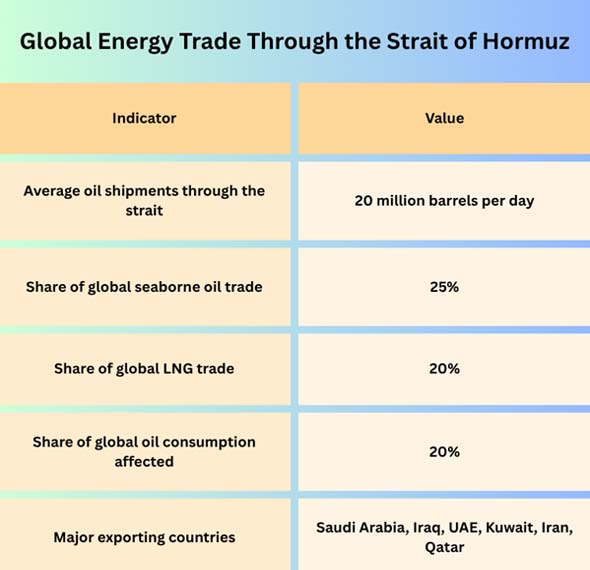
The amount of trade that travels across the Strait illustrates how vital it is for strategy. Based on Iran Import Export Trade Data by Import Globals, over one-fifth of the world's oil and over 20% of the world's LNG trade go through the Strait. This is why it is one of the most essential shipping routes for the world's energy system.
The most oil that passes across the strait ends up in Asia. These imports are very important to countries like China, Japan, and South Korea. Many Gulf producers don't have many other options, thus difficulties in the Strait can quickly affect oil markets around the world.
In 2026, There Will Be More Problems Between Countries
In early 2026, tensions between countries in the Middle East rose, which made many worry about how safe it was to travel by sea across the Strait of Hormuz. It is now riskier for commercial ships to operate in the area because of military conflicts and threats to shipping.
As per United Kingdom Import Data by Import Globals, recent occurrences show that the war is already affecting trade all across the world. LNG tankers that were transporting shipments from Qatar, one of the world's top LNG exporters, have turned around after getting close to the Strait because they were worried about safety. This indicates how rapidly the transmission of energy is altered.
Economists and central banks have also said that the conflict might hurt the economy and supply chains around the world by raising oil prices and making it harder to get goods. Shipping companies and dealers are worried about the current instability, and many are shifting their routes or putting off shipments until circumstances get better.
An Increase in Oil Prices and Volatility in the Energy Market
As per Europe Import Trade Analysis by Import Globals, hen there is fighting near critical energy corridors, one of the first things that happens is that the prices of oil and gas around the world go up and down. Traders expect shortages, therefore energy markets react quickly when there are problems with supply channels.
Fighting has caused a lot of problems lately, which has made energy prices go up a lot. Oil prices have gone up a lot because people are worried about supply shortages and limited shipping options. In certain cases, the price of benchmark crude oil has gone up a lot since the crisis began. Higher gas prices make it more expensive to move things, which harms businesses all across the world.
When Energy Prices Go Up, It Has an Effect on Other Things as Well:
- It costs more to create products when gasoline prices go up.
- Costs for moving things and getting them to their destination go up.
- Many economies are under more inflationary pressure.
As per Russia Export Data by Import Globals, these examples show how issues in one part of the world can quickly affect the economy of the whole planet.
Shipping Insurance Prices Are Rising Increasing
Another big effect of fighting near maritime chokepoints is that the cost of war-risk insurance goes up quickly. Shipowners and logistics companies require unique insurance plans when they work in places with a lot of danger. Insurance firms hike prices when tensions between countries grow to cover the higher risk of damage to ships, loss of cargo, or military attacks.
The cost of war-risk insurance for ships that work near the Strait of Hormuz has gone up a lot since the start of the present conflict. Because freight prices are going up, traders, exporters, and importers have to pay more for insurance. As per Europe Importer Data by Import Globals, Shipping costs going up directly affects trade around the world since it makes it more expensive to move goods between continents.
Issues With the Supply Chain Around the World
Modern global supply chains rely on shipping schedules that are easy to guess and prices for transportation that don't change substantially. When sea trade routes are restricted, problems quickly extend to other businesses.
Shipping concerns in the Middle East are affecting many areas:
- Petrochemicals for Energy
- Making the ingredients that go into fertilizers
A lot of industrial supply chains depend on oil and petrochemical products from the Gulf. Import Globals said that if there are problems, there may be shortages and delays in Iran's exports.
Businesses may acquire additional inventory, modify their shipment routes, or seek out new suppliers to address this issue. However, these modifications frequently result in increased costs and decreased efficiency. Additionally, shipping corporations may dispatch vessels on extended routes, which necessitates additional petroleum and time.
The Manner in Which It Affects Logistics and Transportation Costs
Based on Iran Import Shipment Data by Import Globals, it has been necessary for shipping companies to increase their rates significantly due to the increasing risk in the region.
The reasons for the increase in transportation costs are numerous:
- The expense of conflict risk insurance
- Tankers equipped with safety barriers
- Modified the transport routes
- The cost of gasoline is higher.
In certain circumstances, transportation costs have increased by 30% to 50% as a result of geopolitical concerns and supply chain challenges. Due to extended routes and additional safety precautions, shipping delays may continue for an additional few weeks. Businesses that implement just-in-time supply chains are experiencing numerous complications as a consequence of these delays.
How It Impacts the Global and Local Economies
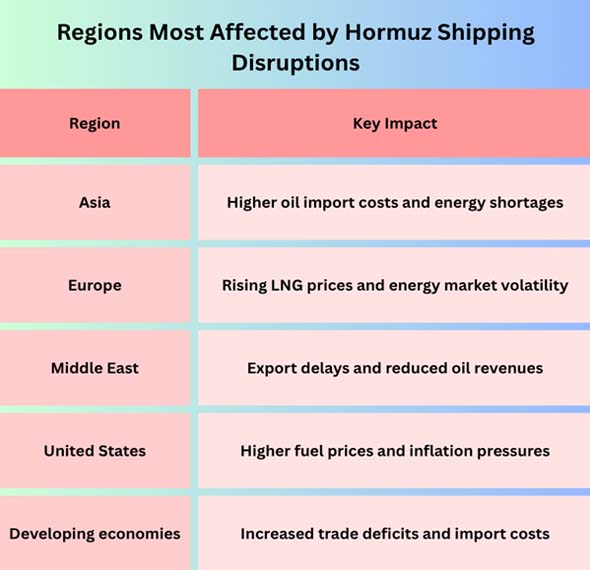
The economy in numerous locations outside of the Middle East is impacted by the issues in the Strait of Hormuz. The countries that rely heavily on energy imports from other countries, such as those in Asia and Europe, are at the highest risk.
Asia is particularly vulnerable to this threat due to the fact that the majority of crude oil that transits the Strait ultimately winds up in Asia. As per USA Import Export Trade Analysis by Import Globals,the economies and industries of countries such as India, Japan, and South Korea can be directly impacted by issues with Gulf energy exports.
The World Economy is at Risk of Inflation
When energy prices go up, it usually signifies that prices for other things in the economy are going up too. When the price of oil goes up, it costs more to move things. This makes food, manufactured goods, and consumer goods more expensive.
Because of inflation caused by growing energy costs, central banks may have to make monetary policy stricter. This could slow down the expansion of the economy. When there are shocks to the energy supply, policymakers are quite anxious about stagflation, which is when prices rise and growth slows at the same time.
Long-Term Strategic Responses
As per USA Export Import Global Trade Data by Import Globals, the current crisis highlights how poorly the world's energy and maritime systems work. Governments and corporations are seeking for ways to depend less on a few critical maritime chokepoints more and more.
There are a few potential plans being considered:
- Putting up more oil pipelines that run around the Strait of Hormuz
- Raising the strategic petroleum reserves
- Finding other ways to get energy
- Investing in long-lasting sources of energy
Countries are also working together to make shipping routes safer by making sea security stronger. A lot of work is currently being done by policymakers all over the world to diversify energy sources and make supply chains stronger.
Last Thoughts
The recent volatility in the Middle East has once again demonstrated how weak shipping networks are around the world. The Strait of Hormuz is still one of the most vital energy corridors in the world. Problems in this small waterway can affect the whole world economy.
Businesses and consumers around the world are already paying more because of higher transportation costs, higher insurance premiums, and delays in oil and LNG shipments. As tensions build, the risks to the global energy and trade markets stay significant.
The issue also highlights how crucial it is to have energy security and a supply chain that is varied. Governments and corporations are investing more in alternate trade routes and energy sources to protect themselves from geopolitical crises.
The safety of critical maritime chokepoints like the Strait of Hormuz is vitally important for global trade to be stable. Geopolitical instability in the area might disrupt how shipping and energy markets work around the world for a long time. Import Globals is a leading data provider of USA Import Export Trade Data.
FAQs
Que. Why is the Strait of Hormuz so important for trade around the world?
Ans. The Strait of Hormuz is a major shipping route that carries around one-fifth of the world's oil and LNG.
Que. How does the situation in the Middle East affect shipping?
Ans. Conflicts make shipping companies wait or change the route of their commodities, which makes ships less safe and raises insurance prices.
Que. Which countries depend the most on goods that transit via the Strait of Hormuz?
Ans. China, India, Japan, and South Korea are the largest Asian countries that import oil that comes via the Strait.
Que. Could issues in the Strait of Hormuz cause prices to go up?
Ans. Yes. It costs more to move things and create things when energy prices go up. This could generate inflation all throughout the world.
Que. Where to get detailed USA Import Export Global Data?
Ans. Visit www.importglobals.com.
