
Why the Strait of Hormuz Is Important for U.S. Oil Trade and Global Energy Markets
- Apr 10, 2026
Why the Strait of Hormuz Is Important for U.S. Oil Trade and Global Energy Markets
The Strait of Hormuz is one of the most important places in the world for trade. This small waterway, which runs between Iran and Oman, connects the Persian Gulf to the Arabian Sea and then to markets all over the world.
As per Iran Export Data by Import Globals, the Strait is the main export route for some of the world's biggest oil-producing countries, like Saudi Arabia, Iraq, the United Arab Emirates, and Kuwait, even though it is not very big.
The Strait of Hormuz is once again in the news around the world because of escalating geopolitical tensions and problems with marine security.The Strait is still very important to U.S. energy economics, even if the country has become less reliant on Middle Eastern oil in the last ten years. Its relevance goes beyond the amount of oil the U.S. buys from the region; it can also affect global oil prices, trade flows, and economic stability.
The Global Energy Lifeline
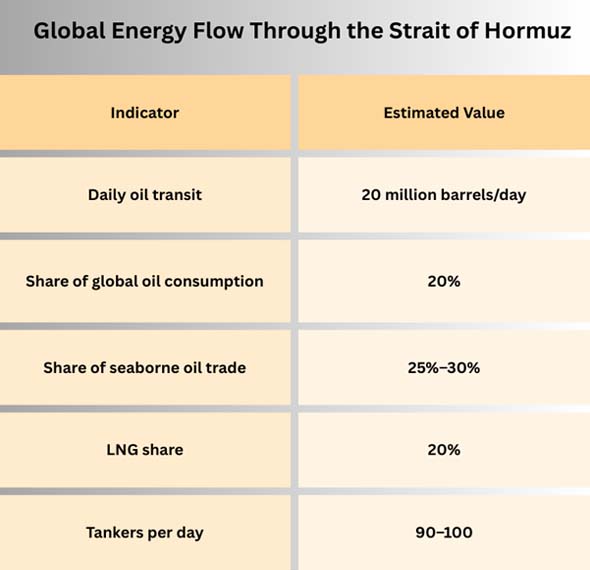
The Strait of Hormuz is the most important choke point in the world's energy supply chain. Based on USA Import Export Trade Data by Import Globals, this small corridor is the main route for moving crude oil and refined petroleum products around the world. Millions of barrels of oil and refined petroleum products move through it every day.About 20 million barrels of oil pass across the Strait every day from 2025 to 2026. This is almost one-fifth of the world's oil use and a large part of the oil commerce by sea.
The Strait is especially vulnerable because so much energy passes through it in one place. Any form of trouble, such as a war, political tensions, or an accident at sea, has an immediate and long-lasting influence on markets around the world.
More Than Just Direct Imports: Understanding U.S. Exposure
It seems at first that the Strait of Hormuz is very safe for the United States. Because of the shale revolution and a larger choice of sites to extract oil from, the U.S. now derives most of its crude oil from regions other than the Persian Gulf. A small part of the total U.S. consumption comes from direct imports that flow via the Strait.
But this protection that looks like it isn't real. According to USA Import Data by Import Globals, the global oil market is a network of markets where prices are set by supply and demand all around the world. So, even if difficulties are far away, they can still effect energy costs around the world.
This Indirect Exposure Makes the United States the Most Vulnerable
Prices around the world go up almost right away when oil from the Gulf is in jeopardy. Brent crude is one of the benchmarks that sets the price of oil. This makes oil made in the U.S. more expensive. This makes fuel more expensive, transportation expenses go up, and inflationary pressures spread throughout the economy.
The Pricing Effect: What Hormuz Means for American Shoppers
Oil prices are the first thing that changes when something goes wrong in the Strait of Hormuz. In 2025–2026, rising tensions in the area have prompted prices to rise sharply several times, with crude oil prices going beyond $100 per barrel during times of higher risk. For those in the U.S., this means that gas and diesel costs will go up.
Costs of transportation go up, which affects everything from the price of groceries to the cost of plane tickets. As per USA Import Trade Analysis by Import Globals, the costs of inputs are going up for manufacturing companies, and logistics and shipping companies are passing on those costs to businesses and consumers.
Global Dependence and Its Effects on Other Areas
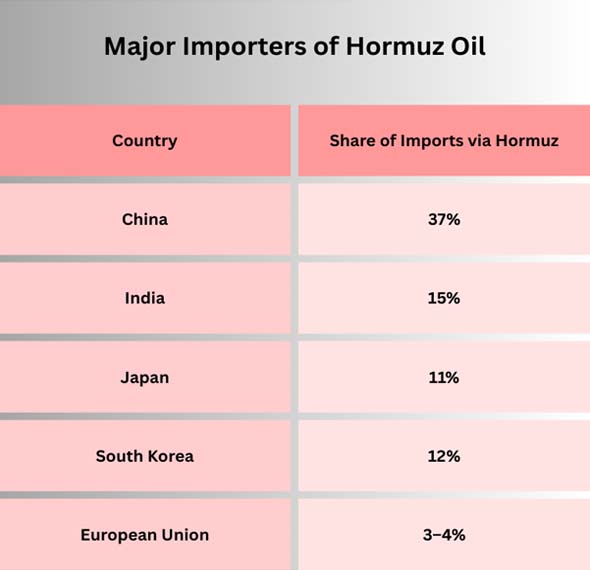
The U.S.doesn't depend on Middle Eastern oil as much as it used to, but many of its most important trading partners still do. The Strait is important for energy imports for countries like China, India, Japan, and South Korea. This dependence has a ripple effect that eventually affects the U.S. economy.
When these economies can't get enough energy, their factories slow down, people buy less, and trade slows down. This means that the US will have fewer chances to export, less demand around the world, and more unstable financial markets.
Problems with Trade and Shipping
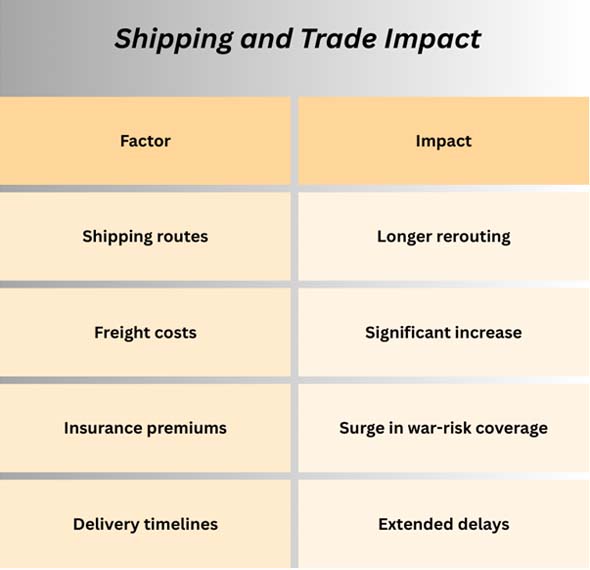
Disruptions in the Strait of Hormuz have a huge effect on shipping and trade logistics around the world, not just oil prices. As per Iran Import Data by Import Globals, the Strait is an important route for oil tankers, but it is also an important route for liquefied natural gas (LNG) cargoes and other energy-related cargo.
Shipping corporations regularly change the routes of their ships to avoid regions that are seen to be dangerous when things get tense. Shipping takes longer and costs more on these other routes, which means that expenses and delays increase higher. Costs for insurance, especially war-risk insurance, go up a lot. This makes it considerably more expensive for countries to trade with each other.
These problems make it harder for U.S. corporations to bring in commodities, make their supply chains longer, and make their operations less efficient around the world.
The Crisis of 2025–2026: A Major Shift
Based on Iran Exporter Data by Import Globals, the events of 2025–2026 showed how weak the Strait of Hormuz is. The rise in tensions in the Middle East, which has caused oil flows to stop and start, has been one of the largest supply shocks in the past few years. During the worst times of escalation, millions of barrels per day were removed off the market for a short time. This made prices go up and down swiftly.
These changes forced both governments and companies reflect about how much they depend on this critical chokepoint. The crisis also demonstrated how few other channels are available and how hard it is to quickly replace lost supplies.
Effects On the World's Energy Markets
The Strait is a key route for oil tankers, but it is also a key route for liquefied natural gas (LNG) and other energy-related cargo. When things get tense, shipping companies often adjust the itinerary of their ships to stay away from places that might be harmful. According to USA Importer Data by Import Globals, Shipping takes longer and costs more on these other routes, which makes delays and costs go up. Insurance costs, especially for war-risk insurance, go up a lot. This makes trade between countries even more expensive.
These issues make it more expensive for U.S. companies to import goods, make their supply chains longer, and make their operations less efficient around the world.
The Crisis of 2025–2026: A Big Change
The events of 2025–2026 have proven how fragile the Strait of Hormuz is. One of the biggest supply shocks in recent years has been the rise in tensions in the Middle East, which has caused oil flows to stop and start. During the worst times of escalation, millions of barrels per day were removed off the market for a short time. This made prices go up and down swiftly. As per USA Import Shipment Data by Import Globals, these changes forced both governments and companies reflect about how much they depend on this critical chokepoint. The crisis also demonstrated how few other channels are available and how hard it is to quickly replace lost supplies.
Why It's Important for the Military and Strategy
The US has had a strong military presence in the area for a long time because it knows how important the Strait is. The U.S. Navy is especially important for keeping trade at sea safe and moving.It does this by keeping an eye on things, guiding tankers, and stopping any threats that might come up.
This strategic commitment shows that people all throughout the world know that keeping the Strait stable is a problem for everyone, not just residents in the area. For the US and the rest of the world to maintain their economy stable, it is very important to keep energy flows going.
Is it Possible to Change the Strait?
There are a lot of people seeking for other ways to cross the Strait of Hormuz, but for now, this is the only way to do it. According to Iran Import Export Trade Analysis by Import Globals, the East-West pipeline in Saudi Arabia and the Fujairah pipeline in the UAE can only handle a small amount of oil that needs to be moved. They can't deal with all the oil that travels through the Strait. This basic challenge ensures that the Strait will stay a key part of the global energy exchange for a long time.
Change and Expansion in the Future
Countries and corporations are investing more and more effort into switching to cleaner energy sources and spreading out their investments because of recurring worries. As per USA Export Import Global Trade Data by Import Globals, part of a wider plan to rely less on vulnerable locations is to invest in renewable energy, build up strategic petroleum reserves, and make the supply chain more diverse. But even with these measures, oil is still a key part of the world economy in 2026. The Strait of Hormuz will always be very important as long as this is the case.
Important Ideas
- The Strait of Hormuz is the world's most important energy choke point because it contains almost 20% of the world's oil supply.
- The US doesn't rely on direct trade too much, yet it is nevertheless very vulnerable to changes in prices throughout the world.
- Asian economies depend a lot on Hormuz, which makes the world economy more risky. The crisis from 2025 to 2026 showed how weak global energy supply chains are.
- Other routes can't handle as much traffic as the Strait.
- The U.S.military's presence is quite important for keeping things stable.
- Energy diversification is happening, but it will take time to become less reliant on it. Import Globals is a leading data provider of USA.
FAQs
Que. What makes the Strait of Hormuz so essential for trade around the world?
Ans. It is important for global energy markets because it carries a lot of the world's oil and LNG.
Que. How much does the U.S.depend on the Strait of Hormuz?
Ans. No, not directly.But not directly—through the price of oil around the world and the fact that economies depend on each other.
Que. What happens if the Strait is blocked?
Ans. Prices of oil would go up, trade around the world would slow down, and economies all over the world, including the U.S., would have problems and inflation.
Que. Are there other ways to get to the Strait of Hormuz?
Ans. No, the current alternatives can't handle the same amount of oil that goes through the Strait.
Que. Where to get detailed USA Import Export Global Data?
Ans. Visit www.importglobals.com
