
How Indonesia's B50 Biodiesel Policy Will Impact Global Trade?
- Jun 27, 2026
How Indonesia's B50 Biodiesel Policy Will Impact Global Trade?
Indonesia is at a reputable position as the centre of the global energy and agricultural commodities with the recent implementation of the ambitious B50 biodiesel policy in 2025. The country, with its image as one of the largest producers and exporters of palm oil has increased the mandatory biodiesel blending requirement from previous levels to 50% biodiesel content. Energy companies, commodity traders, manufacturers, and investors have mainly contributed to the export memorandum. The B50 biodiesel mandates launched by the government authorities in recent times aim to strengthen energy security.
The initiative is designed to reduce the dependence on imported fossil fuels in order to support the domestic palm oil producers while contributing to the sustainability objectives. The policy launched by the government authorities will extend far beyond Indonesia's borders. The consumption of farmers for biodiesel production will reshape the global trade flow while impacting the vegetable oil markets of Indonesia. Indonesia Shipments Data reported the palm oil remains of the country as a strategic export commodity, working as a strong trade pillar for the marketing authorities.
A significant portion of the palm oil producing ability of the manufacturing units is redirected towards the domestic biodiesel consumption while promoting the supply availability and pricing dynamics. The businesses involved in agriculture, energy, transportation, food processing, and renewable fuels have been mainly maintaining the development integrity with Indonesia's B50 biodiesel program.
The Comprehensive Overview of Indonesia's B50 Biodiesel Policy
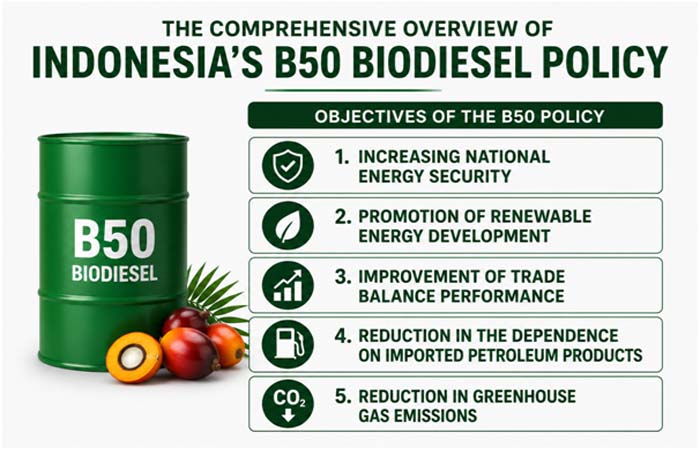
The B50 biodiesel policy was implemented by the government authorities in order to evaluate the fact that the diesel fuel sold domestically contains 50% of biodiesel, which is primarily derived from palm oil-based fatty acid methyl ester. The policy is representative of the aggressive biofuel blending mandates. that has been implemented on a global scale in order to meet environmental standards.
The objectives behind the initiative launched by the Indonesian government, as reported by the Indonesia Trade Data, include:
1. Increasing national energy security
2. Promotion of renewable energy development
3. Improvement of trade balance performance
4. Reduction in the dependence on imported petroleum products
5. Reduction in greenhouse gas emissions
The policy right now has a significant impact on the B20, B30, and B35 trade implementations launched, which have been successfully increasing the domestic consumption of palm oil with the proper reduction in the fuel import expenditures.
Why is Indonesia's B50 Policy Considered Significant for Global Trade?
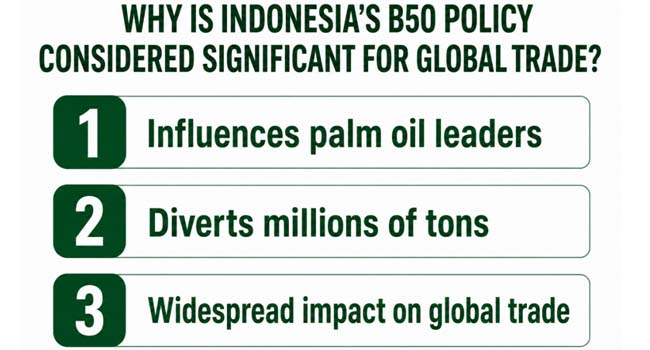
The importance of the B50 policy launched by the Indonesian government is considered important. The country accounts for more than half of the global palm oil production, while being the largest exporter worldwide. The major policy affecting domestic consumption impacts the international supply chains in commodity markets.
The B50 mandate diverted millions of tons of palm oil from the export market towards domestic biodiesel production. The shift of the trade is basically expanded in order to reduce the exportable surpluses while properly influencing the pricing across various agricultural sectors.
The trade decision of the Indonesia B50 initiative, as per Indonesia Import Data is taken in terms of contact with palm oil exports, vegetable oil markets, renewable energy markets, food manufacturing industries, transportation fuel sectors, and commodity trading activities. In the regulation of this B50 trade initiative, the domestic demand might increase, become import-dependent, and the countries importing may also face higher procurement costs with an increase in the competition for available supplies.
The Crucial Impact of B50 on the Global Palm Oil Trade
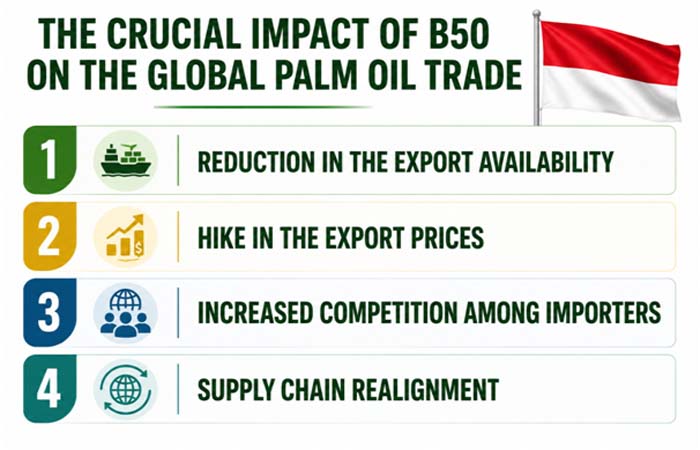
Palm oil is considered one of the topmost primary feedstock’s that has been used by the export authorities the most to diversify the overall trade portfolio regarding essential oils. The proper expansion of the biodiesel blending requirements has maintained the increased domestic palm oil consumption rate significantly while balancing the import and export trade activities. As presented by the Indonesia Export Data, the factors representing the impact of B50 on the global palm oil trade are,
1. Reduction in the Export Availability - The primary impact of the B50 on palm oil trade is that it has immediately led to a reduction in the quantity of palm oil available for export. The international buyers right now, due to this initiative, are encountering tighter supply conditions.
2. Hike in the Export Prices - After the implementation of B50, the global traders are expecting a significant hike in the export prices, with an anticipation of a reduction in export volumes. The traded categories are influenced among major importing countries.
3. Increased Competition Among Importers - Top trading authorities like India, China, Pakistan, Bangladesh, and various European nations have mostly been reliable in their Indonesian palm oil imports in order to satisfy their domestic consumption rates. The increased competition among the importers has intensified the traders' interest in the specific category.
4. Supply Chain Realignment - Due to the implementation of the B50 initiative, the diversification of the sourcing strategies has increased, with an average hike in the purchases from other producing countries while reducing dependence on Indonesian supplies.
Significant Impact of B50 on Other Vegetable Oil Markets
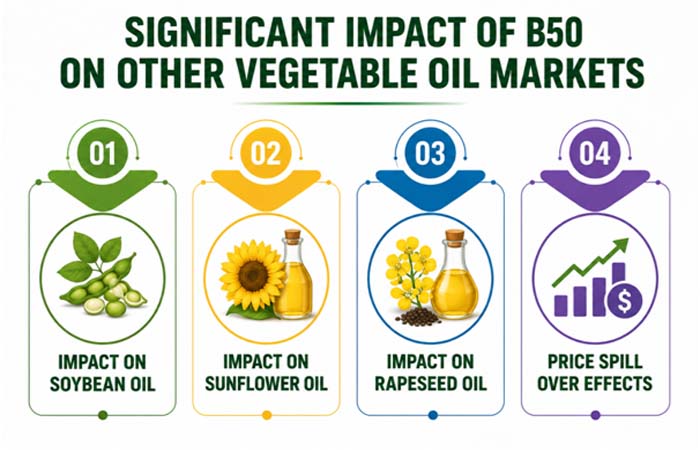
The effect of B50 launched by the Indonesian government authorities is not limited to palm oil. Palm oil supplies have been reduced due to the initiative, as the food manufacturers and industrial consumers have increasingly turned toward the alternative vegetable oils. Below are the other impacts discussed;
1. Impact on Soybean Oil - Soybean oil producers are benefiting from this B50 initiative launched by the Indonesian government because it has made a direct exposure of the soybean oil manufacturers towards the growing demand rate for essential oils worldwide.
2. Impact on Sunflower Oil - The sunflower oil producers are experiencing a hike in the international demand that has been directly benefiting their export revenue earnings. The executive continuity in the supply rate and substantial amount has maintained the trade integrity.
3. Impact on Rapeseed Oil - The rapeseed oil market has also increased. With a hike in the demand rate, the activity of the buyers has diversified the procurement strategies.
4. Price Spill Over Effects - The interconnected nature of vegetable oil markets, like the hike in the palm oil trade, can significantly impact the trade of rapeseed oil and sunflower seed oil. The interconnectivity is basically the result of the consumers' increasing and decreasing demand rates and certain fluctuations in the overall traded categories.
The Impact of B50 on Global Energy Markets
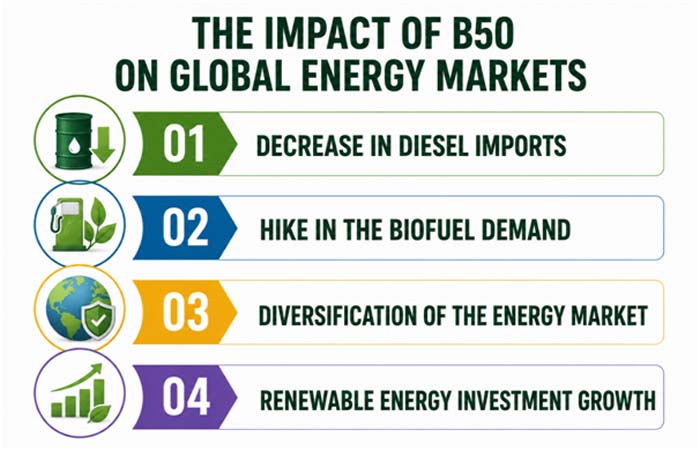
Indonesia Customs Shipment Data reported the B50 as a globally impactful trade initiative launched to benefit certain regions while limiting the diversification of traded categories in another region in order to maintain a proper trade balance in the global memorandum of import and export. Indonesia's biodiesel expansion is having significant implications. As part of the global energy market demand rate, below is the different impact of the B50 on global energy markets.
1. Decrease in Diesel Imports - The B50 mandate has immediately resulted in a decline in the demand for imported petroleum products. It has resulted in an improvement in the energy trade balance.
2. Hike in the Biofuel Demand - A certain hike in the biofuel demand has reinforced the role of renewable fuels in the transportation energy systems. This mandate has eventually encouraged further investment in biodiesel production infrastructure.
3. Diversification of the Energy Market - B50 mandates another impact on the global energy market is market diversification. The countries trying to strengthen their energy security are facing some obstacles in trade expansion, which are resolved by Indonesia's model as a blueprint for expanding domestic biofuel industries.
4. Renewable Energy Investment Growth - The extreme success of the B50 initiative could be represented as the renewable energy investment growth. The mandate has encouraged additional investments in biofuels and sustainable energy technologies.
The Top-most Affected Industries Under Indonesia's B50 Policy
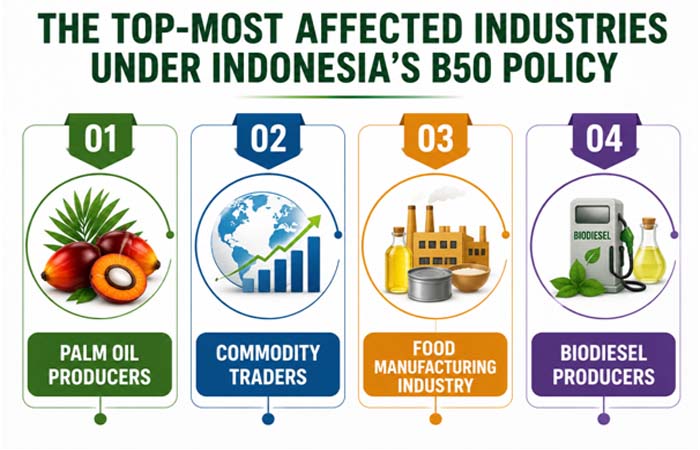
1. Palm Oil Producers - Palm oil producers are considered the significant impacted category of traders under Indonesia's B50 mandate. Indonesia Trade Statistics reported that the domestic producers are benefiting from the stronger local demand.
2. Commodity Traders - Commodity traders top the second positioning of Indonesia's B50 mandate-impacted industries. The authorities are adjusting as per the procurement strategies in order to monitor the supply-demand dynamics.
3. Food Manufacturing Industry - The food manufacturing industry has long been dependent on the palm oil trade to increase the raw material cost. They are having severe declines in their trade rates while maintaining the trade balance.
4. Biodiesel Producers - The biodiesel producers are gaining benefits from the expanded production requirements while obtaining government support.
The Challenges Associated With the B50 Biodiesel Policy
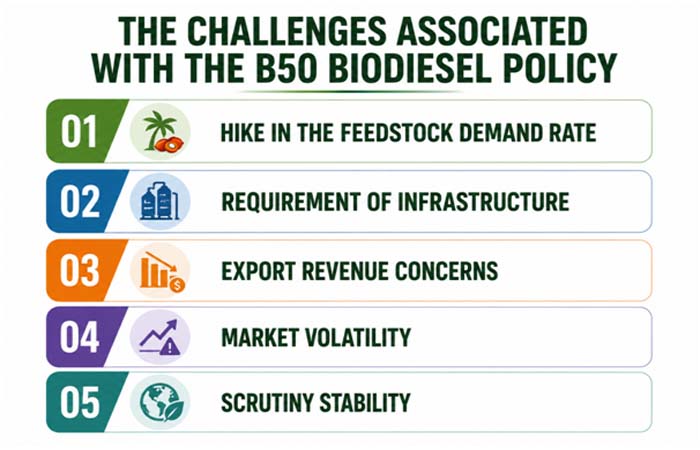
1. Hike in the Feedstock Demand Rate - Indonesia Customs Data reported a significant hike in the feedstock demand rate as the primary challenge related to the B50 biodiesel policy. The requirement for palm oil feedstock holds the ability to strain the supply availability, creating upward pressure on the trade prices.
2. Requirement of Infrastructure - The expansion in biodiesel production is another significant challenge related to the B50 biodiesel policy. The significant investment requirement in storage, blending, transportation, and processing infrastructure is supposed to have an impact on the globally leading traders.
3. Export Revenue Concerns - The increase in the domestic consumption rates and the reduction in the export volumes are on the way to affect the overall export revenues.
4. Market Volatility - The substantial change in the supply and demand patterns is on the way to increase the volatility across agricultural and energy markets.
5. Scrutiny Stability - The traders popular globally are expected to monitor environmental concerns. The trade associated with palm oil production, including land use, will face some sustainability constraints.
Opportunities Related to the B50 Policy
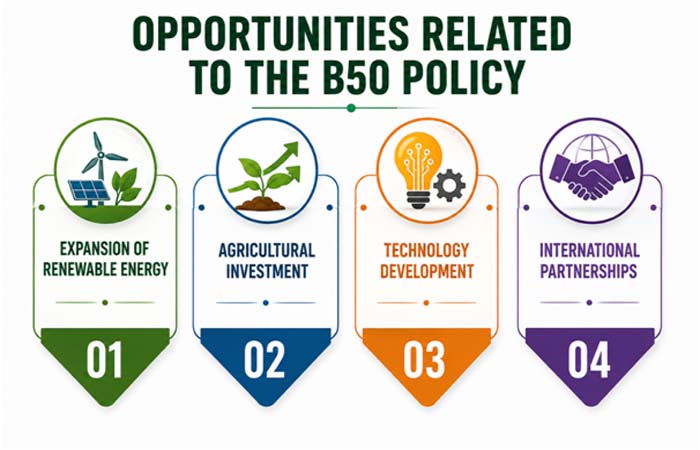
1. Expansion of Renewable Energy - Indonesia Trade Customs Data reported the rapid expansion of renewable energy as the topmost opportunity created by the B50 policy. The involvement of the authorities in renewable energy development has benefited from the growing biodiesel demand.
2. Agricultural Investment - The higher feedstock demand rate has encouraged investments in plantation productivity. Sustainable agricultural productivity is benefiting from the implemented mandate.
3. Technology Development - The greater investment acquired by the bio digital technologies and supply chain management solutions is expected to benefit the technology development while promoting the productivity rate.
4. International Partnerships - B50 mandate has expanded the international partnerships with Indonesian producers while securing long-term supply agreements.
The Comprehensive Role of Trade Data in the Evaluation of the B50 Market Impact
Trade data plays a vital role in the proper acknowledgement of the market impact of the B50 biodiesel policy implemented by the Indonesian government authorities. Indonesia Import Customs Data reported the B50 mandate as the main factor increasing the domestic consumption of palm oil for biodiesel production.
The shipment level trade data is considered important because it helps the market participants monitor how the palm oil is being diverted. The data set available regarding Indonesia Export Trade Data helps businesses to track the export volumes with identification of the destination countries, buyer sourcing patterns, and fluctuations in commodity prices. It even helps them anticipate the market changes with adjustments to the procurement strategies accordingly.
The trade intelligence is considered supportive as it promotes the analysis of competitor activities while allowing the companies to evaluate the export performance. The trade impact is far more than the normal acknowledgement of buyers and seller’s activities. The impact of the B50 policy is mainly related to sectors like vegetable oils, renewable energy, transportation fuels, and food manufacturing. The pricing movements and supply chain development help businesses understand how policy changes influence the international trade flows.
Future Outlook for Global Trade Under Indonesia's B50 Policy
The B50 policy's mandate, launched by the Indonesian government, will continue to influence the global agricultural and energy markets in the near term. The government authorities worldwide will continue to pursue energy security while maintaining the sustainability objectives, says Indonesia Customs Trade Data. The success of the market trade will depend on the acceleration of the adoption of renewable fuel mandates on a global scale.
Palm oil will remain one of the strongest factors supporting the export growth rate of the country, with certain investments in sustainable production, supply chain transparency, and renewable energy infrastructure. The businesses trying to be capable of the trade strategies will adapt to the changing market conditions with diversification of the sourcing trades while leveraging the trade intelligence to be best positioned among the latest traders.
Conclusion
The B50 biodiesel policy of Indonesia will be one of the most significant developmental factors in the near future. The increasing domestic biodiesel consumption will reduce the reliance on imported fossil fuels. The strengthening of the nation as a reputed trader will be mainly because of the reshaping of the international trade dynamics.
The influential trade of Indonesia's energy sector and essential oils trade is mainly because of the renewable energy development, food manufacturing industries' upgrade regarding global trade compliance, and global commodity pricing structures. The companies trying to remain competitive in the changing global trade environment will try to closely monitor the developments related to Indonesia's biodiesel industry.
CTA
Trying to understand the latest developmental strategies of Indonesia's biodiesel and palm oil trade, you have landed at the right platform here. Import Globals is responsible for resolving all your complexities of trade with the latest activities from globally leading traders. Subscribe to www.importglobals.com or email info@importglobals.com to accelerate your global business growth via reliable trade analytics.
FAQs
Que. What is the B50 biodiesel policy of Indonesia?
Ans. The B50 biodiesel policy of Indonesia requires that diesel fuel sold domestically contain 50% palm oil-based biodiesel.
Que. What is the motive behind the introduction of the B50 policy?
Ans. The policy was mainly introduced to improve energy security while reducing fuel imports in order to support the palm oil producers.
Que. How will the B50 mandate launched by the Indonesian government affect the government's palm oil trade?
Ans. The B50 mandate will reduce the exportability of palm oil supplies while potentially increasing the global prices.
Que. Name the top industries affected most by the B50 mandate.
Ans. Palm oil, biodiesel, food manufacturing, commodity trading, and transportation are the main sectors that will be affected most by the B50 mandate.
Que. How Indonesia trade data will help businesses understand the impact of B50?
Ans. Indonesia trade data will help businesses understand the impact of B50 by providing detailed insights into the shipment volumes, pricing trends, market demand, and buyer activities.
Que. How does Indonesia import export data support business growth?
Ans. Indonesia Import Export Data support business growth via proper identification of buyers, suppliers, analysis of market demand, and development of effective market expansion strategies.
Que. What information is available in Indonesia trade reports?
Ans. Indonesia trade report covers importer names, exporter names, shipment date, HS code, product details, quantity, values, pricing information, origin country, importing country, and port details.
Que. How frequently is the Indonesia Trade Data updated?
Ans. Indonesia Trade Data is updated on a monthly basis.
Que. Where to get detailed information on Indonesia Trade Data?
Ans. Visit www.importglobals.com or email at info@importglobals.com for detailed updates on Indonesia Trade Data.
You Can Also Visit :-
