FAQs
Use Case

In the fast-paced global economy, configuring a reliable supplier and manufacturer as per your critical aspects of trade is quite difficult. Different business authorities right now are facing challenges like rising procurement costs, quality inconsistencies, and overdependence on a limited number of vendors. The inclusion of trade shows, business directories, and referrals offers limited visibility into supplier performance. Global import export data is considered a smart tool for the research analysts and the trade holders towards a more data-driven approach to supplier discovery and sourcing.

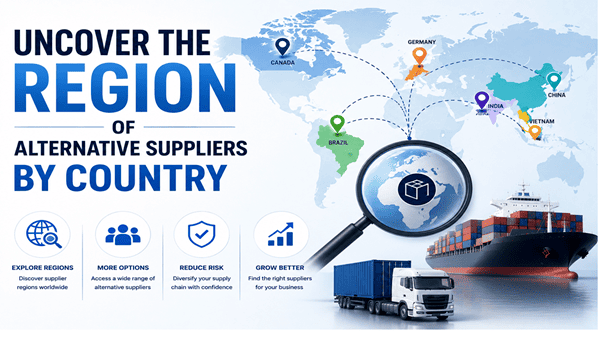
International trade records on Import Globals, like global trade data, provide valuable information about manufacturers, exporters, shipment activities, destination markets, and trading volumes. The global trade intelligence highlighted in the platform is beneficial as it enables businesses to properly identify alternative suppliers in different regions.
The procurement teams instead of depending on a limited number of contracts can simply analyse the real shipment records while supplying the products similar to their sourcing requirements. It helps businesses compare similar capabilities. Evaluation of export performance and identification of the new sourcing opportunities is even available via the latest insights highlighted.
Import Globals is considered a beneficial platform because it allows users to search by supplier concentration, HS code, exporter name, and destination country, which accurately fulfils the trade acquisition of the research analysts. It makes the identification of trusted manufacturers easier. The exploration of supplier options across multiple regions helps businesses strengthen their sourcing strategies while reducing risks associated with regional disruptions.
The accurate sourcing of the acquired products from manufacturers and exporters is beneficial because it provides significant advantages like improved pricing, better quality control, and stronger business relationships. Import Globals is popular because it helps in the identification of exporters shipping products to international buyers, similar to the region of interest of the customer.
The valuable insights on Global shipment data provide supplier credibility and market activity. The acknowledgment of the shipment records reveals key details like export frequency, shipment volume, destination markets, and trading partners. It allows the sourcing team to properly evaluate potential suppliers based on actual trade performance.
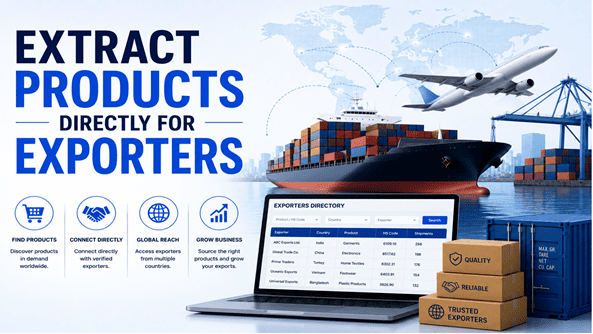
Businesses right now are even able to identify the exporters while regularly supplying the products within their region of interest, which promotes direct connectivity with manufacturers, creates opportunities to negotiate competitive pricing, and improves the overall sourcing efficiency. The utilization of the global trade data helps the authorities and the research analysts gain transparency in the supplier network.
| Data Field | Description |
|---|---|
| HS Code | Product classification code used to identify traded goods internationally. |
| Product Description | Detailed information about the imported or exported product. |
| Importer/Exporter | Company names and trading entities involved in the shipment. |
| Shipment Volume | Quantity, weight, or volume of goods traded. |
| Country | Country of origin for imports or destination for exports. |
| Port Details | Information about loading, discharge, and transit ports used in logistics. |
| Date | Shipment date and trade timeline for tracking market activity. |
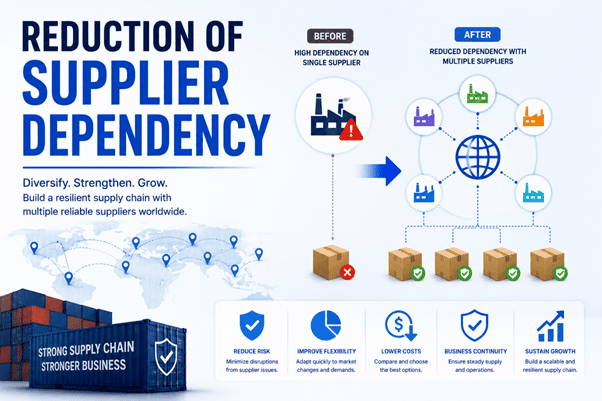
The over-dependency of the authorities on a single supplier can lead to operational risk. The geopolitical events, transportation challenges, or production delays are impactful for business continuity and profitability. The highlighted data sets, like global shipment data, on Import Globals helps businesses diversify their supplier base while promoting the identification of multiple manufacturers and exporters across global markets.
The shipment analysis and supplier benchmarking are important because they help the authorities build a resilient network of trade. The proper monitoring of the export activities and the supplier performance reduces the dependency on individual suppliers. It improves the supply chain flexibility and reliability. Access to comprehensive global trade intelligence promotes sourcing of opportunities and maintaining a competitive advantage in procurement operations.
The expansion of the supplier network and the optimization of the sourcing strategy are essential because they ensure the positivity in future trade output. Import Globals is popular for providing the latest intelligence required for the identification of reliable exporters while comparing the shipment activities to build a stronger global supply chain idea.
Import Globals Import Export trade data is a detailed representation of the sourcing ability of traders and the production output. It gives a basic idea to the research authorities regarding the adaptations of the methodologies they should go with for service expansion.
Data sets on Import Globals include information regarding HS code, product description, importer-exporter name, shipment volume, country name, and port details.
Yes, businesses can properly identify new buyers and suppliers through Import Globals Import Export trade data.
Yes, the users can reliably compare trade trends on Import Globals with multiple countries, as the shipments from different regions are properly highlighted.
Yes, historical trade data is available on Import Globals. The shipment level insights into the resourcing potential of each region are highlighted.
Subscribe to info@importglobals.com for getting detailed updates on global trade data.
