
Top Products Traded Between Ireland and the UK: A Complete Import Export Market Analysis
- Nov 18, 2026
- 21 Views
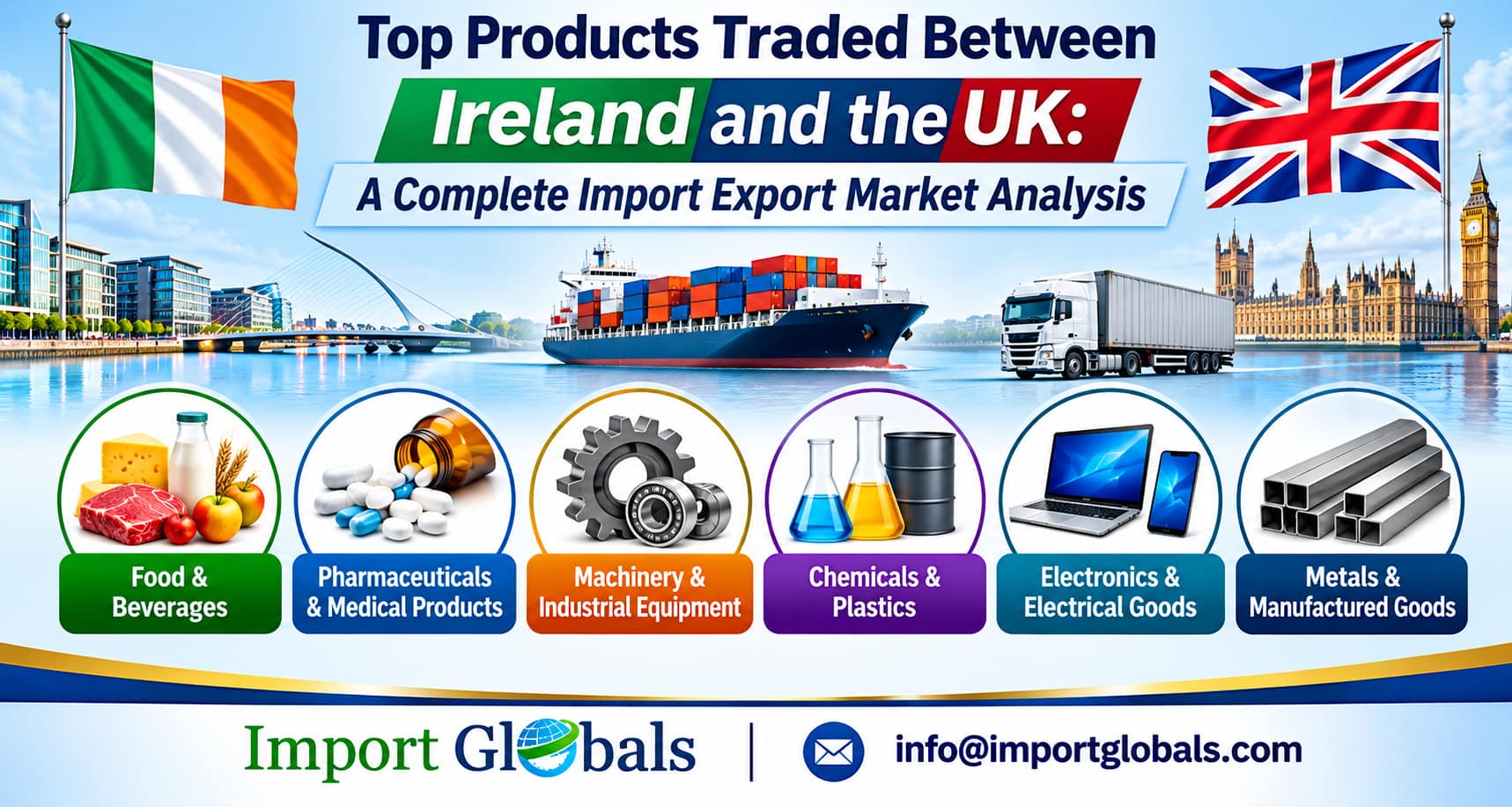
Top Products Traded Between Ireland and the UK: A Complete Import Export Market Analysis
Ireland and the UK have a close, long-standing business partnership based on proximity, firm collaboration and shared supply chains. Both countries are major players within global business and trade, trading a lot of different commodities, including foodstuffs and beverages, medicines, machinery, chemical products and manufactured goods.
Even with the changes to the rules and regulations governing Ireland–UK trade relations following Brexit, there are still many business opportunities in Ireland–UK trade for importers, exporters, manufacturers, and foreign suppliers.
Ireland Import Data provides the necessary information on products coming from the UK to Ireland and from the rest of the world. Statistics on imported products help companies to analyze demand for specific goods, learn about sourcing trends, identify key trading partners and find new potential suppliers.
Likewise, Ireland Export Data provides a glimpse of the products exported from Ireland to the international market like the UK. Export intelligence helps business people to know major categories of export, estimate the demand of the markets, find potential buyers and explore ways to increase the customer base in the international market.
In contrast, UK Import Data provides the market demand scenario of United Kingdom for Irish and other imported products. It also helps to know countries from where imports are coming, product categories and import trends.
UK Export Data also helps organizations to analyze the goods exported from the UK to Ireland and other foreign destinations. This service assists in market research by identifying export opportunities, trade patterns and potential business relationships.
According to Import Globals, reliable import-export trade intelligence can help organizations make sound decisions, find buyers and suppliers, and improve their cross-border trade strategies. Organizations could examine bilateral trade to find opportunities and establish business relations in Ireland and the UK.
Top Products Exported from Ireland to the UK: Key Industries and Market Demand
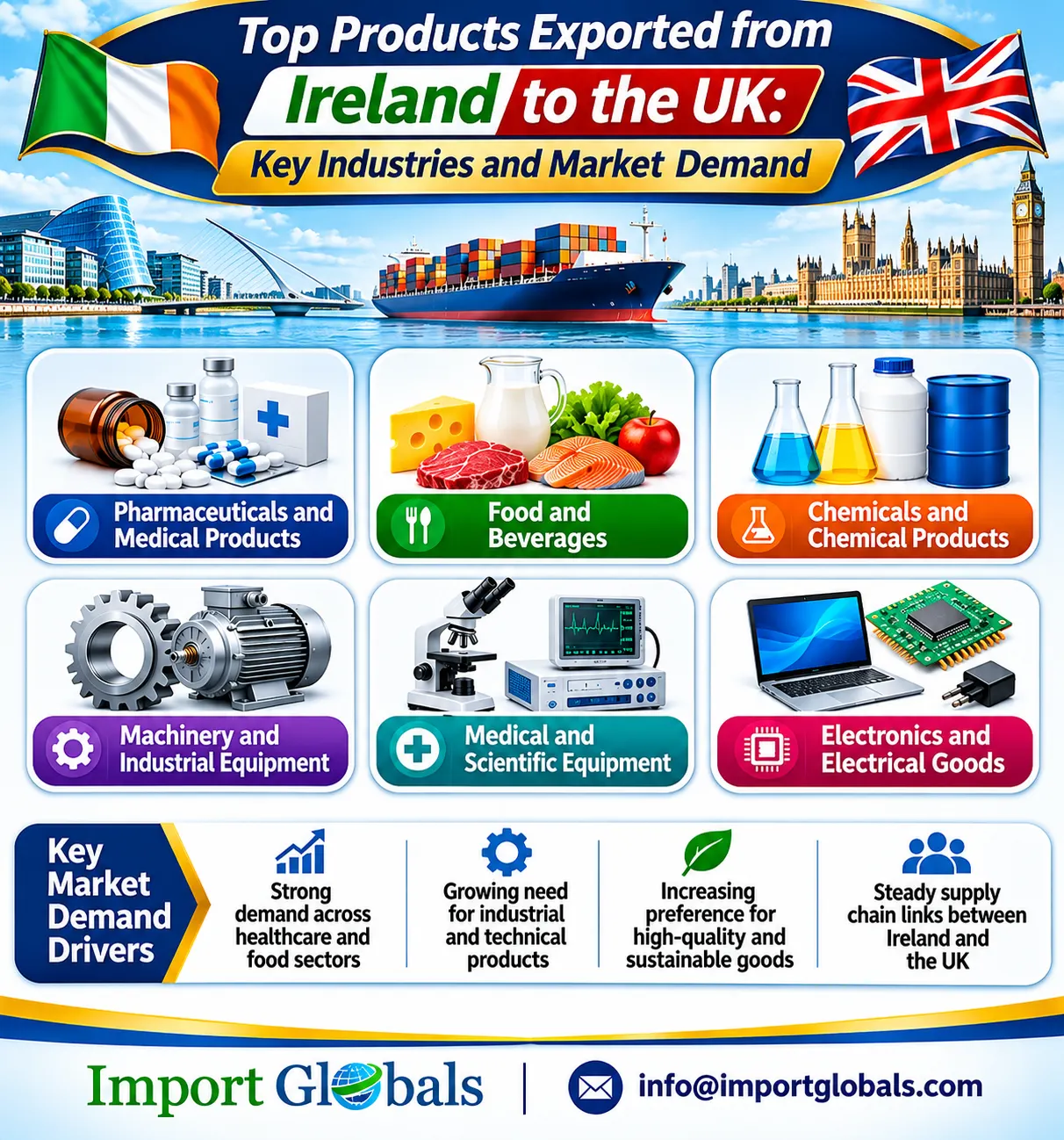
Ireland and the United Kingdom have a strong trading relationship sustained by geographical location, established business links and a growing demand for high quality products. The country exports a lot of Irish goods to the United Kingdom in different sectors of her economy.
Major Products Exported from Ireland to the UK
The following product categories play an important role in Ireland's export trade:
Pharmaceuticals and Medical Products: The main export categories in the health sector are medicines, vaccines, pharmaceuticals and medical supplies.
Food and Beverages: The bulk of Irish cross-border trade is made up of dairy products, cheese, meat, seafood, processed food and beverages.
Chemicals and Chemical Products: The UK uses industrial chemicals, organic chemicals and specialty chemicals for production purposes.
Machinery and Industrial Equipment: Electrical machinery and equipment is another category of exports.
Medical and Scientific Equipment: Research and health care facilities find laboratory equipment, diagnostic equipment and specialized health care products useful.
Electronics and Electrical Goods: Electric parts, electronic equipment and other associated products support the supply chains of industry and commerce.
Understanding Ireland's Export Market Through Trade Data
Ireland Export Trade Data helps to find out the main export products, product codes, destinations, volumes of shipments and potential foreign customers. These aspects will assist in the export of goods and in the designing of a strategy for export.
Identifying Opportunities in the UK Market
Similarly, UK Import Customs Data can provide information on categories of imported goods, countries of origin, suppliers of goods and import demand. Import Globals enables companies to search for international trade data, identify potential buyers and suppliers, and generate new business opportunities in international markets between Ireland and the UK.
Major Products Imported by Ireland from the UK: Leading Categories and Business Opportunities
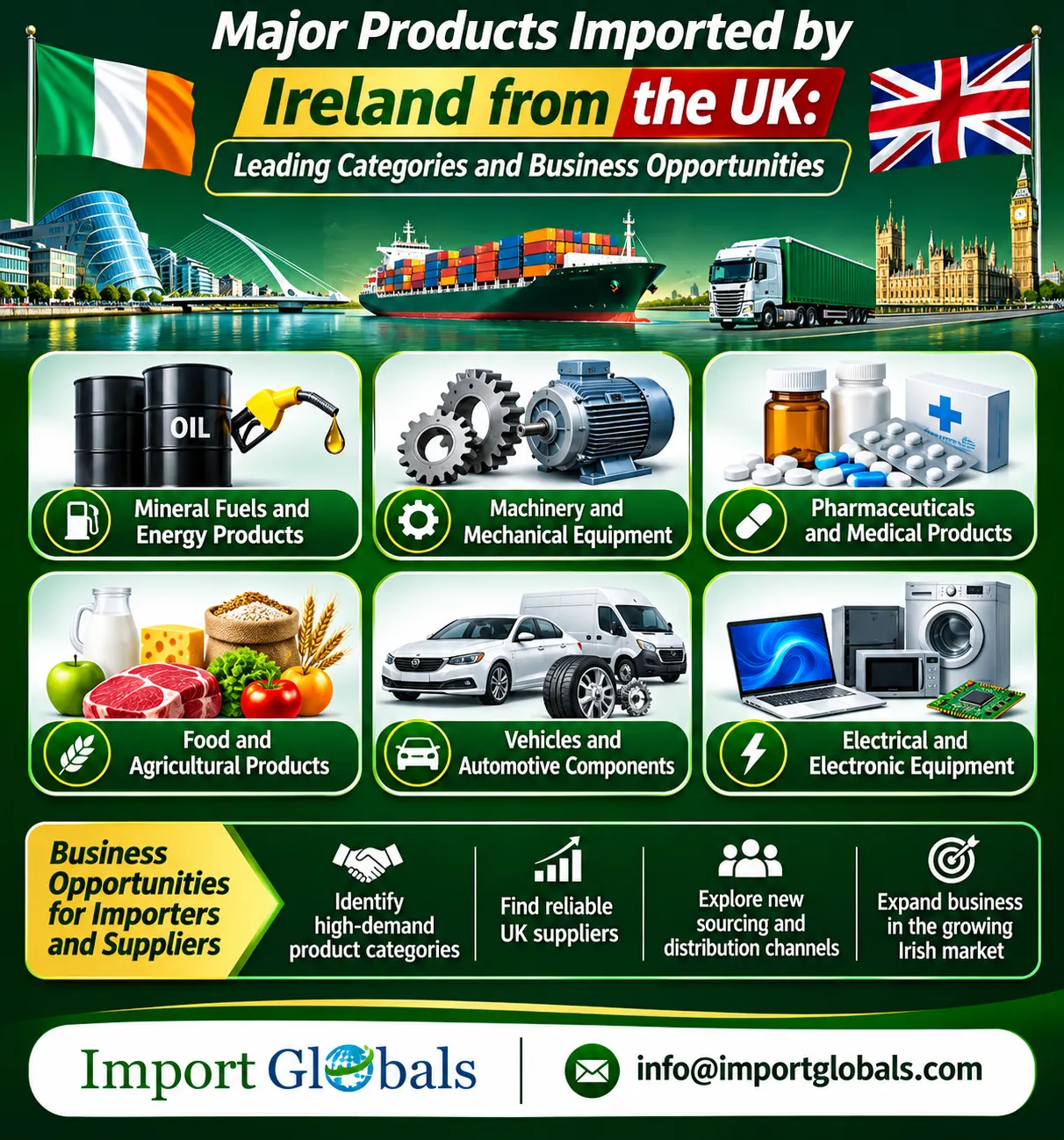
Ireland and the United Kingdom have very good connections between their countries for the export and import of products. They enjoy the benefits of proximity, existing supply chains and long-standing commercial links. Knowing the import types for the country will allow international firms to find some new trading partners for them.
Major Products Imported by Ireland from the UK
The following product categories represent important areas of Ireland–UK trade:
Mineral Fuels and Energy Products: Petroleum, fuels and energy products supply the energy needs of the country.
Machinery and Mechanical Equipment: Industrial machinery and equipment, engines and mechanical parts are used for various industries.
Pharmaceuticals and Medical Products: Medicines, health care supplies, preparations and medical products satisfy the health care needs of the population.
Food and Agricultural Products: The Food market of the country consists of meat, dairy products, cereals, foodstuffs, beverages and agricultural products.
Vehicles and Automotive Components: The passenger and commercial vehicles, spare parts and accessories are useful in offering support to the transportation and automotive industries.
Electrical and Electronic Equipment: Electrical appliances, electronics, cables and other equipments are useful for domestic and industrial purposes.
Exploring Opportunities Through Ireland Trade Data
Ireland Trade Data helps businesses to analyze import product types, shipment activities, trading partners and sourcing activities. This helps identify market needs and supplier relationships.”
Understanding UK Trade Opportunities
UK Trade Data is helpful for exporters and suppliers to study international trading activity, product movement and business markets. Import Globals provides trade intelligence for finding buyers, identifying suppliers, and conducting market research.
Agricultural and Food Products: A Major Part of Ireland–UK Trade
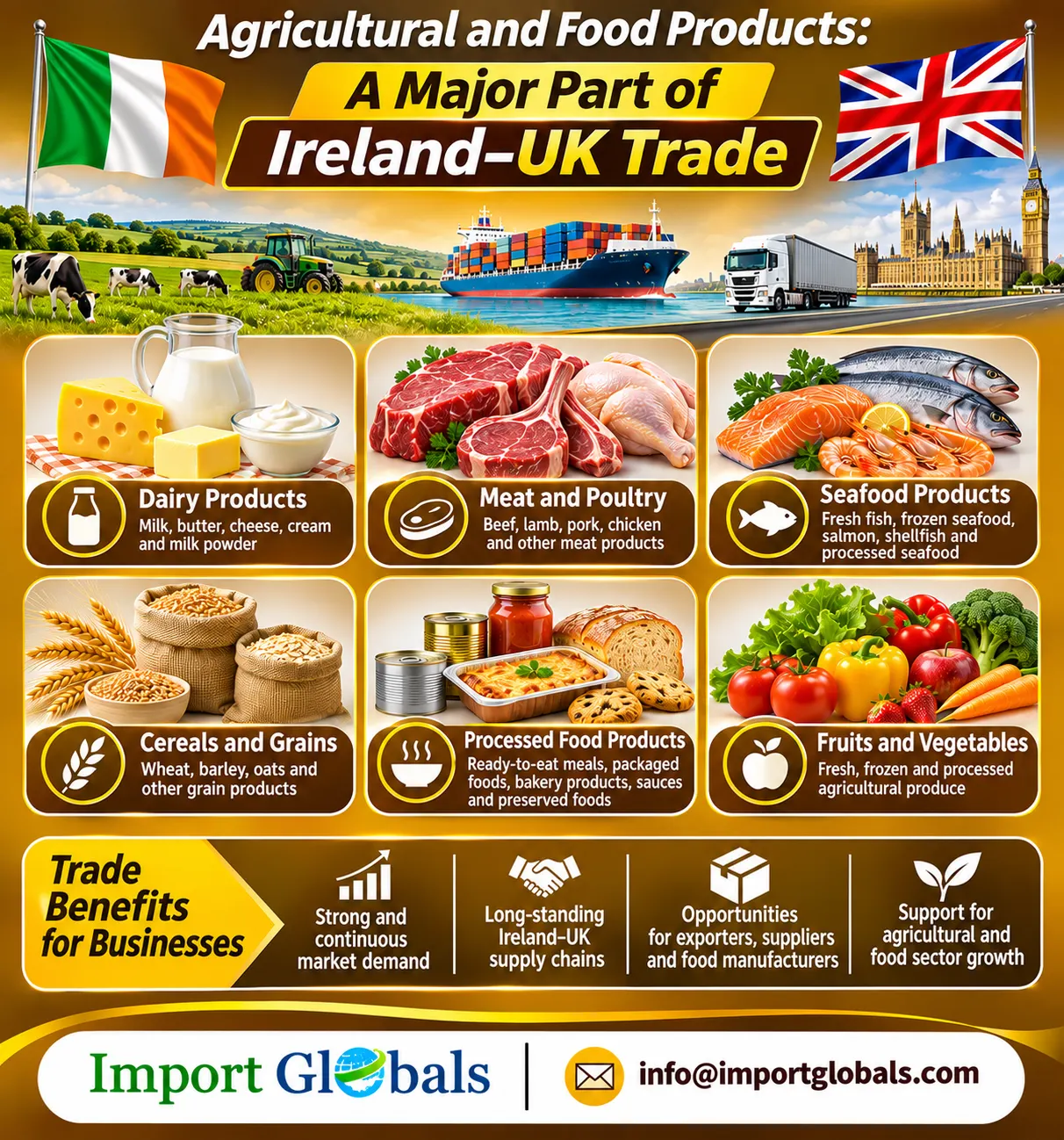
Agricultural and food products are among the goods traded between Ireland and the United Kingdom. Ireland and the UK have efficient food supply chains, due to geographic proximity, efficient distribution channels and demand. There are business opportunities for UK farmers, food processors, exporters, wholesalers and distributors in a wide range of Irish agricultural commodities and food products.
Major Agricultural and Food Products Traded Between Ireland and the UK
The following product categories contribute to bilateral agricultural and food trade:
Dairy Products: Milk, butter, cheese, cream and milk powder are major food products used in the retail and food processing sectors.
Meat and Poultry: Beef, lamb, pork, chicken and other meats satisfy the needs of supermarkets, restaurants and food distributors.
Seafood Products: Fish, frozen fish, salmon, shellfish and processed fish are covered in wholesale and retail.
Cereals and Grains: Wheat, barley, oats, and other grains are significant food products and animal feeds.
Processed Food Products: The following food products help promote cross-border trade – ready-to-eat meals, packaged foods, bakery products, sauces, and preserved foods.
Fruits and Vegetables: Super markets and food service enterprises are supplied with fresh, frozen and processed agricultural products.
Understanding Agricultural Trade Through Ireland Trade Statistics
Ireland Trade Statistics can be used by businesses to identify the trends of export of agricultural products, products’ category, trading partner countries and demand for the products.
Exploring Market Opportunities with UK Customs Data
UK Customs Data would also be useful for the business to identify imported food products, their movement and the source of supply.
Pharmaceuticals and Medical Products: Growing Cross-Border Trade Opportunities
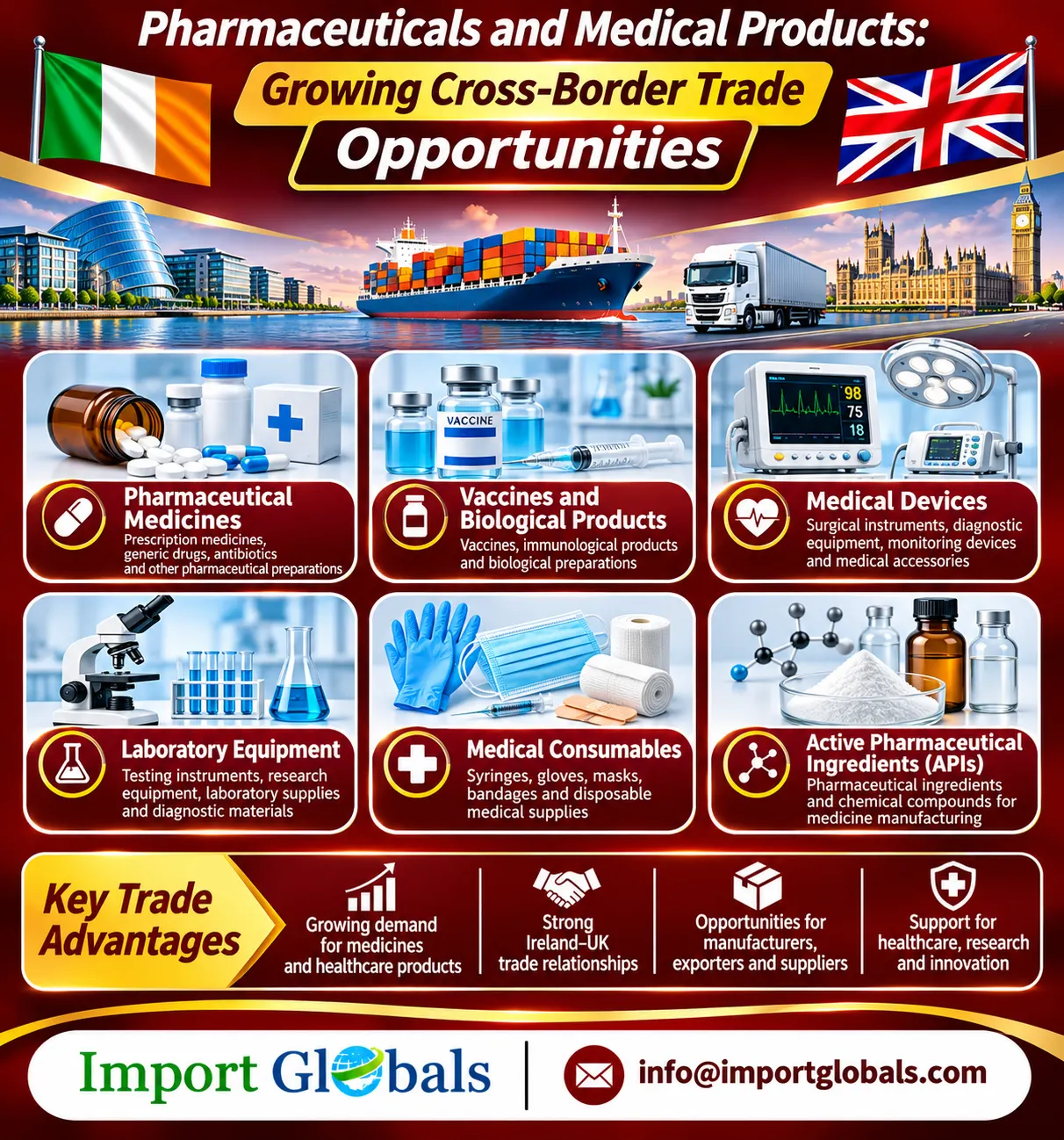
The Pharmaceutical Products sector is one of the main sectors for trade between Ireland and the United Kingdom. Both countries have developed health care sectors, pharmaceutical producers, distributors of medical equipment and institutions conducting pharmaceutical research.
Major Pharmaceutical and Medical Products Traded Between Ireland and the UK
The following product categories contribute to cross-border pharmaceutical and healthcare trade:
Pharmaceutical Medicines: The healthcare needs require prescription drugs, generics, antibiotics, and other pharmaceutical products.
Vaccines and Biological Products: Hospitals and other health care institutions require vaccines, immunization and biological products.
Medical Devices: Modern healthcare institutions require instruments for surgery, diagnostics and monitoring, and other medical supplies.
Laboratory Equipment: Laboratory testing, and other research equipment and supplies, are used in pharmaceutical research and development.
Medical Consumables: Syringes, gloves, masks, bandages and other medical disposables are useful to hospitals and healthcare companies.
Active Pharmaceutical Ingredients (APIs): Pharmaceutical raw materials and chemicals for making and producing medicine.
Understanding Market Opportunities Through Ireland Import Export Data
Ireland Import Export Data helps companies to know the flow of pharmaceutical products, trading partners, import/export trends, and international buyers/suppliers of pharmaceutical products.
Exploring UK Pharmaceutical Trade with Market Intelligence
The UK Import Export Data helps companies to analyze the pharmaceutical import, medical products, suppliers and trends across the globe just like the Ireland Import Export Data.
Machinery, Electronics and Industrial Equipment: Strengthening Trade Between Ireland and the UK
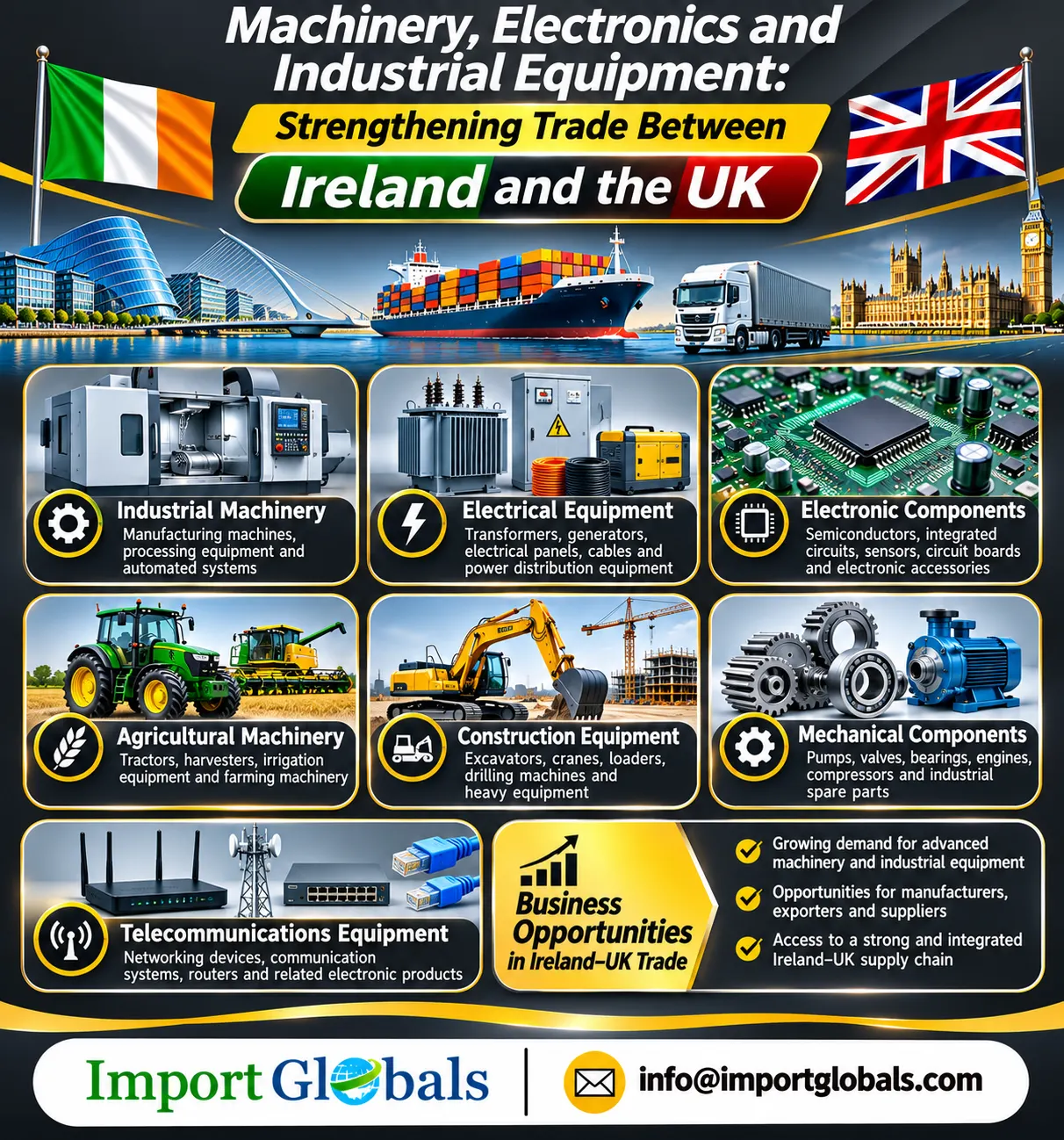
The main categories of trade between Ireland and the UK are machine tools, electronics and industrial machinery. Both countries rely on cross-border supply chains to obtain technological innovations, production machinery, electrical supplies and other specialized equipment. The growing demands of the industries are opportunities for businesses such as manufacturers, exporters, importers, wholesalers and equipment suppliers.
Major Machinery, Electronics and Industrial Products Traded Between Ireland and the UK
The following product categories contribute to industrial trade between the two countries:
Industrial Machinery: Industrial machinery, manufacturing machines, processing machinery and automated machines assist industrial activities.
Electrical Equipment: Transformers, generators, electrical panels, cables and power distribution machines meet industrial and commercial requirements.
Electronic Components: Technology production is aided by semiconductors, integrated circuits, sensors, circuit boards and electronic accessories.
Agricultural Machinery: Agricultural machinery such as tractors, harvesters, irrigation machinery etc. increase the efficiency of agriculture.
Construction Equipment: Construction and heavy machinery includes excavators, cranes, loaders, drilling machines etc.
Mechanical Components: Pumps, valves, bearings, engines, compressors and spare parts for the industry aid in the maintenance and manufacture of equipment.
Telecommunications Equipment: Digital infrastructure is made up of networking equipment, communication systems, routers and other electronic products.
Business Opportunities in Ireland–UK Industrial Trade
The requirement for sophisticated machinery, automation equipment and electronics provide opportunities for overseas vendors to serve their industrial customers. Companies can use trade intelligence to understand demand in markets, identify potential buyers and evaluate sourcing options.
Chemical Products, Plastics and Fuel: Understanding Essential Trade Categories
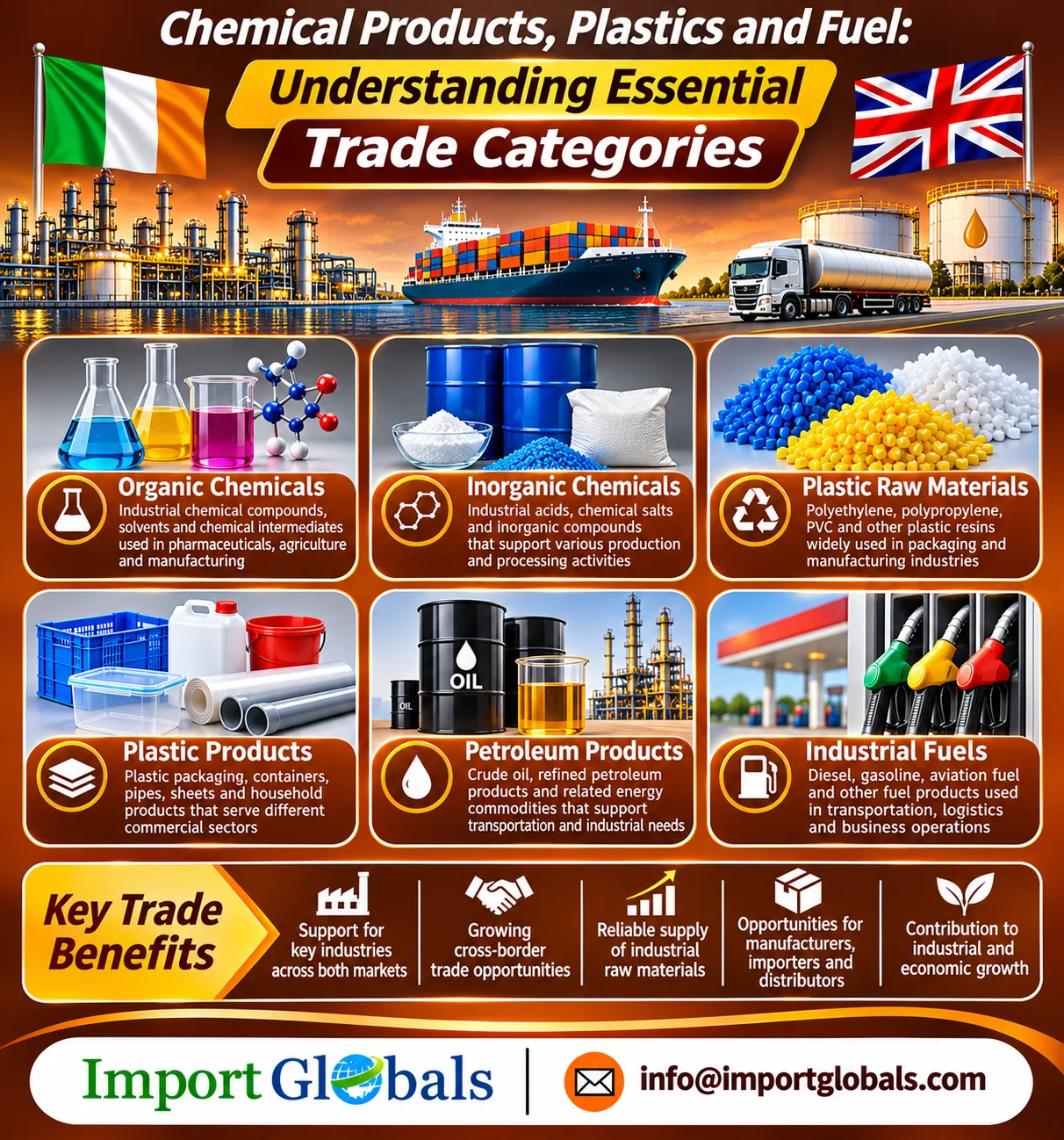
Some of the major products traded between Ireland and UK are Chemical products, plastic and fuels. Both countries depend on the international movement of goods to receive industrial raw materials, chemicals, plastics and petroleum products needed to maintain the production processes, constructions and satisfy their business needs.
Major Chemical Products, Plastics and Fuel Traded Between Ireland and the UK
The following product categories contribute to bilateral trade:
Organic Chemicals: Industrial chemicals, solvents and chemical intermediates are extensively used in pharmaceutical, agricultural and manufacturing industries.
Inorganic Chemicals: Acids, chemical salts and inorganic chemicals are used in a variety of production and processing phases.
Plastic Raw Materials: Polyethylene, polypropylene, PVC and other plastic resins are the most used plastic products in the manufacturing and packaging industries.
Plastic Products: Plastics are used in a wide variety of commercial applications such as packaging, containers, pipes, films, household items and industrial components.
Petroleum Products: Oil , its derivatives and energy related products help in fulfilling transportation and industrial needs.
Industrial Fuels: The transportation and logistics industry run on fuels like diesel, gasoline, jet fuel, and others.
Business Opportunities in Chemical and Energy Trade
Increasing demand in industry is opening new opportunities for chemical producers, plastics manufacturers, fuel companies and international traders. Knowing the product and the source of demand, companies can find their possible business partners.
Brexit and Its Impact on Ireland–UK Import Export Regulations and Customs Procedures
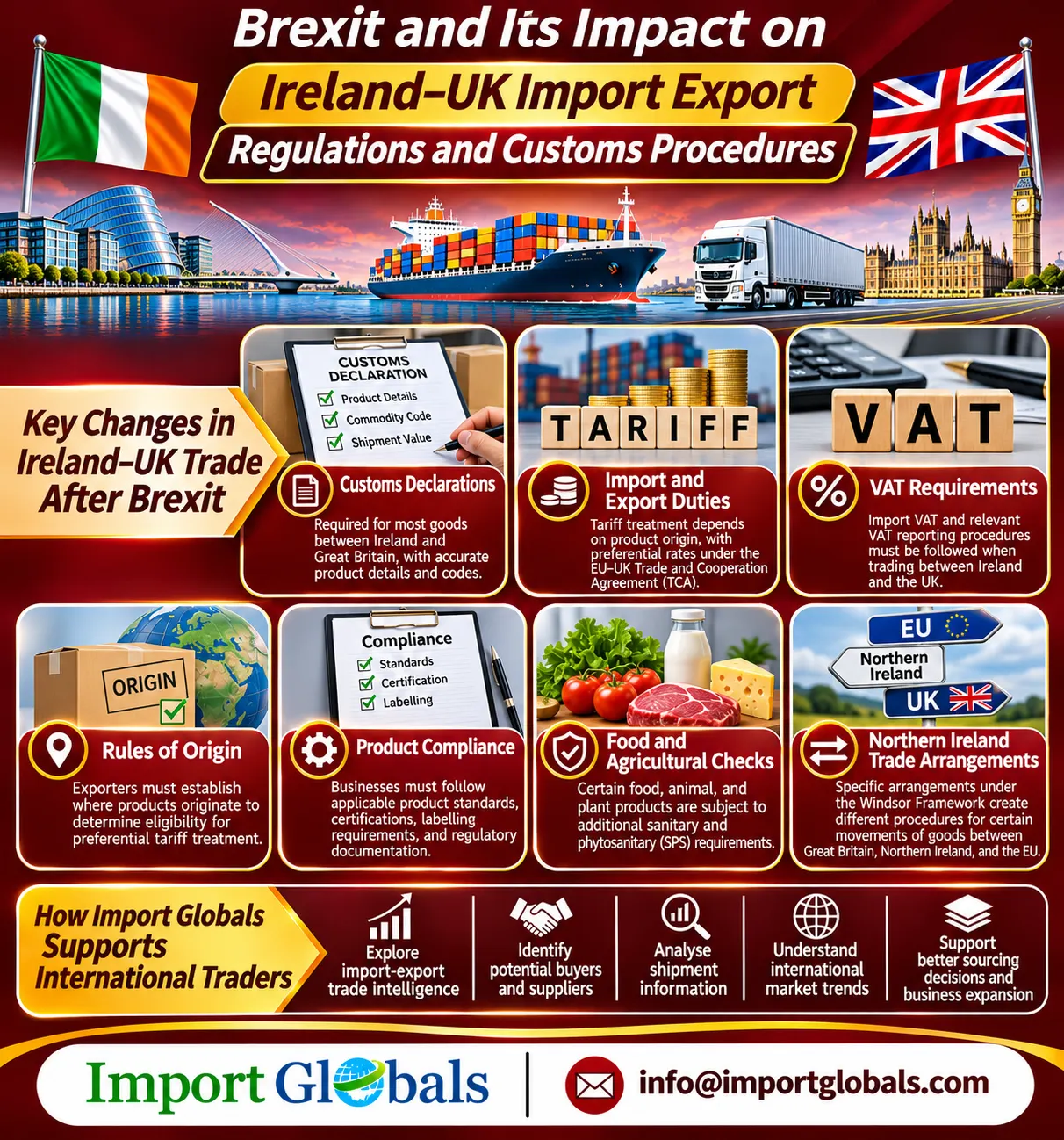
The United Kingdom’s exit from the European Union has had a major impact on the trading relationship between Ireland and the United Kingdom, with new customs, regulatory and documentation procedures required for operations across the border. Both the markets have strong trading links but traders need to know the difference between the rules of trading in both the markets so as to carry out their business without any hassles.
Major Changes in Ireland–UK Trade After Brexit
Customs Declarations: Most traders who deal with goods traded between Ireland and Great Britain need customs declarations with accurate information on the goods, their commodity codes and the value of the shipment.
Import and Export Duties: The tariffs will apply depending on the origin of the goods and whether there is a trade agreement in place between the two countries.
VAT Requirements: Import VAT will be due when the goods are moved from one market to another and must be properly declared to the VAT office.
Rules of Origin: Goods must be classified to determine if they qualify for preferential tariff treatment.
Product Compliance: All organizations should know the standards that apply to them regarding products, certification, labeling and documentation.
Food and Agricultural Checks: Some food, animal and plant products are subject to additional sanitary and phytosanitary conditions.
Understanding Northern Ireland Trade Arrangements
The Windsor Framework makes special provisions for Northern Ireland after Brexit, to allow different procedures for certain movements of goods.
How Import Export Trade Data Helps Identify Irish and UK Buyers, Suppliers and Market Opportunities
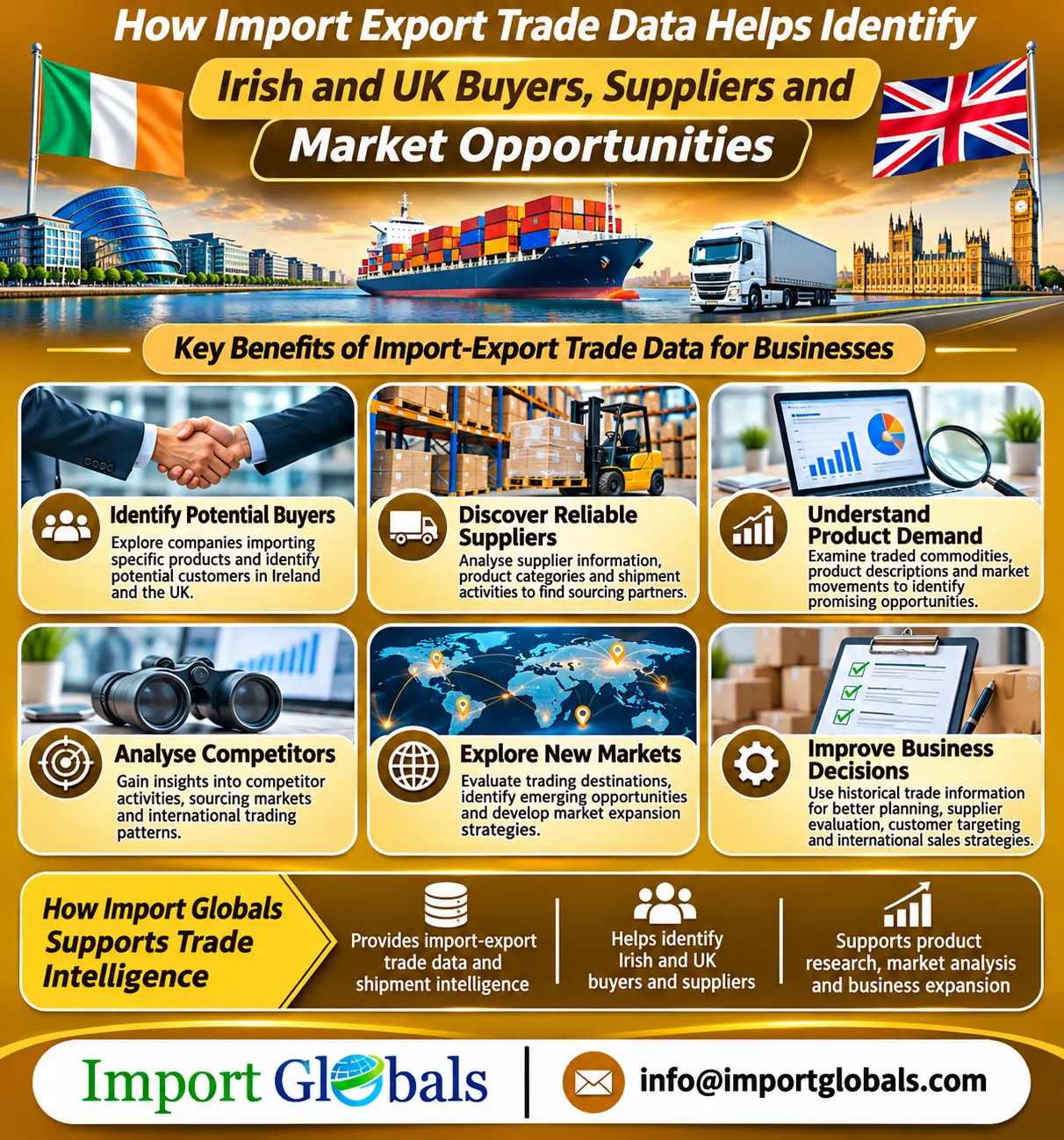
Companies use import/export trade records to help them find new customers, sources and profitable international markets. Ireland and the United Kingdom have strong links in the form of trading activities in various sectors including foods and beverages, pharmaceuticals, machinery, electronics, chemicals and industrial machinery.
Key Benefits of Import-Export Trade Data for Businesses
Identify Potential Buyers: Trade intelligence helps companies understand what is in demand in the market and how to make business decisions.
Discover Reliable Suppliers: The trading records help exporters to research on companies importing certain goods and know their buying behavior and customer base in the two nations.
Understand Product Demand: The importers use the supplier information, product type, shipping activities and trading patterns to identify potential sourcing organizations.
Analyse Competitors: Trade intelligence helps to know about the competitor, his operations, sources of material and international trade trends.
Explore New Markets: Shipments intelligence allows firms to analyze where they are trading, discover opportunities and develop strategies for expansion into new markets.
Improve Business Decisions: The trade data history can be useful in planning and analyzing the same so as to get good suppliers and customers.
How Import Globals Supports Trade Intelligence
Import Globals offers import export trade intelligence and shipment intelligence helping you explore the Irish and UK trading markets. Import Globals is a trade intelligence company that assists you in finding buyers, suppliers, products and foreign markets.
The availability of good trade intelligence enables manufacturers, exporters, importers, wholesalers and distributors to establish good business relations.
Future of Ireland–UK Trade: Emerging Products, Market Trends and Business Opportunities in 2026 and Beyond
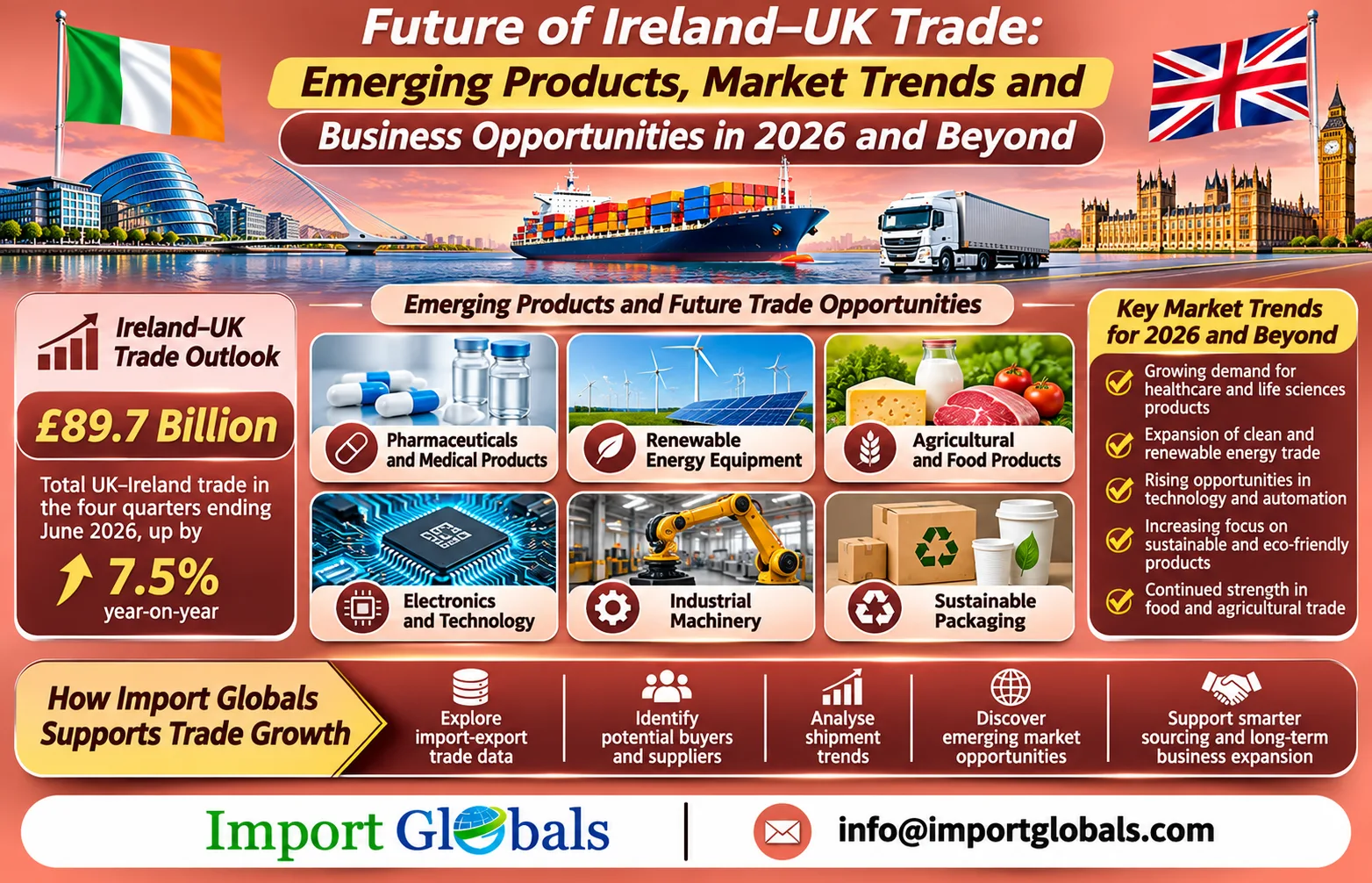
Ireland and the UK have maintained a strong trading relationship, opening opportunities for exporters, importers, manufacturers and suppliers. Changing consumer demands, technological advancements, sustainability efforts and the development of supply chains will be among the many factors that will impact bilateral trade between the two countries in 2026 and beyond. Companies will be able to invent new types of products.
Emerging Products and Future Trade Opportunities
The following sectors offer promising areas for future Ireland–UK trade:
Pharmaceuticals and Medical Products: Demand for healthcare services is an opportunity for medicines, vaccines, medical devices and pharmaceutical ingredients.
Renewable Energy Equipment: Sustainable energy sources are solar panels, wind turbines, batteries and energy storage solutions.
Agricultural and Food Products: Dairy products, meat, fish, processed food and products from organic agriculture are important areas of trade.
Electronics and Technology: The computer hardware, semiconductors, telecommunication equipment and electronics make digitalization possible.
Industrial Machinery: For Industries there are many ways for opportunities in Automation systems, machinery and manufacturing equipment.
Sustainable Packaging: Companies are more and more worried about recyclable plastics, biodegradable materials and green packaging.
Market Trends and Business Opportunities in 2026 and Beyond
These trade figures are recent proof of the truth of this relationship. Total trade in goods and services between the UK and Ireland was £89.7 billion in the four quarters to June 2026, an increase of 7.5% on the year.
Conclusion
Ireland and the UK have strong business ties in a number of sectors including Pharmaceuticals, agricultural produce, food & beverages, machinery, electronics, chemicals, plastics and fuel amongst others. The above product categories offer business opportunities for importers, exporters, manufacturers and international suppliers. Knowledge of changing market demands, trading trends and cross border trade regulations will help businesses make sound decisions. Import Globals helps companies engaged in import export trade with information and shipment intelligence to find prospective customers and trusted suppliers.
CTA
Explore the UK – Ireland Market Business Opportunities with Import Globals! Obtain reliable trade data on imports and exports to discover buyers, suppliers and market trends. Expand your business globally with Import Globals. For more information please visit www.importglobals.com or email us at [email protected].
FAQ’s
Que. Identify key traded goods between Republic of Ireland and the UK.
Ans. Key commodities include pharmaceuticals; food products; beverages; machinery; electronics; chemicals; plastics; fuels and agricultural products.
Que. What are the main exports of Ireland to the UK?
Ans. Ireland exports medicines, dairy products, meat, sea foods, chemicals, machinery and processed food products to UK.
Que. What goods does Ireland import from the UK?
Ans. Ireland imports from UK petroleum products, machinery, vehicles, food products, medicines, electric equipment and industrial components.
Que. What has been the impact of Brexit on Ireland-UK import and export trade?
Ans. Most of the goods that move between Ireland and Great Britain are now subject to increased customs declaration and other formalities as a consequence of Brexit.
Que. Name the sectors which can provide successful trade opportunities between Ireland and the UK?
Ans. Sectors such as pharmaceuticals, agriculture, food processing, renewable energy, electronics and industrial machinery hold potential.
Que. How do companies identify buyers from Ireland and UK?
Ans. Companies may utilize import-export trade data, shipments and buyer intelligence to identify buyers and understand their purchasing patterns.
Que. Why is Ireland-UK import export trade data important?
Ans. Trade data will allow companies to assess product demand, identify suppliers and competitors and find new opportunities in international markets.
Que. How can Import Globals help companies explore Ireland-UK trade?
Ans. Import Globals provides import-export trade data and shipment information to help companies find buyers and suppliers.
Que. How frequently is the UK and Ireland Import Export Data updated?
Ans. UK and Ireland Import Export Data is updated on a monthly basis.
Que. Where can you obtain detailed information on Ireland–UK import-export trade data?
Ans. Visit www.importglobals.com or drop an email at [email protected] for detailed information on Ireland–UK import-export trade data.
You Can Also Visit :-
