
US – Canada Trade War 2026: How Are Tariffs Changing Imports & Exports?
- Sep 30, 2026
- 1,061 Views
US – Canada Trade War 2026: How Are Tariffs Changing Imports & Exports?
US-Canada trade war has reached a new stage in 2026, mainly because of the new tariffs, counter-tariffs, import limits, and the future predictions regarding the relationship, backed up by the productivity and the export activity of both the regions.
The escalation of the tariff rates implemented and the effect on the import and export of both the economies has decided to introduce a 50% tariff on various Canadian goods by the U.S. government, as reported by the US Trade Data. Canada also announced counter-tariffs for selected products from the U.S. starting in September.
Besides tariffs, the present trade conflict has great importance, says Canada Shipments Data. The U.S. and Canada have intricately connected supply systems in various sectors of the economy such as metallurgy, energy, machinery, transportation, and consumer goods. Hence, any change in tariffs will have a significant impact on the statistics of imports and exports. In 2025 the trade in goods between the U.S. and Canada reached $715.5 billion, which includes $333.6 billion that belong to U.S. export and $381.9 billion that belong to U.S. import.
The Trade War Between Canada and the USA - What Is Different in 2026?
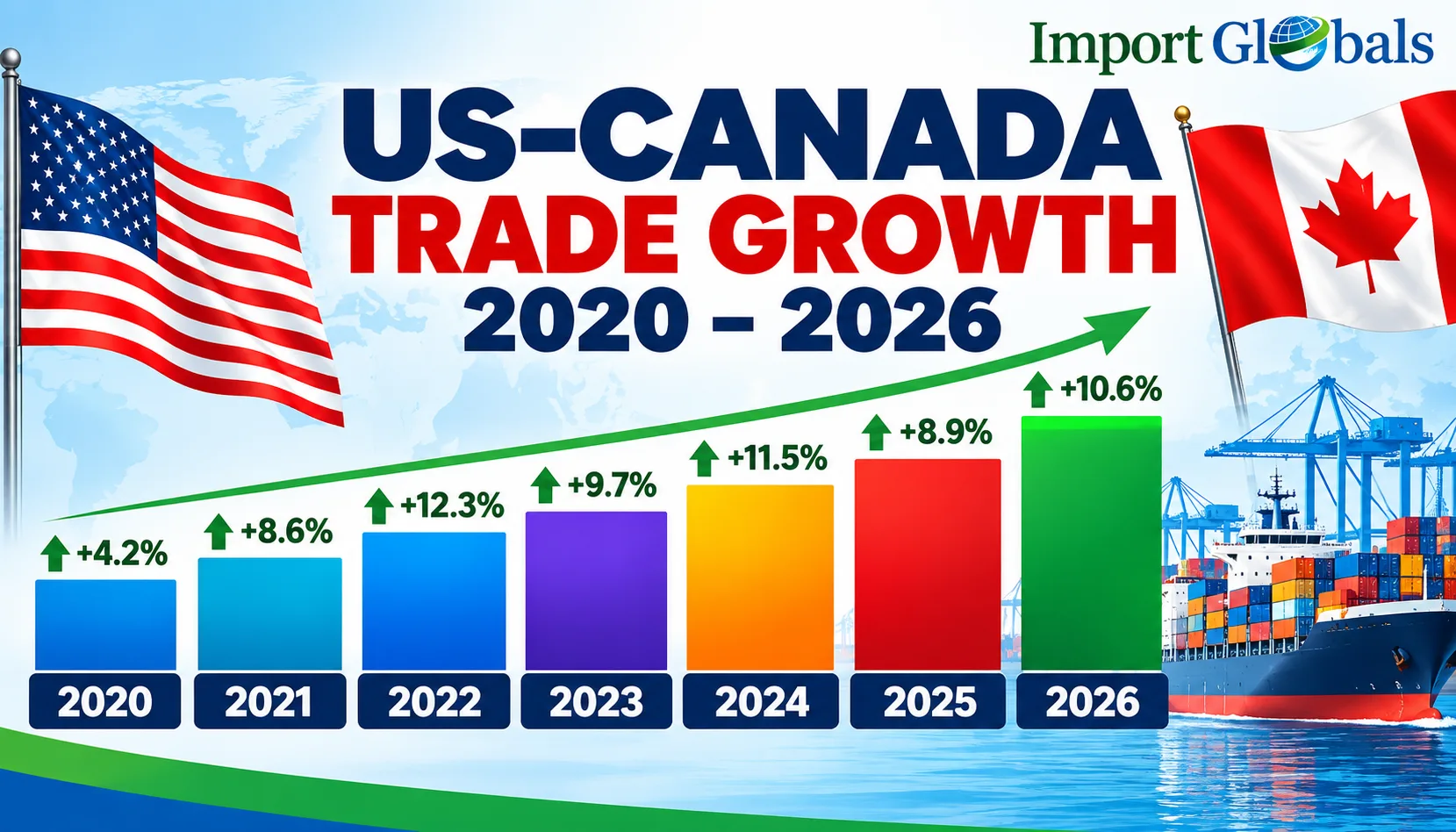
Unlike in all previous instances, the recent US-Canadian conflict took place through different rounds of introduction of tariff measures rather than by a single announcement about tariffs being introduced.
In July 2026, the US administration declared its intention to introduce tariffs of 50% on many Canadian goods. According to the Canada Customs Data, this decision followed the earlier introduction of tariffs by the USA in many major sectors, including the automobile industry.
After that, by the law IV. Section 338, in August 2026 tariffs were imposed on nearly $20 billion worth of Canadian goods. Canada has introduced countermeasures and has set tariffs on $20 billion worth of American products, which came into force on September 8.
These measures cover the following groups of goods:
- Steel and aluminium
- Dairy products
- Appliances
- Agricultural equipment
- Pulp and paper
- Plastics
- Electronics
- Other manufactured goods
The country still imposes earlier tariffs on US automobiles. On September 29, the conflict got even worse due to the US ban on imports, including certain types of Canadian alcoholic beverages, motorcycles, and dairy products.
Now, it has become evident that every business needs to measure not only what it sells, but also how tariffs are affecting the US – Canada bilateral trade of 2025, says US Trade Statistics.
Top Tariffs Affecting US–Canada Trade in 2026
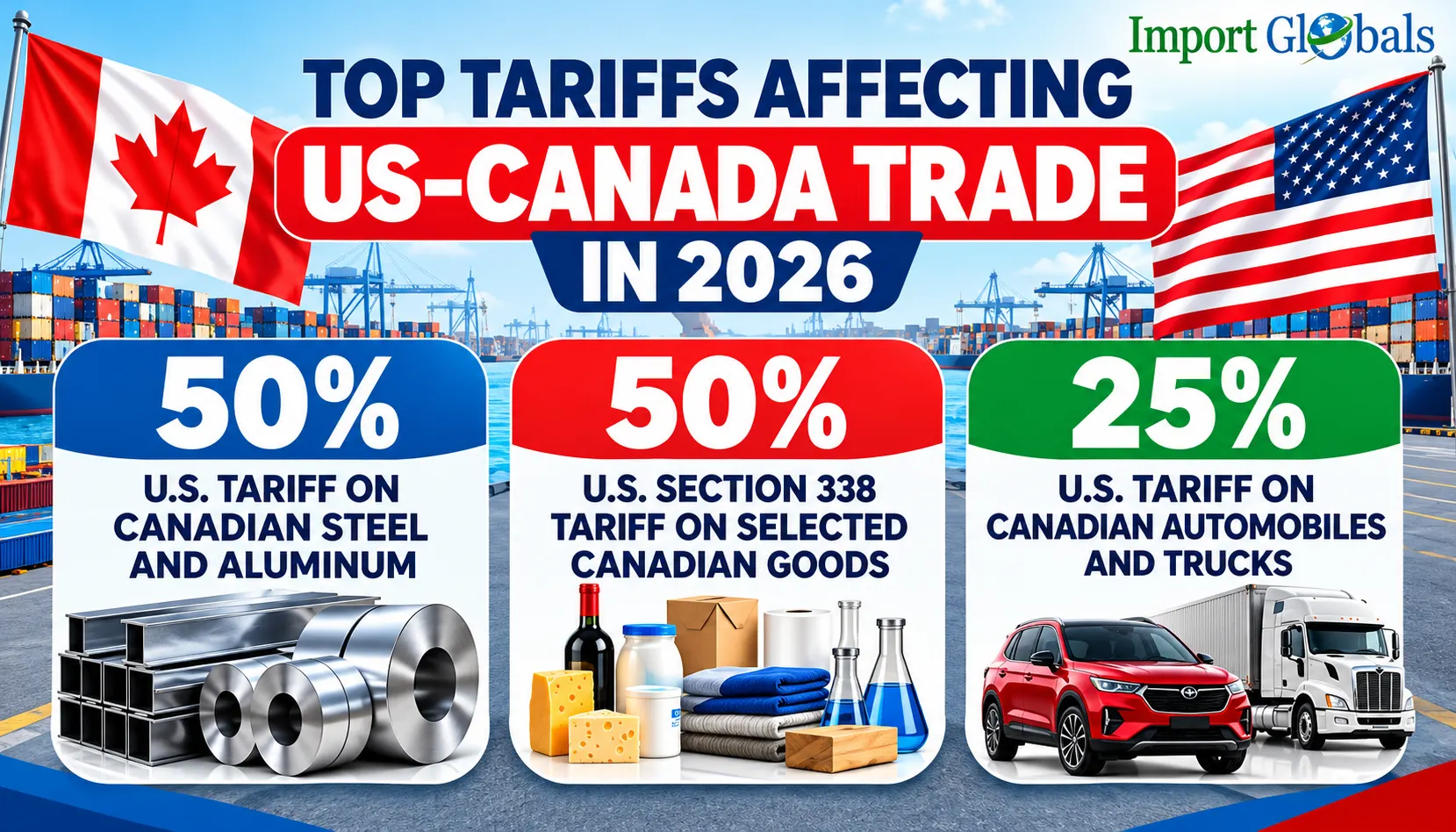
1. 50% U.S. Tariff on Canadian Steel and Aluminum
The United States imposes tariffs ranging from 15% to 50% on imports from Canada concerning the Canadian Steel and Aluminum industries. Steel and aluminum products have been hit hard by these tariffs. Canada has reported that the country is facing 50% tariffs on steel and aluminum.
The reciprocation of the extended trade by both the economies has been mainly based on the primary metals because different types of steel and aluminum manufacturers are mainly reliant on production of automobile and car parts, building machinery, white goods, machinery used in the industry, and aircraft parts.
Canada Shipment Trade Data have reported that the country has imposed counter tariffs against the U.S. for making steel imports from the U.S. more expensive, basically on Canadian soil. The implemented tariff measures are basically 50% tariffs on a number of U.S. steel products.
2. 50% U.S. Section 338 Tariff on Selected Canadian Goods
The United States, in response to the Canadian trade measurements, has introduced 50% tariff on certain Canadian products under the Section 338, which has been in effect from the 22nd of August 2026, says US Import Customs Data.
In the United States, a 50% tariff on certain Canadian products, as applied under Section 338, has been imposed, effective from the 22nd of August, 2026. The value of Canadian goods subject to the tariff in excess of 500 product categories stands at around US$27.6 billion.
The categories of products involved include:
- Alcohol
- Dairy products
- Wood products
- Paper
- Textiles
- Chemicals
- Machines
- Tools
What's worth mentioning is that some items are liable to apply Section 338 even if different preferences can apply to them within the CUSMA/USMCA scheme. This will have major implications for those international businesses that have relied on such advantages of North American commerce.
3. 25% U.S. Tariff on Canadian Automobiles and Trucks
The Finance Department of Canada states that the 25% U.S. tax on cars and trucks exported from Canada is one of the most significant tolls on Canadian products. The impact of the U.S. toll was more than just the burden on the imported vehicles since automotive production in North America is tremendously connected, reported US Export Data.
The firms that fall under the toll include:
- Manufacturers;
- Suppliers of cars;
- Producers of steel;
- Producers of aluminum;
- Suppliers of electronics;
- Companies dealing with logistics;
- Dealers.
From the given examples, it is clear that the automotive toll affects the number of vehicles as well as the flow of parts. Another important point is the future situation regarding the U.S administration's warning about the 50 percent toll on Canadian cars and parts starting from January 1, 2027, says US Customs Shipment Data.
Why United States Import Data Is Affected by Tariffs?
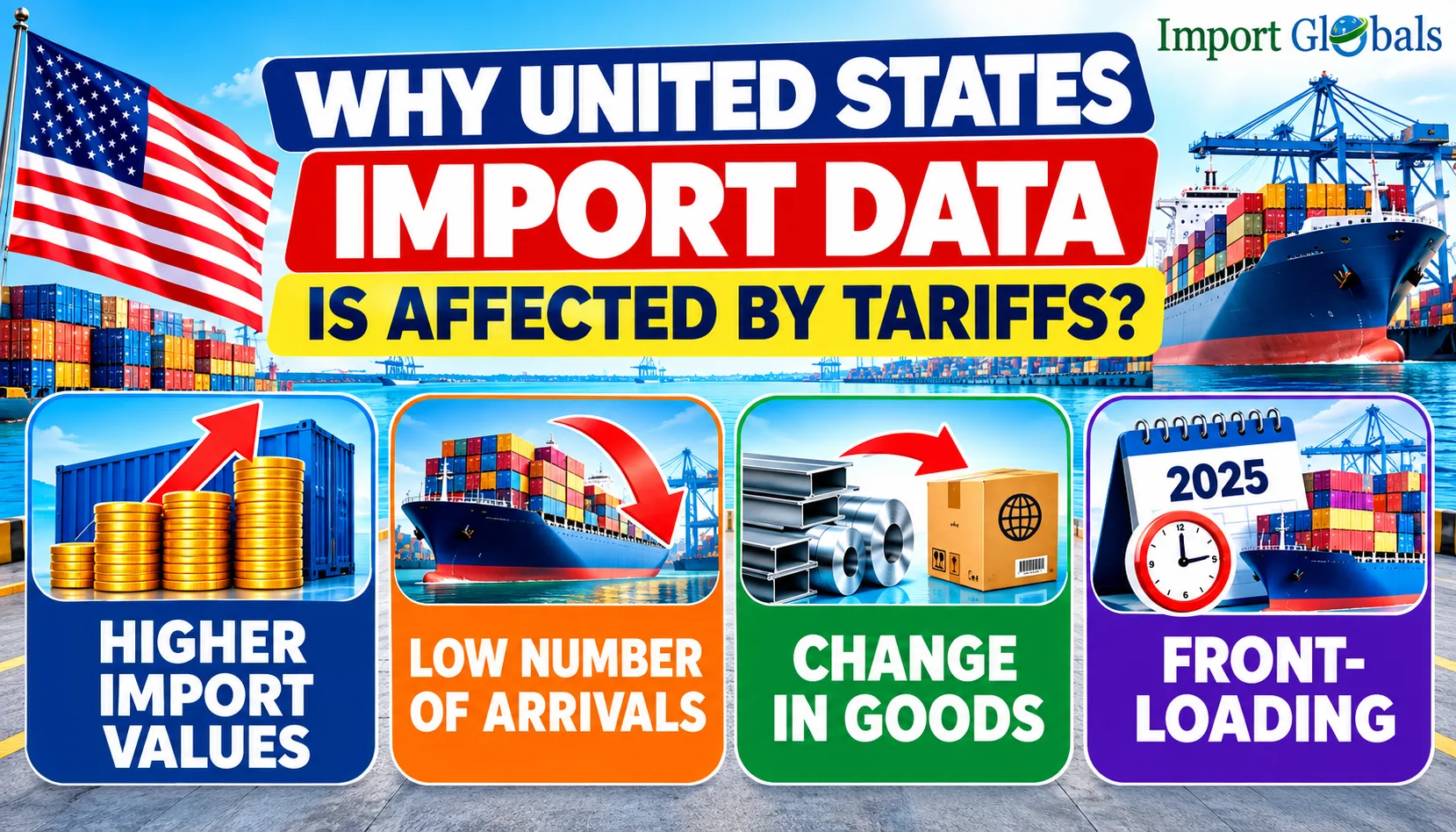
Tariffs have a significant effect on U.S. Import Statistics, despite the real consumer demand remaining stable. In the case of high tariff rates imposed on goods imported from Canada, the results may be as follows.
Higher Import Values
All imported goods have a high custom, even if the number of arrivals is low. The price rises can partly compensate for the fall in the number of arrivals so that the values increase, while the volumes decrease, says Canada Import Export Data.
Low Number of Arrivals
Any producer may stop buying from Canada, because any tariff will make Canadian products lose the competition with Mexican and European products as well as products from Asia and America.
Change in Goods
Importers may change the HS code or category of goods imported depending on the duties imposed.
For Example,
Canadian steel is replaced with steel imported from some other supplier. U.S. customers may find the needed machinery in another place.
Front-Loading
In its 2025 trade pattern, Canada has already witnessed this phenomenon. As reported by the Canada Trade Statistics, uncertainty in US tariffs led US companies to begin importing much sooner than usual in anticipation of upcoming tariff hikes. As a result, monthly US Import Customs Data can become especially relevant at times of changing tariffs.
Impacts on Canadian Export Statistics
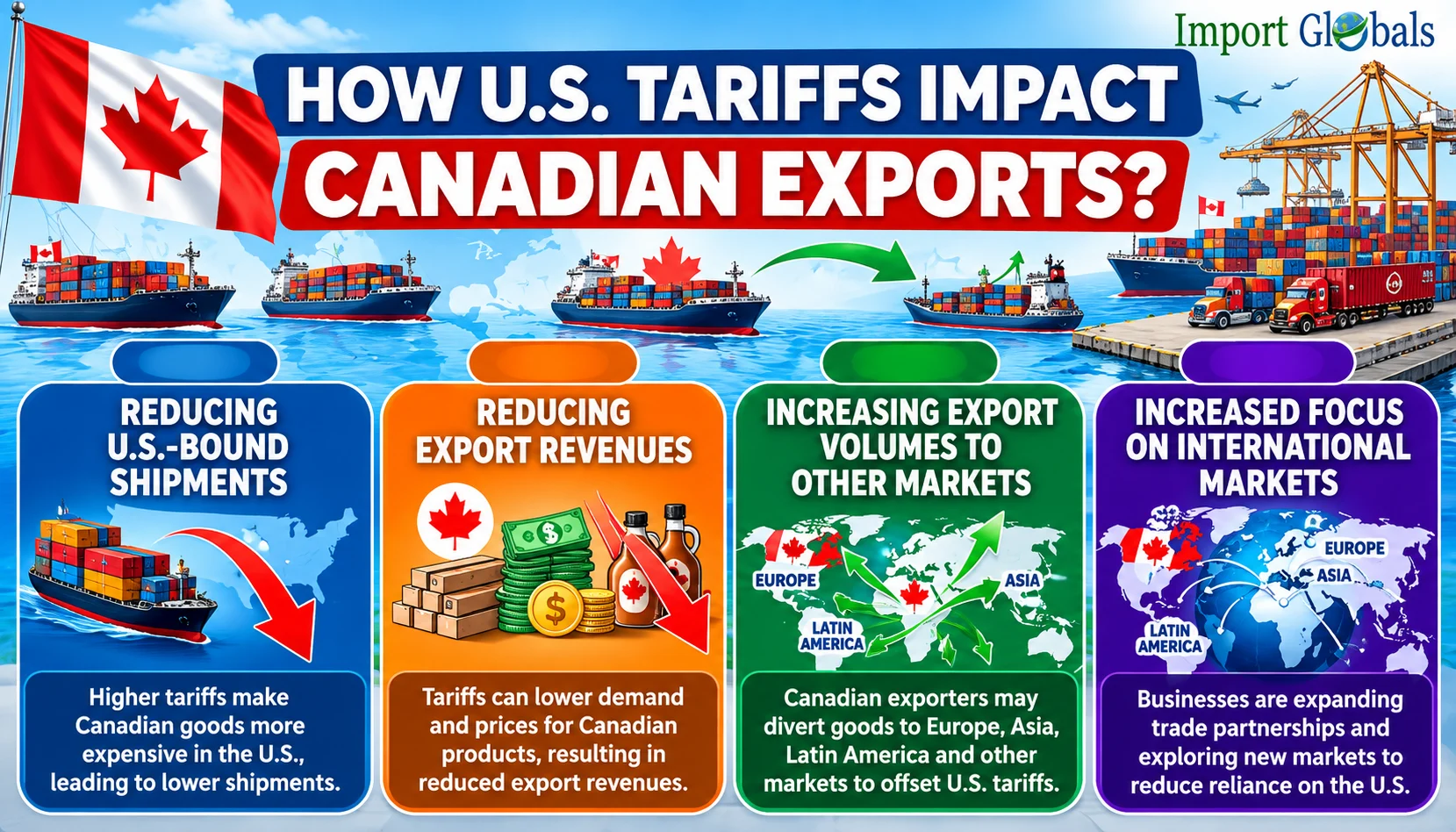
Canadian exporters are undergoing similar transformations on this side of the border. The United States continues to be Canada’s major export market. In 2025, nearly 72.5% of Canadian exports were shipped to the United States, although this was down from 76.3% in 2024.
The concentration creates a situation whereby changes in U.S. tariff regulations impact Canadian exporters directly, reported Canada Import Customs Data. Some of the most important changes visible in Canadian export records include the following:
Reducing U.S.-Bound Shipments
Due to steep tariffs imposed by the U.S., US Import Data says that shipments of goods would decrease in number as U.S. importers seek alternatives.
Reducing Revenues from Exports
In order to retain U.S. customers, exporters could lower prices, thus dragging down their exports even in situations where the shipping quantity remained largely unchanged.
Increase in Exported Volumes to other Markets
Canadian exporters might increase shipments to Europe, Asia, Latin America, and so on. The trend has already been apparent as early as 2025, with Canadian merchandise exports to the U.S. dropping by 5.3%, and exports to Europe and Central Asia rising by 30%.
Increased Focus On International Markets
For Canadian exporters; as per the Canada Shipment Customs Data; markets outside North America need to become more important if they want to avoid relying on just one destination. As a result, using Canada Export Data can be useful in discovering new markets for Canadian products.
Changes in Import and Export Practices by Companies
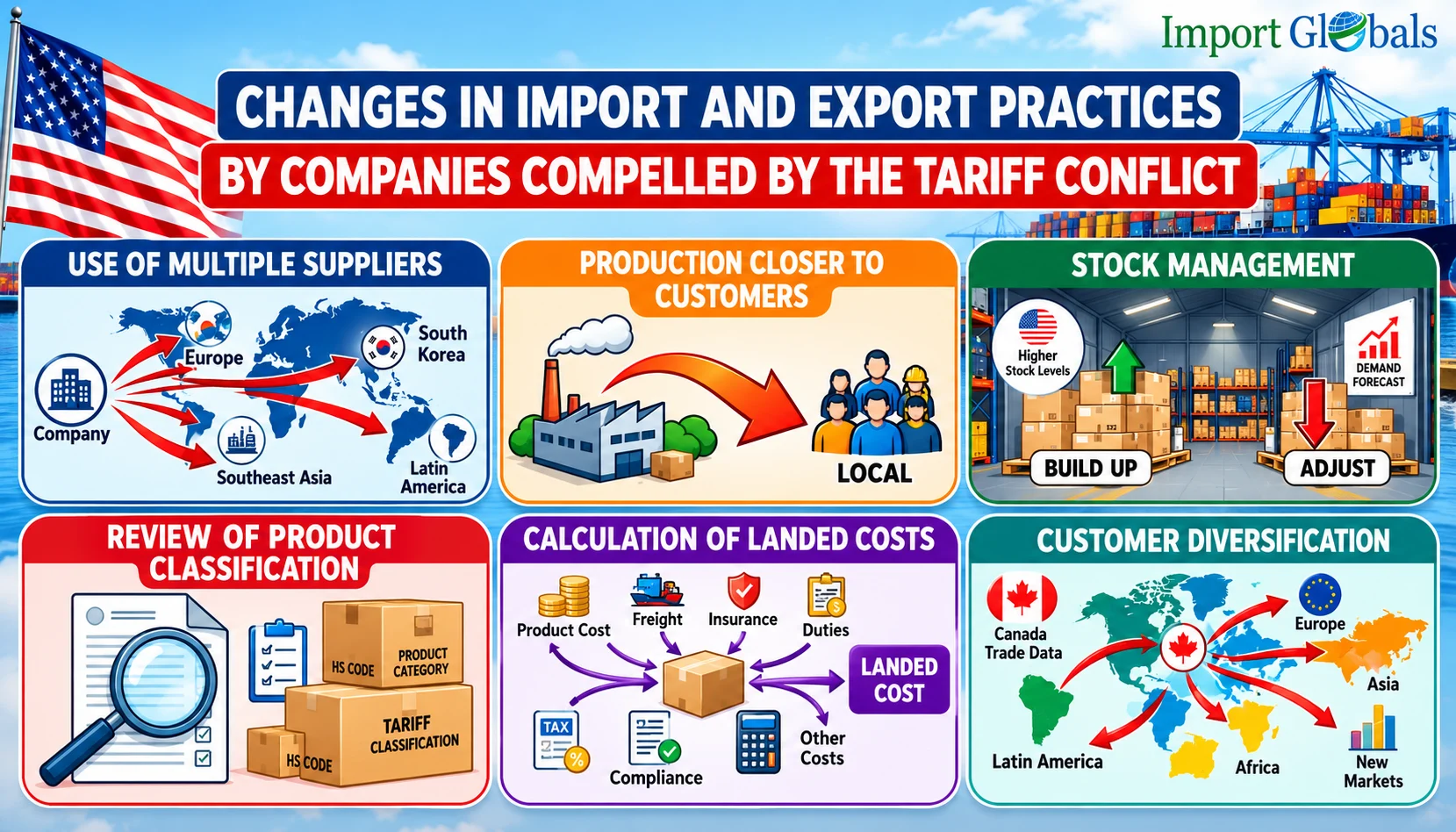
The tariff conflict is compelling businesses to rethink their customary sourcing methods in North America.
Use of Multiple Suppliers
Companies are likely to employ different suppliers from:
- Mexico
- Europe
- Japan
- South Korea
- Southeast Asia
- Latin America
Their goal is to reduce their dependence on any one country and the tariffs that country imposes.
Manufacturing in Close Proximity to Customers
Some manufacturers might think of shifting production to be closer to where the largest customer base is.
Stock Management
Businesses are likely to build up their stock levels before the tariffs are implemented in great volume and reduce their stock levels as demand becomes uncertain, says US Import Shipments Data.
Review of Product Classification
Companies are now taking notice of the HS codes they are using for their products, since two similar products may be taxed differently.
Calculation of Landed Costs
Just knowing the price of the product is no longer enough for businesses. Companies also need to take into account:
Product Cost + Freight + Insurance + Duties + Taxes + Compliance Costs = Landed Cost.
Customer Diversification
Canadian businesses that depend a lot on U.S. customers are likely to look for customers in Europe, Asia, Africa, and Latin America, as per Canada Trade Customs Data.
Future Prospects: How Trade Data Will Influence the Year 2026 and Beyond?

The future of the economic relationship between The United States and Canada will rely significantly on matters like tariffs negotiations, exemptions, retaliations, supply-chain shifts, and the handling of highly consolidated North American markets, as per Canada Import Data.
Although tariff policies are likely to continue evolving, it is expected that their short-term consequences will be easy to see through changes in shipment volumes, customs values, prices of products, shares of various suppliers, and markets of destination. Nonetheless, long-term effects may also have stronger implications for how businesses carry out product sourcing, choose suppliers, control inventories, and develop foreign markets.
Arguably, one of the most significant trends can be supply chain diversification, reported US Shipments Trade Data. Producers and importers that relied heavily on the United States or Canada may start building connections with suppliers from other countries in order to mitigate their risks of feeling the effects of tariffs and changes in policy. Companies may be increasingly looking for opportunities to source goods in such countries as Mexico, Europe, and Asia, leading to gradual changes in the structure of imports and exports from North America and creating new relationships with new suppliers.
Conclusion
The trade links between the United States and Canada represent one of the leading and competitive trade system implementations, but 2026 has brought many uncertainties regarding tariffs. The tariffs imposed by the United States in the amount of 50% on certain types of Canadian goods, Canada's actions in response to that, and customs regulation measures undertaken have led to the increase of costs and uncertainty for the companies from both countries.
The impact of these actions is already visible in the changing situation in the automotive market and the increasing trade activity of Canadian companies with the external markets other than the US.
Thus, the most problematic for all stakeholders among importers, exporters, producers, and traders is not the mere acknowledgement of tariffs, but the dynamics of their implementation. It means that the monitoring of the buyers and suppliers, HS codes, shipment value and product volume, ports, and end market is crucial for international trade participants, says US Trade Data.
Import Globals can assist in this process via access to global trade intelligence data on importers, exporters, suppliers, buyers, shipment patterns, etc.
CTA
Looking for the latest market insights on the US and Canada trade conflict of 2026? You have come to the right platform. Import Globals provides businesses looking for the latest insights with detailed acknowledgement of the tariff rates affecting industrial growth within both economies. Subscribe to www.importglobals.com or drop an email at info@importglobals.com for detailed updates on the US-Canada trade conflict of 2026 to drive your international business growth.
FAQ’s
Que. What is the US-Canada trade war of 2026?
Ans. The US-Canada trade war of 2026 is a proper representation of the series of tariffs, counter-tariffs, and the import restrictions implemented by the government authorities, which holds a greater impact on the movability of goods between the two countries.
Que. Name the major tariffs affecting the US-Canada trade in 2026.
Ans. US tariffs on Canadian steel and aluminum, additional tariffs on selected Canadian goods, and tariffs affecting Canadian automobiles and trucks are some of the major tariffs affecting the US-Canada trade in 2026.
Que. How are the tariffs affecting the US-Canada import export data?
Ans. The tariffs are basically influencing the shipment volumes, customs values, and product prices in US-Canada trade.
Que. Name the industries affected the most by the US-Canada tariffs.
Ans. Automotive, steel, aluminum, and manufacturing are the top industries affected by the US-Canada trade instability due to tariffs.
Que. Is the automotive sector sensitive to tariffs between the US and Canada?
Ans. Yes, the automotive sector is quite sensitive to the US-Canada tariffs because of the highly integrated supply chains. The components and materials are having a reliable access to cross the border several times during manufacturing.
Que. How the businesses can identify the alternative suppliers amidst the trade conflict between US and Canada?
Ans. Businesses can analyse the import and export data with acknowledgement of product HS code, supplier country, buyer shipment, port and trade valuation.
Que. How do US and Canada import-export data support business growth?
Ans. US and Canada import-export data support business growth via proper identification of buyers, suppliers, analysis of market demand, and development of effective market expansion strategies.
Que. What information is available in US and Canada trade data?
Ans. US and Canada trade data covers importer names, exporter names, shipment date, HS code, product details, quantity, values, pricing information, origin country, importing country, and port details.
Que. How frequently is the US and Canada trade data updated?
Ans. US and Canada trade data is updated on a monthly basis.
Que. Where can one obtain detailed information on US and Canada trade data?
Ans. Visit www.importglobals.com or drop an email at info@importglobals.com for detailed updates on US and Canada trade data.
You Can Also Visit :-
- US Imports and Exports: Components and Statistics
- USA Import Data 2025: Latest Trade Statistics and Market Insights
- USA economic Data and Trade Analysis
- The Top Five Things That the Us Imports, and the Countries That Do So
- Canada Export of Industrial Machinery in 2025: The Data-driven Trade Statistics Overview
