Bulgaria Import Data

Bulgaria Import Data

Bulgaria, based in south eastern Europe, extending into Romania and North Macedonia in the north and west direction, is one of the influential import economies of the worldwide marketplace. Bulgaria Import Data represented the direct access of the country to the European Union single market under simplified customs procedures as factors maintaining the trade stability. The limited domestic production capacity and the stronger manufacturing collaboration with the latest traders worldwide have maintained the country's resilience over the latest emerging authorities. The proximity to the European Union supply chain centre, with an efficient customs checkpoint, has reduced the trade barriers while facilitating the import ranking.

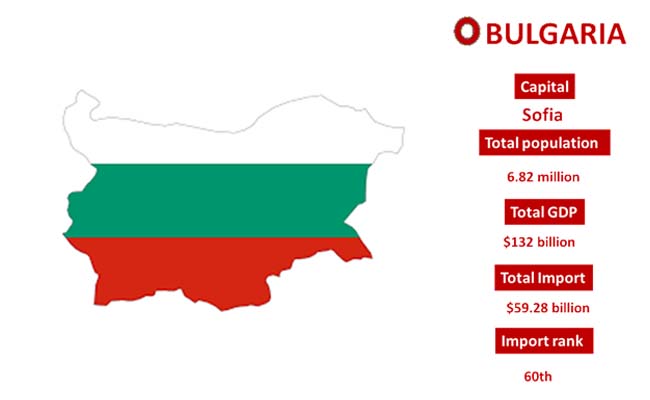
Bulgaria Customs Data listed that the country has recorded a total annual import ranking of 60th on the global scale. The country has recorded a total GDP of 132 billion US dollars with a growth rate of 3.07% from the previous year. The standardized trade regulations and the collaboration of the country with the large single market have benefited trade stability resulting in a total valuation of imports worth 59.28 billion US dollars.
60th

Bulgaria Global Import Data has listed the country as the 60th top importer at present, mainly due to the total consumer demand and the mineral fuels and energy inputs.

0.25

Bulgaria alone accounts for 0.25% of the total world import share due to the small economy size and the European Union integration efficiency.

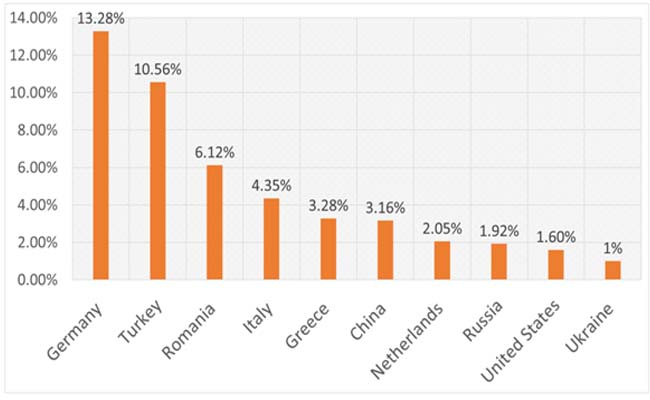
Turkey

Bulgaria mostly imports its domestically demanded essentials from Turkey, mainly due to the effective import of textile machinery parts from the country.

Mineral Fuels

Bulgaria has been heavily importing mineral fuels from foreign resources, backed up by the high energy dependency of the country.


Top 10 Import Products of Bulgaria

As per Bulgaria customs import data, energy, industrial machinery, automobiles, and electronics, essential components of Bulgaria's infrastructure and economy, are the main imports.

  • Mineral fuels, oils & distillation products (HS 27): 12.3% — USD 6.61 B
  • Electrical machinery & equipment (HS 85): 11.0% — USD 5.93 B
  • Machinery, nuclear reactors, boilers (HS 84): 9.9% — USD 5.17 B
  • Vehicles (HS 87): 7.7% — USD 3.61 B
  • Ores, slag & ash (HS 26): 5.5% — USD 2.96 B
  • Pharmaceutical products (HS 30): 4.2% — USD 2.25 B
  • Plastics (HS 39): 4.2% — USD 2.25 B
  • Iron & steel (HS 72): 3.4% — USD 1.69 B
  • Copper (HS 74): 2.4% — USD 1.39 B
  • Articles of iron or steel (HS 73): 2.0% — USD 1.02 B
Product Image
Product Image

Top 10 Import Trading Partners of Bulgaria

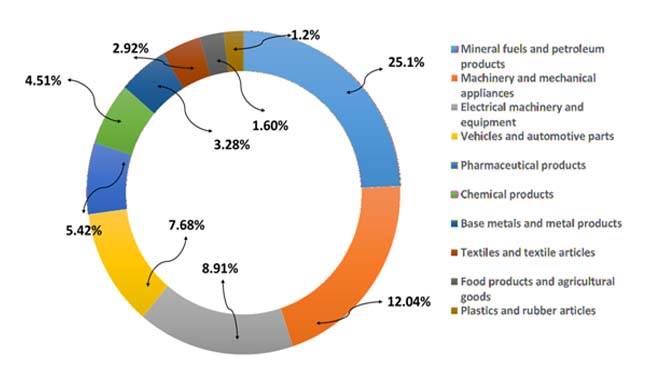
Bulgaria Import Market Research Data has listed machinery and electrical equipment, dominated by mineral fuels, as some of the sectors maintaining the foreign trade integrity. As presented by the Bulgaria Import Customs Data, the topmost variants of goods imported in the nation in 2025 are,

  • Mineral fuels and petroleum products (HS Code 27): 25.1% ($ 8.19 billion)
  • Machinery and mechanical appliances (HS Code 84): 12.04% ($ 6.5 billion)
  • Electrical machinery and equipment (HS Code 85): 8.91% ($ 5.72 billion)
  • Vehicles and automotive parts (HS Code 87): 7.68% ($ 4.68 billion)
  • Pharmaceutical products (HS Code 30): 5.42% ($ 3.28 billion)
  • Chemical products (HS Code 38): 4.51% ($ 2.9 billion)
  • Base metals and metal products (HS Code 83): 3.28% ($ 2.21 billion)
  • Textiles and textile articles (HS Code 63): 2.92% ($ 1.19 billion)
  • Food products and agricultural goods (HS Code 24): 1.60% ($ 1 billion)
  • Plastics and rubber articles (HS code 40): 1.2% ($ 972 million)

What Details Contain In Bulgaria Import Data?

Our services on Bulgaria Import Data can be considered as one of the most valuable assets towards your trade expansion. All the information necessary for staying competitive, like the total amount of shipments, HS code, price ranges, trade partners, and currency rates, is highlighted in a reliable way. Users can directly access the set of details required within specific titles like “Bulgaria Import Trade Data”. The data set highlights the proper growth rate of the research analysts as it helps them maintain their trade alliance as per the global trade regulations.

Irrespective of the type of business firm, if any user is facing difficulties in solving the complexities of global trade. They can simply refer to the trade assets like “Bulgaria Import Customs Analysis”. Businesses can truly craft their market entry strategies with proper information on the trade outputs of the targeted country.

  • Date 
  • HS Code
  • HS Code Description
  • Total Value in USD
  • FOB Value
  • Quantity
  • Weight
  • Way of Transport
  • Destination Country
  • Import Country
  • Port of Loading
  • Port of Unloading

Benefits of Bulgaria Import data in your business

  • Helps you acknowledge the latest shipments of the targeted country.
  • Promotes your market entry strategies.
  • Keeps you updated with the latest data-driven insights.
  • Caters to the needs of your market expansion with exact shipment details.
  • Enhances your trade ranking with a strong trade database.

FIND OUT OTHER EUROPE COUNTRIES IMPORT EXPORT DATA

Ask for Bulgaria Import Sample Data and Demo

Whatsapp
TOP