
How Sanctions, Brics Demand, and Global Food Security Are Changing the Rules for Russia's Control of the Fertilizer Export Business
- Mar 19, 2026
How Sanctions, Brics Demand, and Global Food Security Are Changing the Rules for Russia's Control of the Fertilizer Export Business
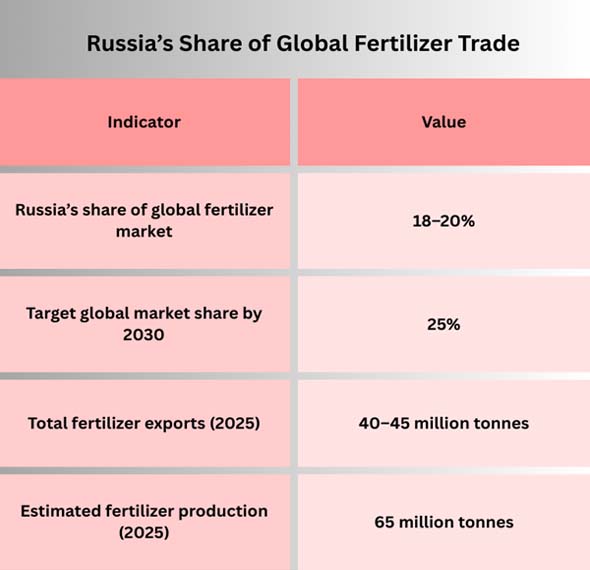
There were conflicts between countries, sanctions, and shifts in global trade flows in 2025–2026, but Russia's fertilizer exports stayed high. In 2025, the government sent more than 40 million tons of mineral fertilizers to other countries in the area.
Fertilizers help farmers grow crops today. According to Import Globals, Russia Import Data, they help the global food supply chain by making the soil more fertile, increasing crop yields, and making the food supply chain better. Russia is one of the best fertilizer makers in the world. It is unique because it sends nitrogen, phosphate, and potash fertilizers to fields all over the world.
There is a lot of demand all across the world, and estimates say that shipments might reach more than 45 million tons. There are many reasons why Russia is getting increasingly active in the fertilizer business. These include its large natural resources, low energy costs, and the fact that India, Brazil, and China, three important agricultural countries, are buying more fertilizer. Sanctions that hurt commercial channels were put in place because of political disagreements. Because of this, Russia made its business ties with new markets stronger. This is why fertilizer exports are now one of Russia's most important strategic goods. They have a direct impact on how much food is grown around the world, how much work farms do, and how much fertilizers cost.
Russia's Place in the World Fertilizer Market
A lot of people know that Russia is one of the world's top fertilizer exporters. There are three primary types of fertilizers that the country makes and sells:
Nitrogen fertilizers, such as
- Urea and ammonium nitrate,
- Fertilizers that use phosphate
- Potash-based fertilizers
These things are all important for growing crops, especially cereals, grains, and oilseeds that feed billions of people. As per Russia Export Data by Import Globals, over the past ten years, Russia's fertilizer industry has grown a lot, thanks to big expenditures in mining, chemical processing, and logistics. Because of this, the country is now the main provider of fertilizer on the world market. Russian fertilizer companies are working hard to get a bigger piece of the world market. They want to grow their share from about 20% now to 25% by 2030. Cheap natural gas is another important reason why Russia is so powerful around the world. It is needed to make nitrogen fertilizers like ammonia and urea. Russian producers can still compete with those in Europe and North America since energy costs are lower.
Different Types of Fertilizers Sent out by Russia
Three main types of nutrients used in farming around the world make up most of Russia's fertilizer exports.
1. Fertilizers with Nitrogen
Because they immediately help crops grow and produce more, nitrogen fertilizers are the most popular type of fertilizer in the world. Urea is a nitrogen-based fertilizer that is widely used on corn, rice, wheat, and vegetables. Russia is one of the leading exporters of urea.
From 2024 to 2025, Russia's urea exports went grown by almost 11%, reaching about 10.8 million tons. A lot of the world's fertilizer demands are for nitrogen fertilizers because cereals and grains, which are one of the main crop groupings, need a lot of nitrogen.
2. Potash Fertilizers
Based on Russia Import Export Trade Data by Import Globals, Potash fertilizers give plants potassium, which helps them stay healthy and use water better. Potash is most often shipped out of Russia and Belarus.
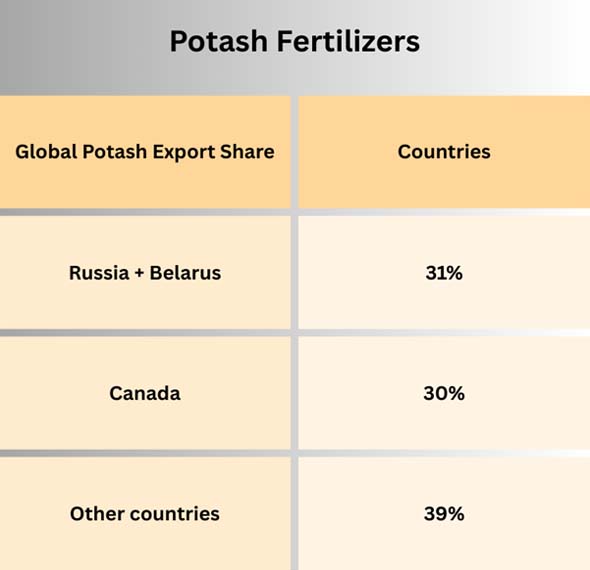
Russia and Belarus jointly export over 31% of all potash in the world, therefore they are very important suppliers to farmers all over the world. Countries with intensive farming systems need to make their land more productive, which keeps the demand for potash high.
3. Fertilizers that have Phosphate in them
Fertilizers with phosphates make plant roots stronger and help crops grow better. Russia's phosphate fertilizer market is robust because there are a number of places to get phosphate rock and major chemical processing factories. PhosAgro and other significant Russian enterprises offer phosphate fertilizers in Asia, Africa, and Latin America.
Sanctions and How They Affect the Trade in Russian Fertilizer
Since 2022, Russia has been hit by a slew of Western sanctions that have hurt industries like banking, shipping, and energy. But most fertilizer exports have not been directly affected by sanctions since people are worried about food security around the world. According to Russia Import Custom Data by Import Globals, many nations know that limiting the supply of fertilizer could cause food prices to go up and problems with farming all around the world.
Even nevertheless, sanctions have made things harder for Russian exporters in a number of ways:
- Important Problems
- Payment limits because of banking sanctions
- Limits on shipping and insurance
- Problems with getting to Western ports because of logistics
- European tariffs and limits on imports
- Fertilizer exports have kept going, though, because demand is still high around the world.
- Sanctions have also caused a big change in trade patterns. Russia is now sending fertilizer supplies to Asia, Latin America, and Africa instead.
The Rise of BRICS' Need for Russian Fertilizers
As per Russia Import Trade Analysis by Import Globals, one of the largest changes in the global fertilizer trade has been the increased demand from BRICS states, especially
- India.
- China
- Brazil
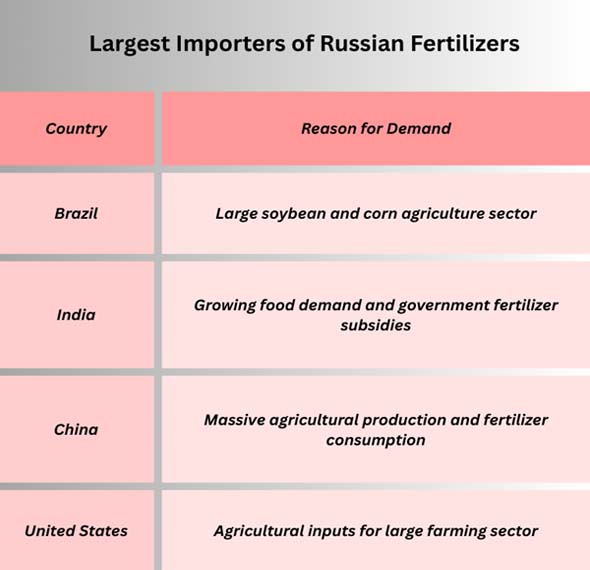
These countries are among of the biggest agricultural producers in the world, thus they need a lot of fertilizers to keep their crops growing. Brazil, India, and China are the three countries that buy the most Russian fertilizers right now. This indicates how important Russia is becoming in agriculture in markets that are getting bigger.
India has been buying a lot more Russian fertilizers since 2023, making it one of Russia's most important agricultural trading partners. In 2024, Russia provided India 4.6 million tons of fertilizers, which represented around 24% of all the fertilizers India bought. Import Globals' Russia Exporter Data says that this pattern lasted until 2025–2026, when Indian agriculture grew to meet India's growing need for food.
How Fertilizers Affect Food Security Around the World
Fertilizers are very important for making sure that food grows all around the world. Crops might not grow as well if there isn't enough fertilizer. Import Globals' Russia Importer Data says that agricultural specialists say that fertilizers, especially nitrogen fertilizers, are needed for more than half of the food grown around the world. That means that Russia's exports of fertilizer have a direct effect on food security all across the world.
Farmers might use less fertilizer if there are problems with the supply. This might make crops grow less and make food more expensive. Many international groups have argued that it is highly important to keep the fertilizer trade going even when there are political issues.
Prices of Fertilizer Over the World From 2025 to 2026
According to Import Globals' Russia Import Shipment Data, fertilizer costs have gone up and down a lot in the past few years because of energy prices, political concerns, and problems getting supply. According to predictions for global commodities, the price of urea would go up by roughly 30% in 2025.
Prices Could Drop a Little in 2026 if More Factories Are Built
Energy prices make up a big part of the cost of fertilizer because nitrogen fertilizer is generated from natural gas. Russia has a lot of gas, which makes it easier for its fertilizer firms to create it.
Big Russian Fertilizer Companies
According to Russia Import Export Trade Analysis by Import Globals, Russia's fertilizer exports are backed by a number of large companies that do business all over the world. These companies own enormous chemical processing and mining factories that help them create a lot of fertilizers and sell them all over the world.
Routes for Shipping and Logistics
Another reason why Russia is the world's biggest fertilizer producer is that it has a huge export infrastructure. Some of the most important ways to send goods abroad are:
- Ports along the Baltic Sea
- Shipping lanes in the Black Sea
- Taking a train to Asia
- Shipping lanes in the Arctic
Russia has also increased exports through commercial channels in Asia, especially by rail and sea links that connect Russia with China and Central Asia.
Concerns about the environment and sustainability
To grow food, you need fertilizers, but they can also cause problems for the environment.
- Too much fertilizer might hurt the soil.
- Water pollution
- Releasing greenhouse gases
Based on Russia Export Import Global Trade Data by Import Globals, fertilizer businesses are spending money on precision agriculture technology that makes fertilizers operate better to solve these concerns.
Experts say that Russia's specialty fertilizer market will grow a lot and be worth roughly $1.54 billion by 2030. This is because farming methods are getting better.
What Will Happen to Russian Fertilizer Exports in the Future
Russia is anticipated to continue to be one of the most prominent players in the global fertilizer sector in the future. There are a number of trends that will likely have an effect on the future of the fertilizer trade:
1. Going into New Markets
Russia is trying to strengthen trade connections with new countries in Asia, Africa, and Latin America.
2. Making it Easier to Make Things
Russia intends to increase fertilizer production to roughly 80 million tons by 2030. This would make exports much better.
3. Trade Between Brics Countries is More Important
If BRICS countries cooperated together on trade, they could generate a big market for fertilizers and other farm products.
4. New Tools
Better ways to generate fertilizer, better logistics, and digital farming might make things even more efficient and cut prices.
Conclusion
Russia's fertilizer export business has become one of the most important parts of the global agricultural trade. Even though there are sanctions and conflicts between countries, the government still controls the fertilizer markets by supplying millions of tons of critical nutrients to farmers all over the world.
Russia is becoming one of the biggest exporters of fertilizer because nations with big agricultural economies, like India, Brazil, and China, are buying more of it. At the same time, the fertilizer trade has stayed strong because people are worried about food security throughout the world.
Russia's fertilizer market is expected to develop a lot more in the future since emerging countries are growing their agricultural production and global food consumption is still rising. The country's many natural resources, strong industrial base, and growing linkages with developing economies will continue to shape the future of global fertilizer trade.
In a world where the population is expanding and the environment is changing, fertilizers and the countries who create them will always be crucial for making sure everyone has enough food. Import Globals is a leading data provider of Russia Import Export Trade Data.
FAQs
Que. Why does Russia send out so much fertilizer?
Ans. Because Russia has a lot of natural gas, minerals, and advanced chemical industries, it can create fertilizers for less money than many other countries.
Que. Which countries buy the most fertilizers from Russia?
Ans. India, Brazil, and China are the countries that buy the most. For large-scale farming, they all need fertilizers.
Que. How have sanctions affected Russia's fertilizer exports?
Ans. Sanctions made things tougher to do and cost more money, but fertilizer exports didn't change much since people were worried about food security throughout the world.
Que. Why do we need fertilizers to make sure there is enough food for everyone?
Ans. Plants grow a lot faster with fertilizers. Farming would slow pace without them, which would make food more expensive and maybe even cause food shortages.
Que. Where to get detailed Russia Import Export Global Data?
Ans. Visit www.importglobals.com.
