
U.S. Export Trade Data by End-Use Categories: Agricultural, Industrial, and Consumer Goods Trends

- Nov 19, 2026
- 127 Views
U.S. Export Trade Data by End-Use Categories: Agricultural, Industrial, and Consumer Goods Trends
Discover U.S. export trade trends across major end-use categories. Explore agricultural commodities, industrial materials, consumer goods, HS Codes, and international trade opportunities with Import Globals.
The End-Use US Export Data are broken down into several major end-use categories. This makes it easier for businesses to understand what goods are exported abroad. The list includes categories such as agricultural products, industrial supplies and materials, capital goods, automotive products, and consumer goods. They fulfilll certain needs of the international supply chain and serve certain parts of the American economy.
Agricultural Products: The agriculture category includes both raw agricultural commodities and processed food products that are exported to other countries. Some of the agricultural products shipped overseas include soybeans, corn, wheat, rice, cotton, beef, pork, poultry, dairy products, almonds, and many others. These are used in the production of food, the manufacture of animal feed, food processing and the production of textile products. For example, soybeans are used for animal feed and vegetable oil, and wheat and corn are used for food products.
Industrial Supplies and Materials: Products in this category include primary products and intermediate goods used in manufacturing, construction, chemical industries and power production activities. Examples of important U.S. exports in this group are petroleum oils, natural gas products, industrial chemicals, plastics, iron and steel, aluminum, copper, fertilizers and other industrial materials. Such products are very important for industrial plants and companies that depend on imported products to produce their goods.
Capital Goods: Capital goods products include machinery, equipment and technology products used by companies in the production of other goods or to offer services. Major U.S. exports of such products are aircraft, industrial machinery, computers, electrical products, medical instruments, manufacturing systems, turbines and agricultural machinery.
Automotive Products: Automotive exports include passenger vehicles, commercial vehicles, trucks, engines, transmission, tires, electronic equipment for automobiles and automotive spare parts . The exports support the international automobile manufacturing, vehicle distribution and vehicle maintenance industries. U.S. automotive exports meet the needs of individual consumers as well as manufacturers that need special components to manufacture vehicles.
Consumer Goods: Consumer goods are final goods used by individuals for consumption. These goods include pharmaceutical preparations, cosmetics, household electrical appliances, furniture, clothing, electronic goods, toys and recreational items. Purchasing power, lifestyle change, technical advancement and population growth affect consumer demand for such goods.
Agricultural Export Trends: Commodities, Food Products, and Global Demand

Agricultural goods are a big part of international business, and US Export Trade Data helps traders to know about American agriculture commodities and their shipment to foreign destinations. Major export commodities include soybeans, corn, wheat, cotton, beef, pork, dairy, almonds and processed food products. International food processing and manufacturing of animal feeds using agricultural commodities.
You can look at the HS Codes for agricultural exports , like 1001 for wheat , 1005 for corn , 1201 for soybeans , and know the kind of products being shipped . And think about international buying opportunities . The country wise data for agricultural exports helps the businesses to know about the changing demands in different agricultural markets.
Wheat – HS Code 1001: Wheat is one of the major agricultural products used for the production of flour, bread, pastas and other foods. U.S. wheat exports serve grain importers, food processors and milling industries worldwide.
Corn (Maize) – HS Code 1005: Corn is a principal commodity exported for livestock and poultry feeding, ethanol, starch manufacturing and food processing. Corn is a very important commodity for countries with livestock and poultry industries.
Rice – HS Code 1006: Rice is a vital food commodity used for consumption and processed food manufacture. The United States exports rice that is made up of many different types of rice that are shipped to wholesalers, distributors, and retailers in other countries.
Soybeans – HS Code 1201: Soybeans also are exported for producing soybean oil, animal feeds and food products. Soybeans are also one of the main agricultural products for agricultural processing and livestock industries in other countries.
Cotton – HS Code 5201: The natural raw material of textile fibers for the production of yarns, textiles, garments and other textile products is raw cotton, uncombed or uncarded. International textile manufacturers need cotton for their manufacturing processes.
Beef – HS Code 0201: This category includes fresh or chilled beef of bovines. This beef is exported to global meat distributors, retailers, restaurants and food processing organizations.
Almonds – HS Code 0802: The almonds are exported for direct consumption, for the baking industries, for manufacture of candies and for other food processing industries.
Industrial Supplies and Materials: Analyzing U.S. Export Market Performance

Industrials are the basic materials needed to make products, build structures, generate power and produce chemicals. US Customs Data provides substantial trade data for research into industrial product categorization, trade value, quantity and trading countries, contingent on the database availability.
Petroleum, chemicals, plastics, iron and steel, aluminum, copper, and fertilizers are major U.S. industrial exports. Examples of such products include petroleum oils under HS code 2710, nitrogen fertilizers under HS Code 3102 and primary plastics under HS Code 3901.
Crude Petroleum Oils – HS Code 2709: The group comprises petroleum oils and oils obtained from bituminous minerals in crude form. Crude oil is one of the main industrial sources of energy . This can be used to refine products based on petroleum.
Refined Petroleum Products – HS Code 2710: This section includes petroleum oils and preparations of petroleum oils (except crude) classified under HS code 2709. Gasoline, diesel, lubricating oils and other petroleum preparations may be included under this section.
Acyclic Hydrocarbons – HS Code 2901: They are organic compounds, used in the petrochemical industry to make various chemical products like plastics, chemicals and solvents.
Nitrogen Fertilizers – HS Code 3102: Nitrogen fertilizers are important components of agricultural production to aid the growth of plants. They are exported commodities for fertilizer traders and agricultural companies around the world.
Flat-Rolled Iron and Steel Products – HS Code 7208: This heading covers certain hot-rolled flat-rolled products of iron or non-alloy steel, of a width of 600 mm or more, not clad, plated or coated. They are used in construction, machinery, manufacturing, and industrial fabrication.
Refined Copper – HS Code 7403: Refined copper and copper alloys are important industrial raw materials for electrical wiring, electronics, construction, machinery and manufacturing.
Primary Forms of Plastics – HS Code 3901: This heading covers ethylene polymers in primary forms. Such materials are used to manufacture packaging materials, plastic containers, pipes and other industrial items.
Capital Goods Exports: Machinery, Equipment, and Manufacturing Trends

Capital goods include machinery, airplanes, computers, electrical machinery, engines used in industry, and special purpose manufacturing systems. The goods help international companies to improve efficiency and improve production capabilities.
US Trade Data analysis can uncover capital goods import and export patterns for manufacturers, distributors and international consumers. For example, HS Code 8471 covers automatic data-processing machines, and HS Code 8501 covers electric motors and generators.
Computers and Automatic Data-Processing Machines – HS Code 8471: This heading covers automatic data processing machines and their accessories. The goods allow computing, information processing and data handling to be used in business.
Other Office Machines – HS Code 8472: This heading includes certain office machines which are not covered by other headings of Chapter 84. The goods are used for administrative and trading purposes.
Machinery with Individual Functions – HS Code 8479: The machinery and mechanical appliances of this heading are of specific purpose, not described or included elsewhere in Chapter 84. These items are used in specialized industries and manufacturing.
Electrical Transformers – HS Code 8504: Transformers are used to transfer electrical energy between two or more circuits and to change the voltage levels. Transformers are essential in power distribution, industrial electric systems and infrastructure construction.
Electric Motors and Generators – HS Code 8501: This heading covers electric motors and dynamos. Machinery, industrial equipment, commercial buildings and electrical systems are among the uses for products in this class.
Aircraft and Spacecraft – HS Code 8802: This heading includes aircraft and spacecraft except unmanned aircraft covered in. This class covers items exported from the U.S. for use in commercial air transportation.
Medical Instruments and Appliances – HS Code 9018: This class relates to devices and apparatus for use in the medical, surgical, dental or veterinary arts. These products include diagnostic devices, surgical equipment and other medical devices.
Consumer Goods Export Trends and International Market Demand

Consumer products means goods that are intended for consumption. The United States exports pharmaceuticals, cosmetics, electronics, furniture, appliances, clothing and recreation products.
These are consumer products and US Import Export Data provides the trade movement data for these products. It helps importers and distributors to look into products such as pharmaceutical preparations, HS Code 3004, beauty products, HS Code 3304 and furniture, HS Code 9403.
Pharmaceutical Products – HS Code 3004: Medicaments means any substances or products, mixed or not, in measured doses or in forms or retail sale, which are intended for use in medicine. These products are a support to the medical community, such as pharmacies, hospitals and distributors.
Beauty and Skincare Preparations – HS Code 3304: This class includes beauty and make-up preparations, skin care preparations and sunscreen preparations. These products are for international cosmetic distributors and retailers.
Refrigerators and Freezers – HS Code 8418: This heading includes refrigerators, freezers and some similar equipment. These items are used in homes, grocery stores, hotels, restaurants and food storages.
Washing Machines – HS Code 8450: This category includes laundry or home-type washing machines, and machines for washing and drying clothes at once. Products are supplied to international distributors of home appliances.
Telephones and Communication Equipment – HS Code 8517: This group includes telephone sets and other devices for transmitting and receiving voice, images or any other data. This includes devices for communication. The products listed are helping the telecommunications and digital connectivity market to grow.
Furniture – HS Code 9403: This heading covers articles of furniture and some parts of furniture not covered by the headings for furniture products. Products are used in the residential, office, hospitality and other commercial interior markets.
Toys and Recreational Products – HS Code 9503: This heading will include tricycles, scooters, pedal cars, dolls, toys, puzzles and other specified toys, and miniature versions of those toys. The products are aimed at makers of international toy and recreational goods sellers.
Automotive Products: U.S. Export Prices and Global Trade Opportunities

Businesses can use US Export Statistics to examine their automotive trade flows and understand which international markets purchase American-made automobiles and their components. 8703 Passenger motor vehicles 8704 Commercial goods-transport vehicles 8708 Parts and accessories of motor vehicles.
Passenger Vehicles – HS Code 8703: Motor cars and other motor vehicles for the transport of persons (excluding those of heading 8702), including racing cars. These vehicles are for use by international automobile dealers, distributors and consumers.
Commercial Vehicles – HS Code 8704: Heading 8704 covers motor vehicles for the transport of goods. They are a diverse range of trucks and other commercial vehicles used in logistics, construction, freight transport and industrial operations.
Motor Vehicle Parts and Accessories – HS Code 8708: This heading covers parts and accessories which are suitable for use principally with motor vehicles of headings 8701 to 8705. For example, some bumper assemblies, brakes, gear boxes, drive axles, radiators and other parts of automobiles.
Vehicle Engines – HS Code 8407: The title covers spark ignition internal combustion piston engines that may operate in reciprocation or rotation. These engines are used in different machines depending on their specifications and classification.
Pneumatic Tires – HS Code 4011: This heading covers new pneumatic tyres of rubber. The types of tires which may be subject to the subheading include passenger car tires, bus tires, truck tires, motorcycle tires and other types of tires.
Vehicle Transmission Systems – HS Code 8708: The heading 8708 may cover transmissions for motor vehicles including gearboxes and other transmission parts for motor vehicles, depending on the applicable subheading for the goods in question.
Exporting research for the automotive industry can be useful to assess foreign demand for vehicles, analyze the components supply chain, and study the possibility of exporting vehicles.
Major U.S. Export Destination Countries and Their Trade Importance
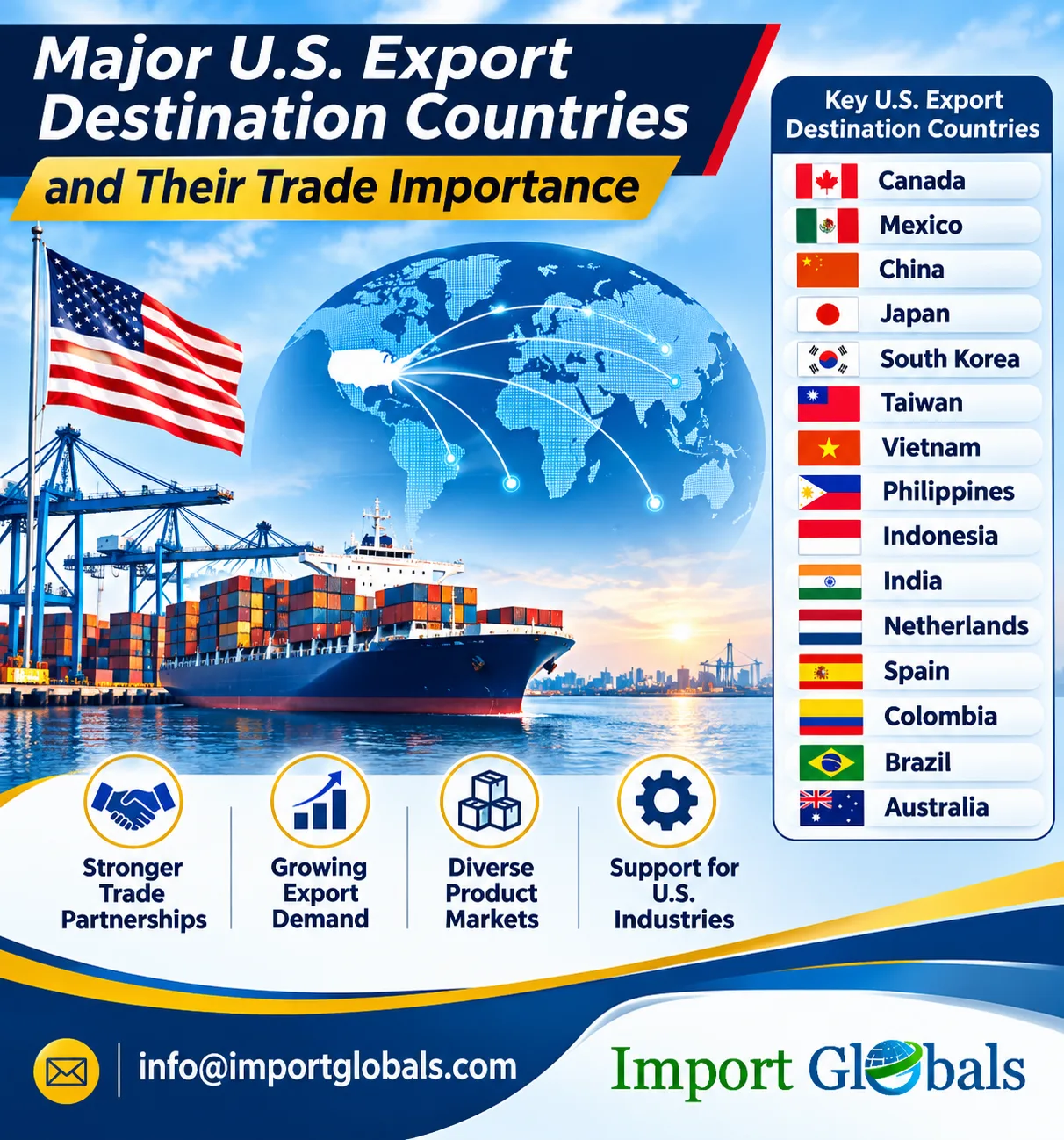
The United States ships a variety of products to countries in North America, Asia, Europe, South America and further afield. Countries purchase U.S. products based on their needs in industry, consumers, agriculture, energy consumption and manufacturing.
Canada: Canada is an important trading partner for the United States because of its proximity. Trade consists of many products such as cars, machinery, agriculture, energy and more.
Mexico: Mexico is associated with manufacturing and the US automotive industry. The United States exports machinery, electronic products, agricultural products, petroleum products, chemicals, and intermediate manufacturing products to Mexico.
China: China is a big player in international trade of manufacturing and agriculture . US exports to China include agricultural products, industrial products, chemicals, machinery and other products that may vary depending on trade conditions and tariffs.
Japan: Japan, because of its high level of industrial development, is an important market for agricultural commodities, aviation equipment and products, machinery, chemicals, and other products manufactured by the United States.
South Korea: South Korea imports energy products, agricultural products, machinery, industrial products and some technology-related goods from the United States. South Korea’s manufacturing sector and technological development assist its trade activities.
Taiwan: Taiwan is part of the global supply chain for electronics and semiconductors. Industrial goods, machinery, agricultural products, chemicals and energy products are exported to Taiwan.
Vietnam: The development of manufacturing and industry in Vietnam has created a need for US cotton, agricultural products, machinery, industrial inputs and other raw materials for production processes.
Philippines: The Philippines imports many US agricultural products, machinery, food products, chemical and consumer goods. Demand for the country is due to food consumption, infrastructural development, and business activities.
Indonesia: Indonesia is a big importer of agricultural products, machinery, industrial inputs, energy related products and other manufactured products from the international market including the United States.
India: The United States sells large volumes of industrial products, aircraft, machinery, agricultural products, chemicals and energy products to India. Growth in the manufacturing sector and infrastructure development facilitate demand for industrial products.
Netherlands: The Netherlands is one of Europe’s main trading and logistics centers. The US exports for this market can be advantageous for both Dutch industries and European markets.
Spain: Spanish industries and commercial markets import American agricultural produce, chemicals, industrial raw materials, machinery, energy products and consumer goods.
Colombia: Colombia is one of the Latin American nations that import U.S. agricultural products, machinery, chemicals, fuels, and manufactured goods, thanks to geographic proximity and regional trade agreements.
Brazil: The Brazilian economy has an agricultural, industrial and manufacturing sector. The United States exports machinery, chemicals, industrial machinery, agriculture and other manufactured goods to Brazil.
Australia: Australian industries buy American machinery, aircraft parts, pharmaceuticals, automobiles, industrial equipment and consumer goods. Demand in Australia ranges from commercial to household use.
Monthly and Annual Percentage Changes in U.S. Export Price Indexes: Understanding US Trade Statistics
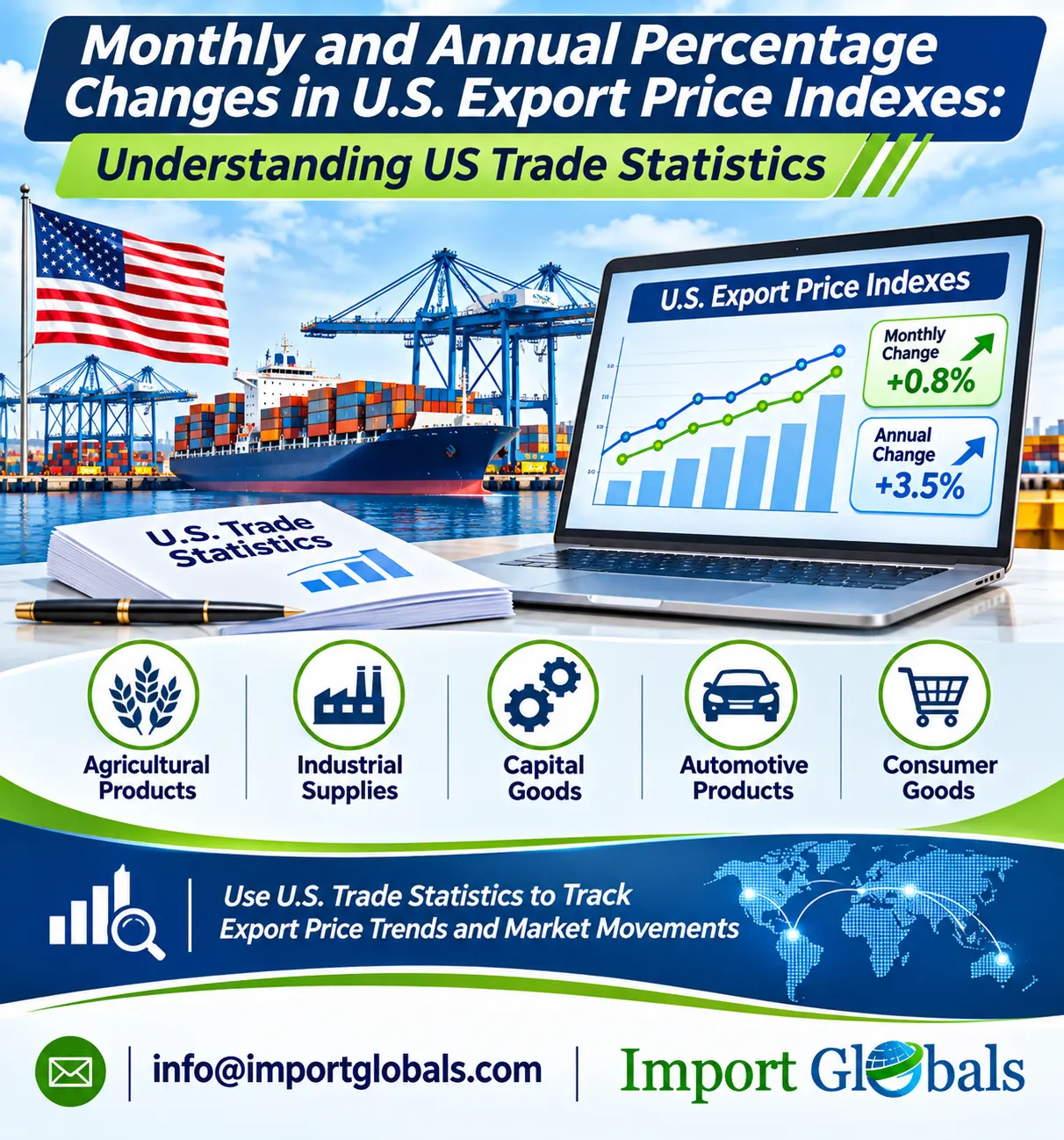
The month-to-month and year-to-year changes in the price of exports provide useful information on international price trends. This information is useful to companies to know if there is an increase, decrease or constancy of prices for agricultural commodities, industrial supplies, capital goods, automobile items and consumer goods.
US Trade Statistics reports the volume and value of merchandise trade, and the export price indexes from the U.S. Bureau of Labor Statistics show price trends. The two data sources are for different purposes, but they can be used together for analysis.
How Export Price Fluctuations Influence International Importers and Buyers

Changes in export prices have direct implications for the international cost of purchases, negotiations with suppliers and profit margins in business. Higher prices for U.S. exports could mean higher costs for foreign buyers of agricultural goods, raw materials, machinery and consumer products. Declining export prices, in contrast, create an opportunity to reduce the cost of imports.
US Import Data allows the international buyers to study product level import activities, country-wise import activities, HS Code classification and trade value. Along with using the data, businesses will also be able to analyze market trends using U.S. export price indexes.
Import Globals gives organizations visibility into the details and movements of international business trade by product and country. Better plans for importing and exporting come from combining product categories and market analysis.
Future Outlook for U.S. Export Trade: How US Import Export Data Supports Business Decisions

The future of the exports of the USA is influenced by many things including international demand, manufacturing investments, agricultural produce, innovation, energy sector and global supply chains. Agricultural products, industrial materials, capital goods, automotive goods and consumer goods will remain essential in international business activities.
Having accurate data on the USA Import Export Trade Data will help to assess market potential and analyze the trade flow for different goods and trading countries. On the basis of HS Codes it will also be possible to do research.
Conclusion
For companies that want to go global, U.S. export trends matter a lot. US Import Export Data, HS Code, Export Price Index and country wise trade data analysis can help importers and exporters with useful insights regarding market trends and pricing. Agricultural produce, industrial supplies, capital goods, automotive products and consumer goods are the drivers of growth in international trade. Import Globals helps companies analyze global trade insights with import/export intelligence.
CTA
Discover new global trade opportunities through Import Globals! Gain access to useful data about US Import/Export, along with other market intelligence to help you make wise business decisions. Visit us at www.importglobals.com or [email protected] to learn more.
FAQ’s
Que. What is U.S. Export Trade Data?
Ans. It provides information about goods exported from the United States, including product descriptions, HS Codes, values, quantities, and destination countries.
Que. What are the major end-use categories of U.S. exports?
Ans. They include agricultural products, industrial supplies, capital goods, automotive products, and consumer goods.
Que. Which agricultural products are commonly exported from the United States?
Ans. Major products include soybeans, corn, wheat, cotton, beef, pork, dairy products, and almonds.
Que. Why are HS Codes important in U.S. export trade?
Ans. HS Codes help classify products, identify commodities, analyze trade statistics, and understand customs requirements.
Que. Which countries are major destinations for U.S. exports?
Ans. Important trading partners include Canada, Mexico, China, Japan, South Korea, India, and the Netherlands.
Que. What are U.S. export price indexes?
Ans. They measure changes in the prices of goods exported from the United States over time.
Que. How does US Import Export Data help businesses?
Ans. It helps identify international buyers, analyze product demand, research trading partners, and discover market opportunities.
Que. Where can businesses find U.S. trade statistics?
Ans. Businesses can access trade information through the U.S. Census Bureau, USITC DataWeb, BLS, and Import Globals.
Que. How frequently is U.S. Export Trade Data by End-Use Categories updated?
Ans. U.S. Export Trade Data is generally updated monthly, depending on the reporting source and data category.
Que. Where can you obtain detailed U.S. Import Export Data and trade statistics?
Ans. Visit www.importglobals.com or email [email protected] for detailed information on U.S. import-export trade data and statistics.
You Can Also Visit :-
