
How the AI Boom and Middle East Crisis Are Reshaping Global Import-Export Trade
- Nov 09, 2026
- 76 Views
How the AI Boom and Middle East Crisis Are Reshaping Global Import-Export Trade
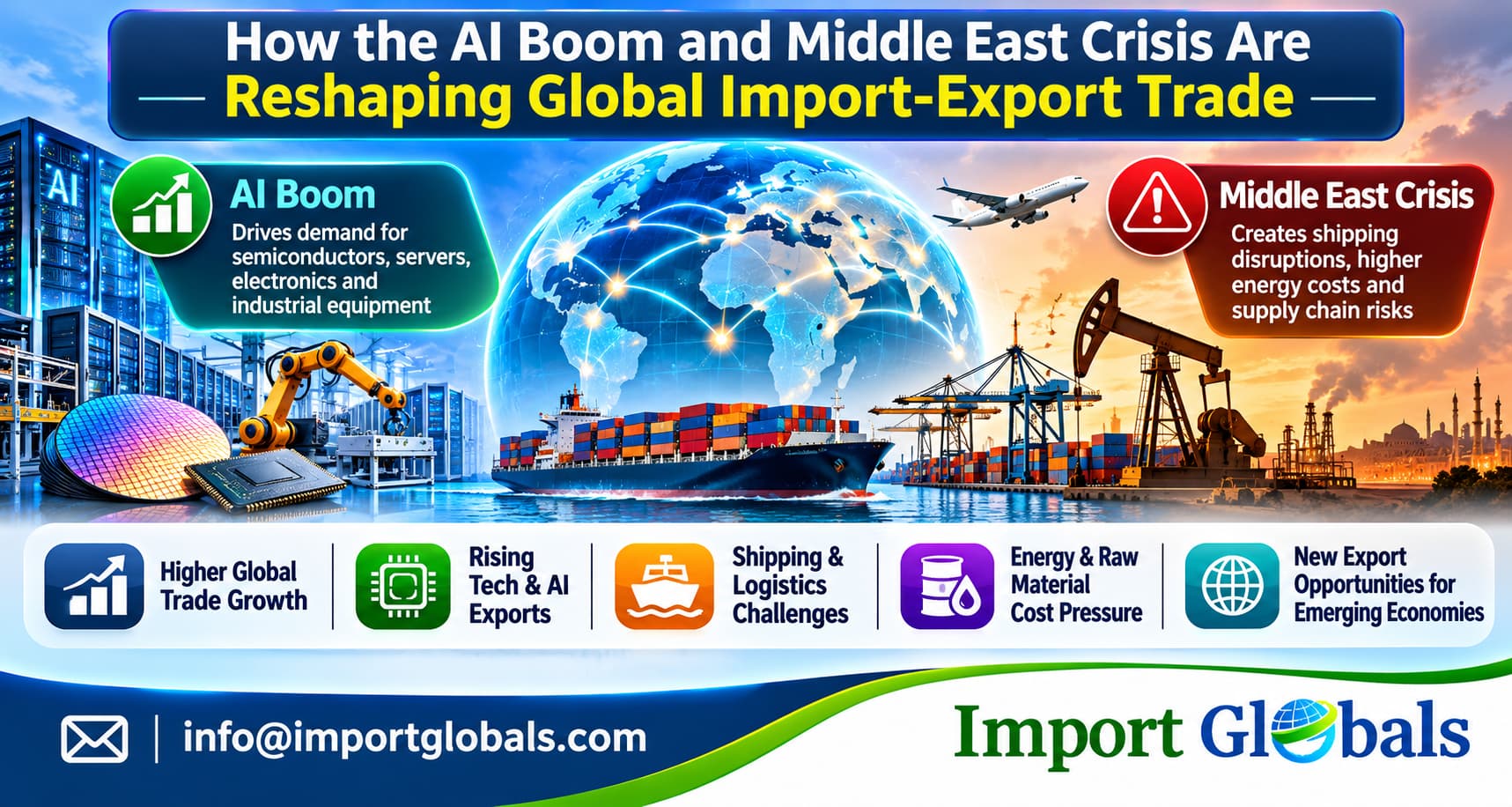
The global import-export industry is undergoing changes. Increased investment in artificial intelligence and political tensions in the Middle East are creating a sense of uncertainty among foreign companies.
These changes are being observed in logistics, technology product demand, energy prices, shipping lanes and global supply chain policies. Global Trade Data helps organizations to know the changing trends in global trade. Global Import Data provides vital information on product demands and new markets.
“More artificial intelligence will mean more demand for semiconductors, computer servers, electronics, data center hardware and more sophisticated machines. IT companies have poured big money into digitization, creating new opportunities for manufacturers and exporters in many countries.
The instability in the Middle East in contrast, has created problems for the global transport and energy sector. Disruption or security threat to the critical sea lanes would result in rise in freight expenses, delays in deliveries and reduce commodity availability.
In October 2026, the World Trade Organization forecasts that global merchandise trade will expand by 3.9% and trade in commercial services will grow by 3.3%. But the results will be unequal from one area to another.
Importers, exporters, manufacturers and suppliers must know these things. Import Globals offers its clients services in analyzing their global import data and global trade data, tracking trends in international trade, diversifying their suppliers and looking for new opportunities.
How the Global AI Boom Is Transforming Import-Export Trade
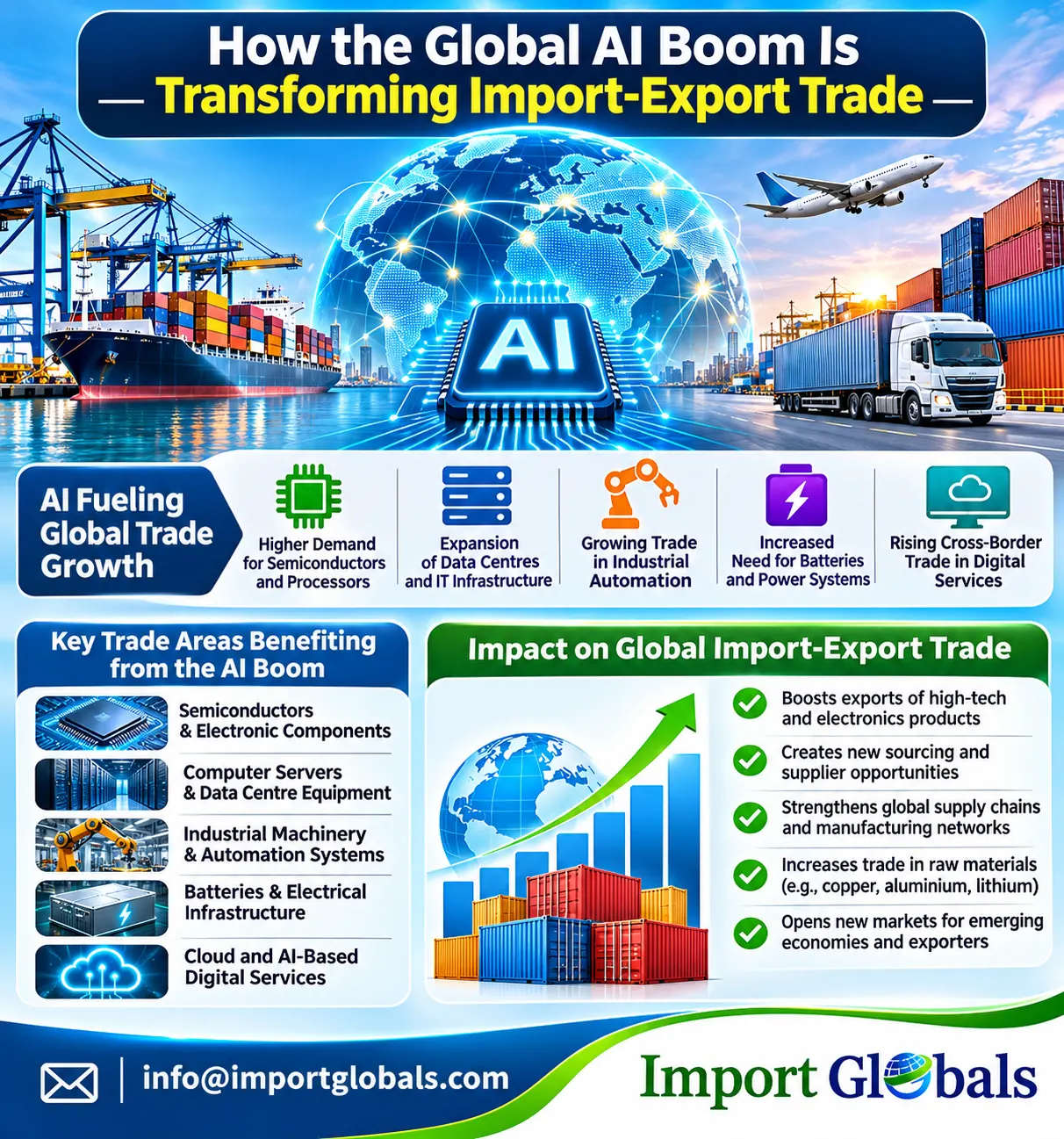
One of the biggest factors contributing to investments in technology in the international scene today is AI. Businesses are using AI to increase efficiency, automate processes, analyze business data and create digital services.
The increased usage is driving a rise in demand for product and infrastructure that can be used to create and operate the artificial intelligence (AI) systems.
Such products that would greatly benefit from AI sector generated demand include:
- Semiconductors and high-end processors
- Computer servers and storage equipment
- Circuit boards and electronics
- Network communications systems
- Machines for semiconductor manufacturing
- Cooling and Power Control System
- Battery and Power Infrastructure
But very important is, above all, the growth of data centers. This kind of infrastructure requires computing hardware, power supplies, cooling systems and building materials. There may be more demand globally for these items as more companies show interest in AI infrastructure. This opens the possibility of exporting electronics, machinery and electrical products and other related materials.
Artificial intelligence (AI) is also changing logistics. Companies are using automatic forecasting, digitization of records, tracking and other analytical tools to improve logistics management.
Hence, artificial intelligence is influencing not only the products being sold around the globe, but also the way in which firms engage in international business activities.
Impact of AI Investment on Semiconductor and Electronics Exports
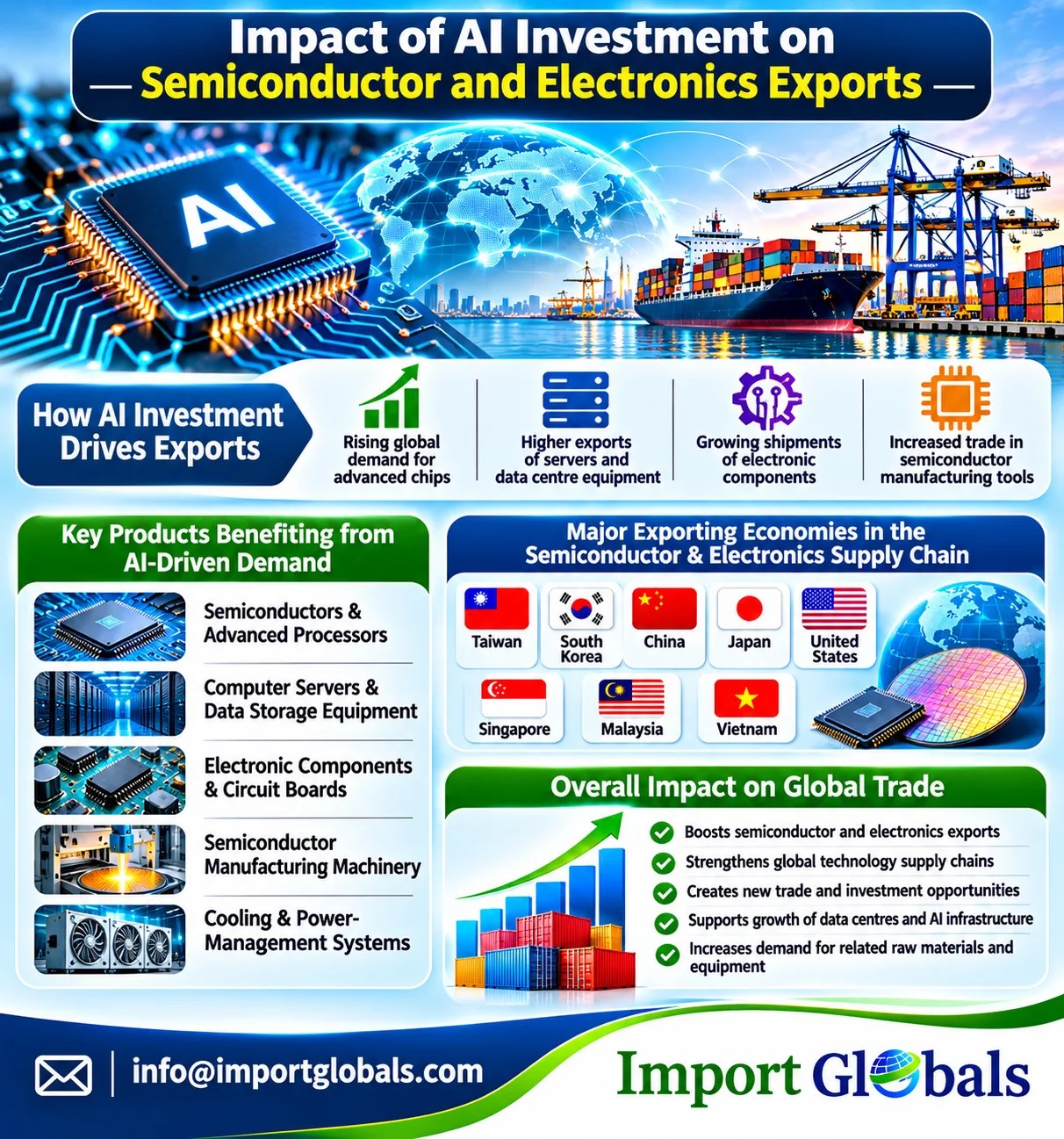
“Semiconductor components are essential for today’s artificial intelligence (AI) technology. Data processing and machine learning are done by highly sophisticated processing units, memory chips and circuitry.
As more investment is made in infrastructure for artificial intelligence (AI) technology, the demand for semiconductors is growing across multiple industries including electronics, automotive manufacturing, telecommunications, and industrial automation.
Economies involved in the semiconductor and electronics chain are:
Taiwan: It is a key center for high-tech semiconductor production and chip making.
South Korea: One of the largest producers of electronic parts, memory chips and semiconductor.
China: One of the major producers and exporters of electronic and computer products.
Japan: Supplier of semiconductor materials, equipment and special electronic components.
United States: Semiconductor design & manufacturing, AI hardware.
Singapore: Simplifying the process of semiconductor and electronics manufacturing.
Malaysia: Contributes to semiconductor and electronic component production.
Vietnam: Build up an electronics manufacturing and export industry.
These economies are connected by their global supply chains. The semiconductors may be manufactured in one country, assembled in other countries and then distributed to the consumers across the world. This interconnection creates business opportunities, but also raises problems of production delays, export control, regulatory changes, etc.
How the Middle East Crisis Is Affecting International Shipping Routes
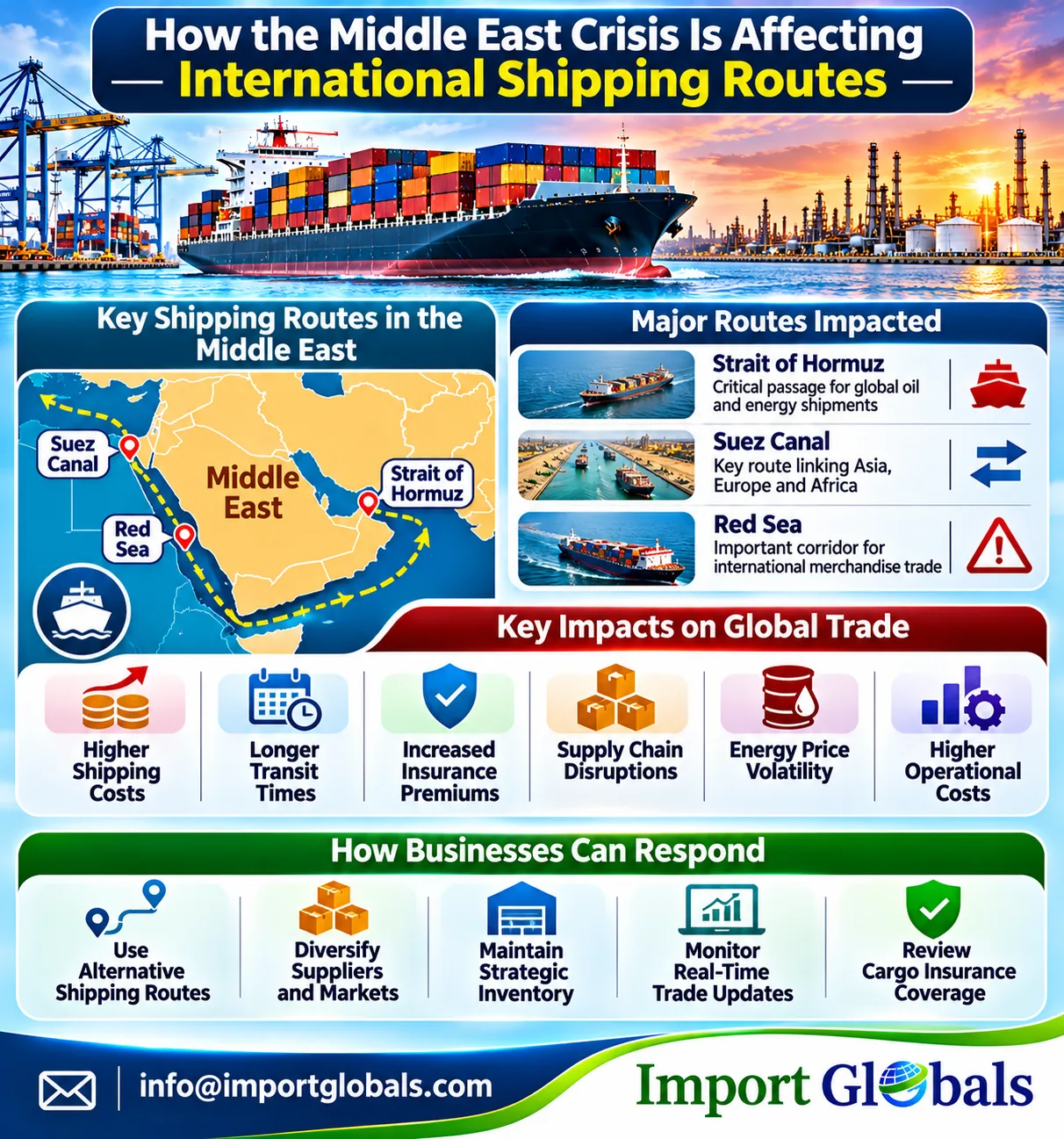
One of the reasons why the Middle East is considered a major player in world trade is because of its strategic location. This region or near this region is home to many key sea routes.
Geopolitical tensions can affect shipping, insurance, vessel availability and logistics.
Important international trade routes include:
Strait of Hormuz: It is a significant route for the transportation of oil and energy around the world.
Red Sea: This route is also very important as it links Indian Ocean and Mediterranean Sea through the Suez Canal.
Suez Canal: The trade route between the Asian and European markets.
Persian Gulf Shipping Routes: The important route for transporting oil, LNG and industrial goods.
If there is any increase in security concerns then the ship operators choose to change the routes and take some additional precautions . It costs more and takes longer to reroute the vessels. This creates problems for those businesses dependent on imports of raw materials, equipment, electronics, chemicals and consumer goods.
Exporters will be watching for longer shipping times and delivery problems and issues with their customers. The rise in the cost of holding inventories and production schedules could be a problem for importers. Companies will thus need to develop flexible logistics plans and identify alternative ports and transportation services.
Rising Energy Prices and Their Impact on Import Costs
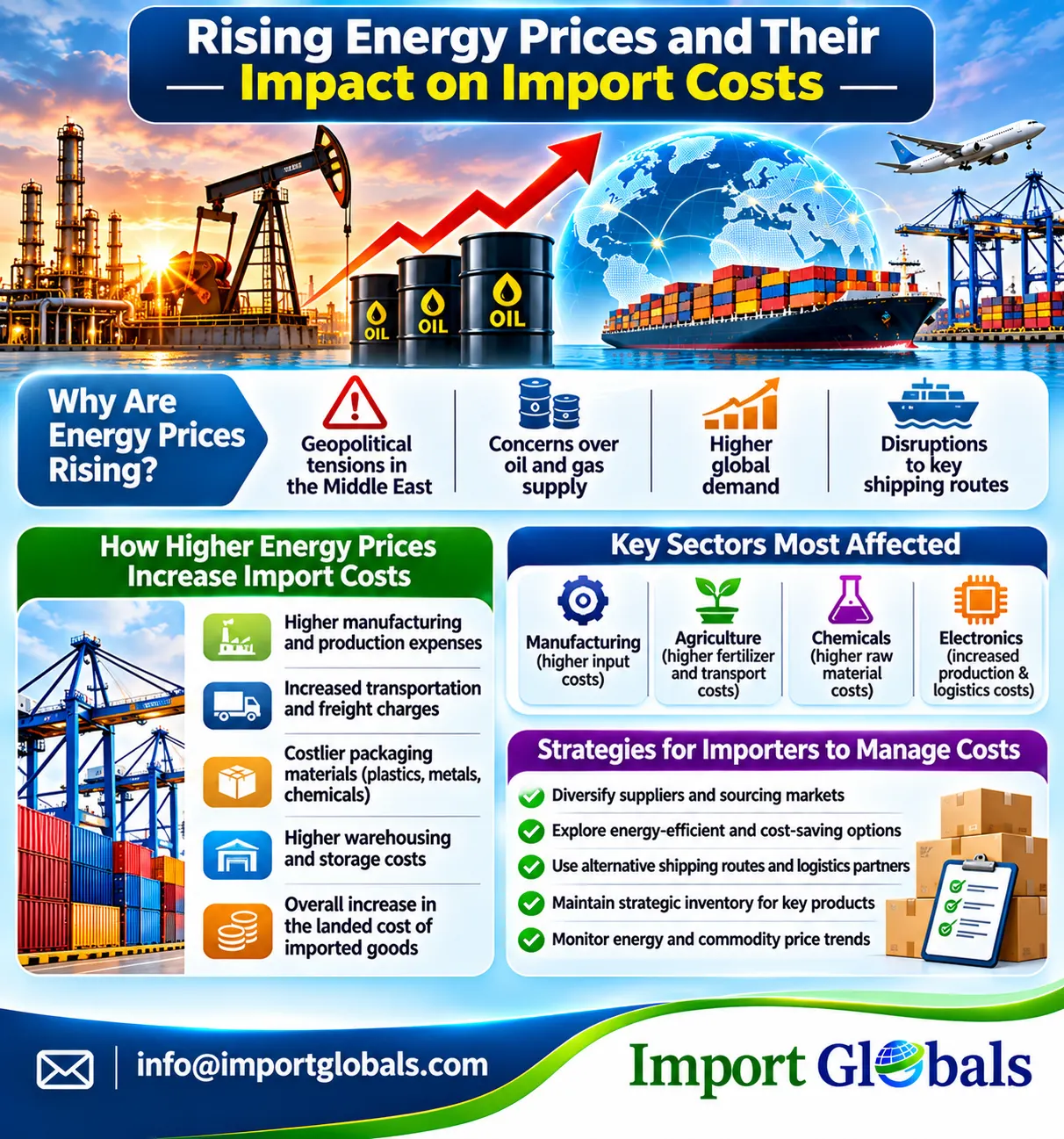
Energy is a significant part of the cost of production and transportation/distribution. The cost of oil and gas is important for the cost of producing and delivering products internationally.
The Middle East crisis adds to concerns about supply disruption and price volatility for energy. Countries that rely heavily on imported energy will find themselves under additional economic pressure.
Different impacts on international business can be caused by high costs of energy, such as:
Manufacturing Expenses: Industries could face higher costs for electricity, fuel and production.
Transportation Charges: The increase of the cost of fuel can derive in increasing the rates for road, marine and air transport.
Packaging Costs: Items that require more energy to produce – such as metals, plastics and chemicals – can be costly.
Warehousing Expenses: Electricity and operating costs for warehouses will also increase.
Product Pricing: Businesses might have to alter their export costs to be profitable.
For example, an exporter of industrial machinery may find himself facing increased costs of production and increased costs of shipping at one and the same time. This may lead to a decrease in competitiveness because the foreign buyer may not be able to absorb the higher cost in terms of price.
Countries that are dependent on imports for their energy supplies are most vulnerable because higher energy prices will mean higher import costs.
"Companies can protect themselves by improving energy efficiency, using flexible supply contracts and having source market alternatives.
Uneven Benefits of AI-Driven Global Trade Growth Across Countries
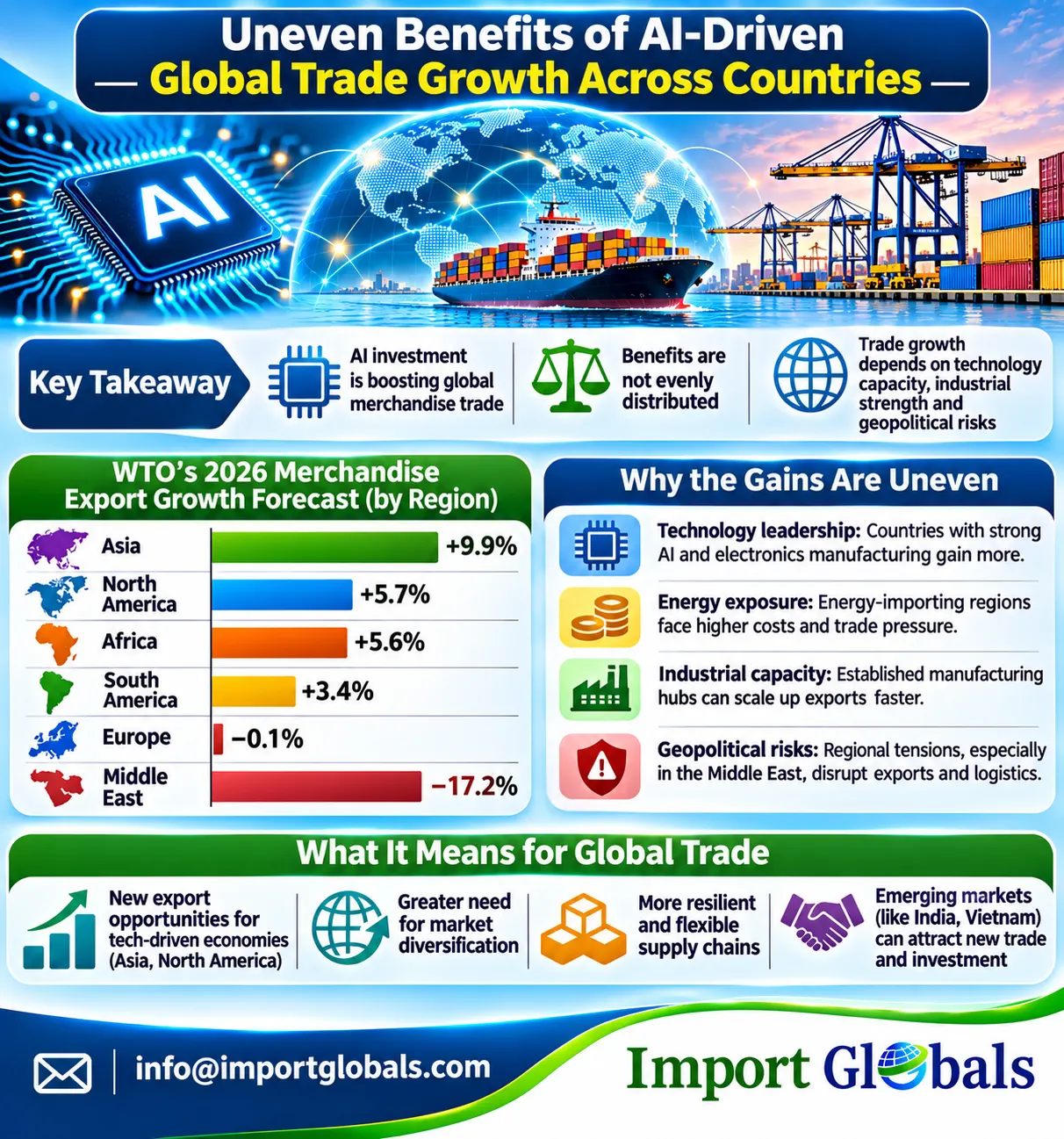
Artificial intelligence (AI) tools are being used to facilitate international trade but the dividends from it are not being shared equally across all countries. This development is more likely to benefit countries with an edge in manufacturing technology, good infrastructure and international supply chains than those with relatively underdeveloped industries.
The WTO’s October 2026 forecast predicts that Asia will see a significant rise in merchandise exports in 2026 – up 9.9%. North America - 5.7%. Africa - 5.6%. South America - 3.4%. However, there will be a decline in the export of goods in Europe – 0.1% and there will be a more significant fall in the export of goods in the Middle East – 17.2%.
This is due to the effect of technology, energy dependency and the investment in industrial capacity.
Asian Economies: Taiwan, South Korea, China, Japan, Singapore and Malaysia are likely to benefit from the growing demand for electronics, semiconductors and AI-related products.
North America: USA, Canada, Mexico. Production of technology, industry and regional production chains.
Europe: Germany, France, Netherlands and other economies of Europe can be successful in industrial automation and manufacture of specialized equipment.
Middle Eastern Economies: The unstable situations in the region may have an influence on the energy exports, transport, tourism and other business operations.
Emerging Markets: As manufacturing diversification takes place, businesses could invest in India, Vietnam and other developing countries.
The unevenness of trade benefits has made market research and supplier diversification increasingly important.
Effects on Global Supply Chains and International Sourcing Strategies
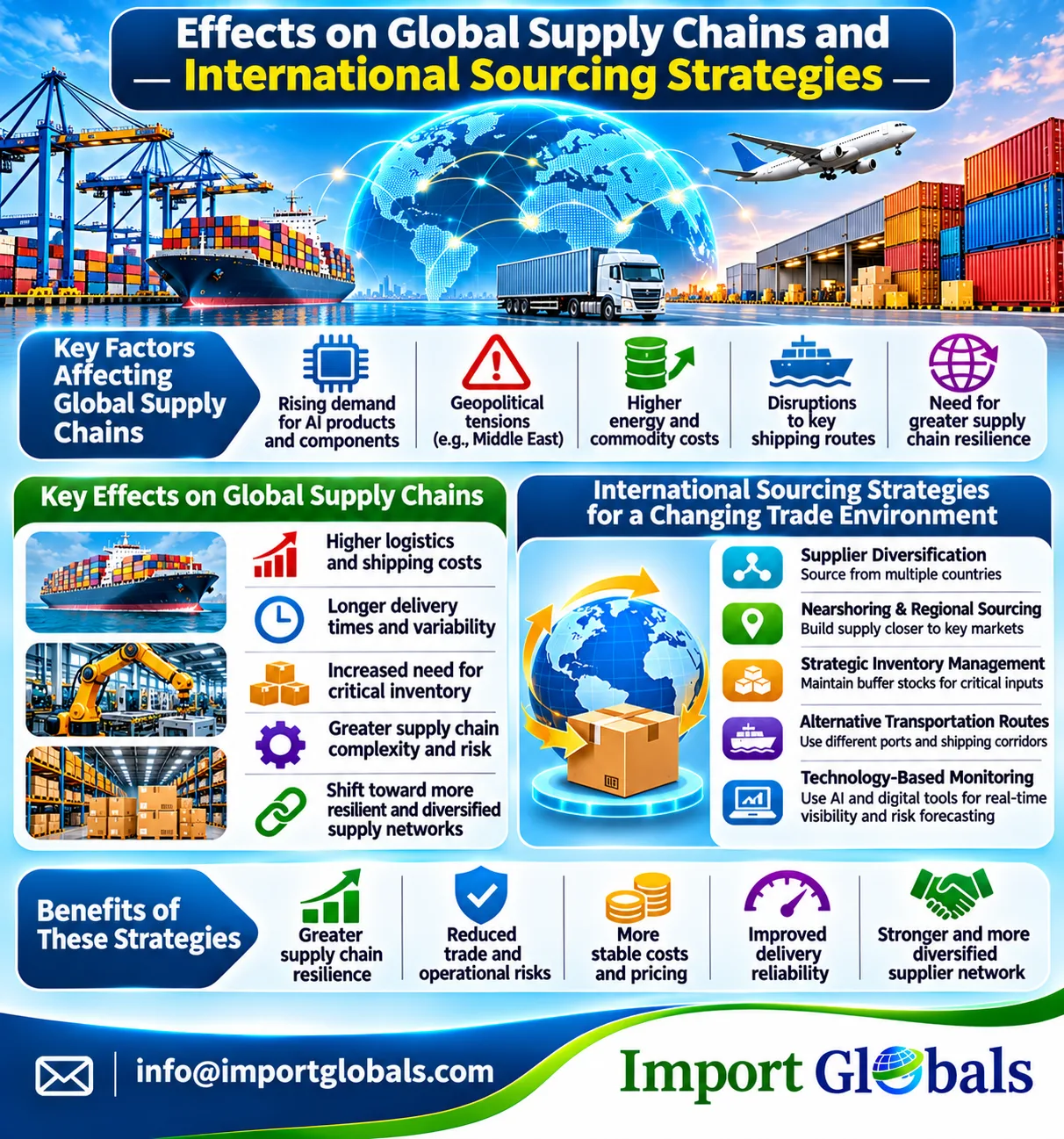
Businesses are dealing with technology-driven demand, geopolitical risks and transportation challenges that have made supply chains more complicated.
In the past, supply chain management was primarily focused on minimizing production costs and establishing strong supplier relationships. Now companies are starting to consider the durability of their supply chain, geographical diversity and availability of raw materials.
Several strategies are gaining importance.
A. Supplier Diversification
Importers are looking at suppliers from a number of countries rather than just looking at one country for suppliers. This would help to reduce the impact of production disruptions, trade barriers and regional conflicts.
B. Nearshoring and Regional Sourcing
The companies could also move their sourcing functions closer to their key consumer base. This would help cut down on the mileage covered in shipping.
C. Strategic Inventory Management
The company might keep a larger inventory of their essential raw materials to avoid any disruption in their production.
D. Alternative Transportation Routes
If current shipping lanes are no longer reliable, shippers and receivers can look at alternate ports, shipping lanes and logistics services.
E. Technology-Based Supply Chain Monitoring
Digital tracking services, predictive analysis and AI forecast tools can assist companies to keep track of their inventories, predict the demand and spot possible disruptions. Such measures can make businesses more resilient but also raise operating costs. Companies have to weigh the cost of increased flexibility against the cost of supply chain disruption.
Impact on Global Energy, Fertilizer and Raw Material Trade
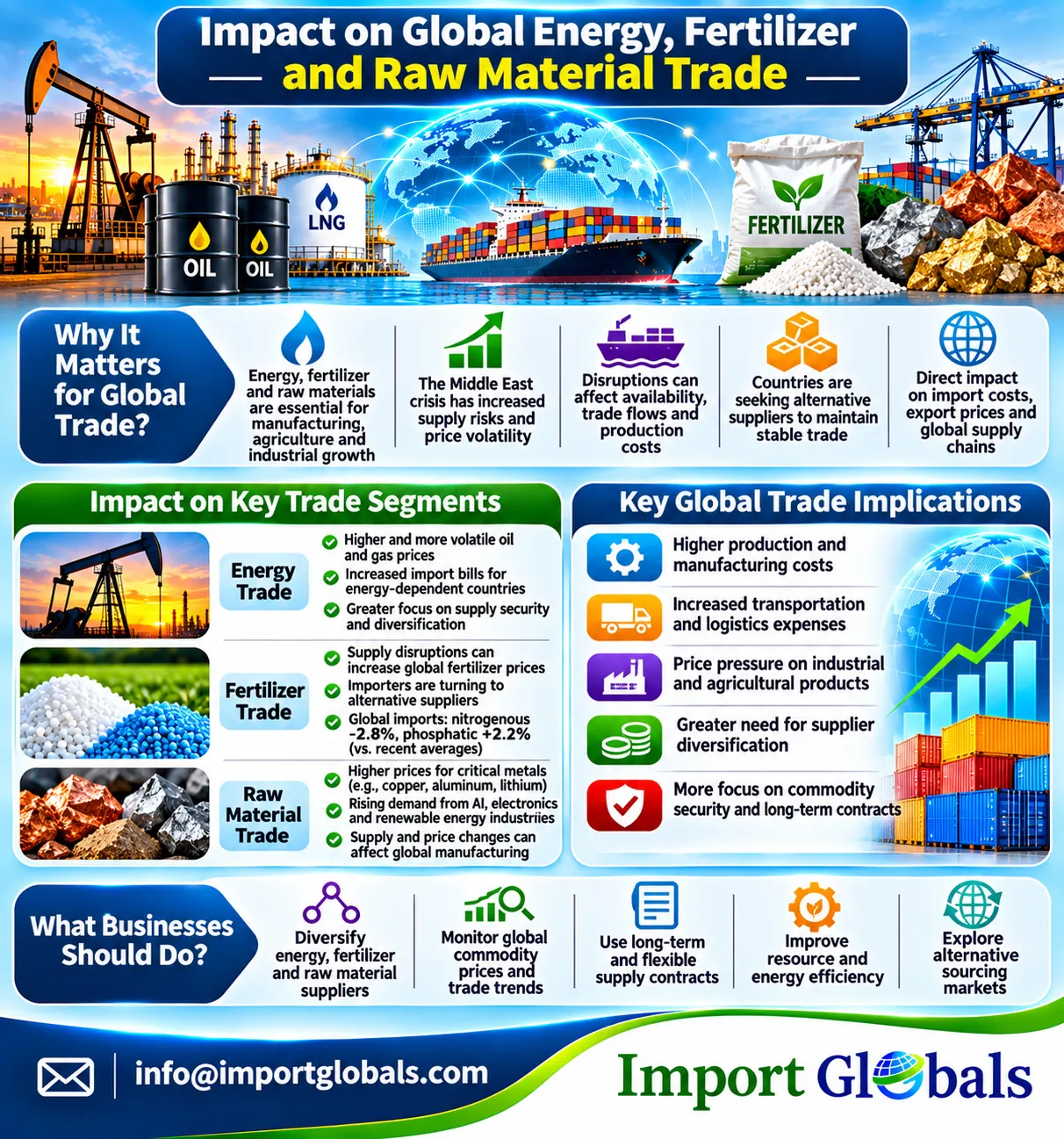
The Middle East problem has put the issue of energy and materials security in the international business operations into perspective. Countries depend on international sources of petroleum, natural gas, fertilizers, industrial minerals and other strategic materials. Disruptions in the production and transportation process will impact supply and prices in more than one industry.
Sources of energy are important because they are the sources of energy for manufacturing, agriculture, transport and power generation. Another important sector is the trade in fertilizers. The nitrogen fertilizers and phosphate fertilizers are important to farm production.
The WTO report released in October 2026 noted that the existence of other suppliers allowed adaptation to sustain disruption in world supplies of fertilizers. Imports of nitrogenous fertilizers decreased by 2.8% compared to the average imports, and imports of phosphatic fertilizers increased by 2.2%. Here disruption is sustained to the world supply chain if there are alternative suppliers of the goods to whom the buyer can turn.
The trade in raw materials is important for industries in artificial intelligence, renewable energy. Raw materials such as copper, aluminum, lithium, etc. are required for power grids, power batteries, computing centers, factories, etc. Companies should monitor prices for commodities, suppliers and trade routes.
How the AI Boom Is Influencing International Services Trade
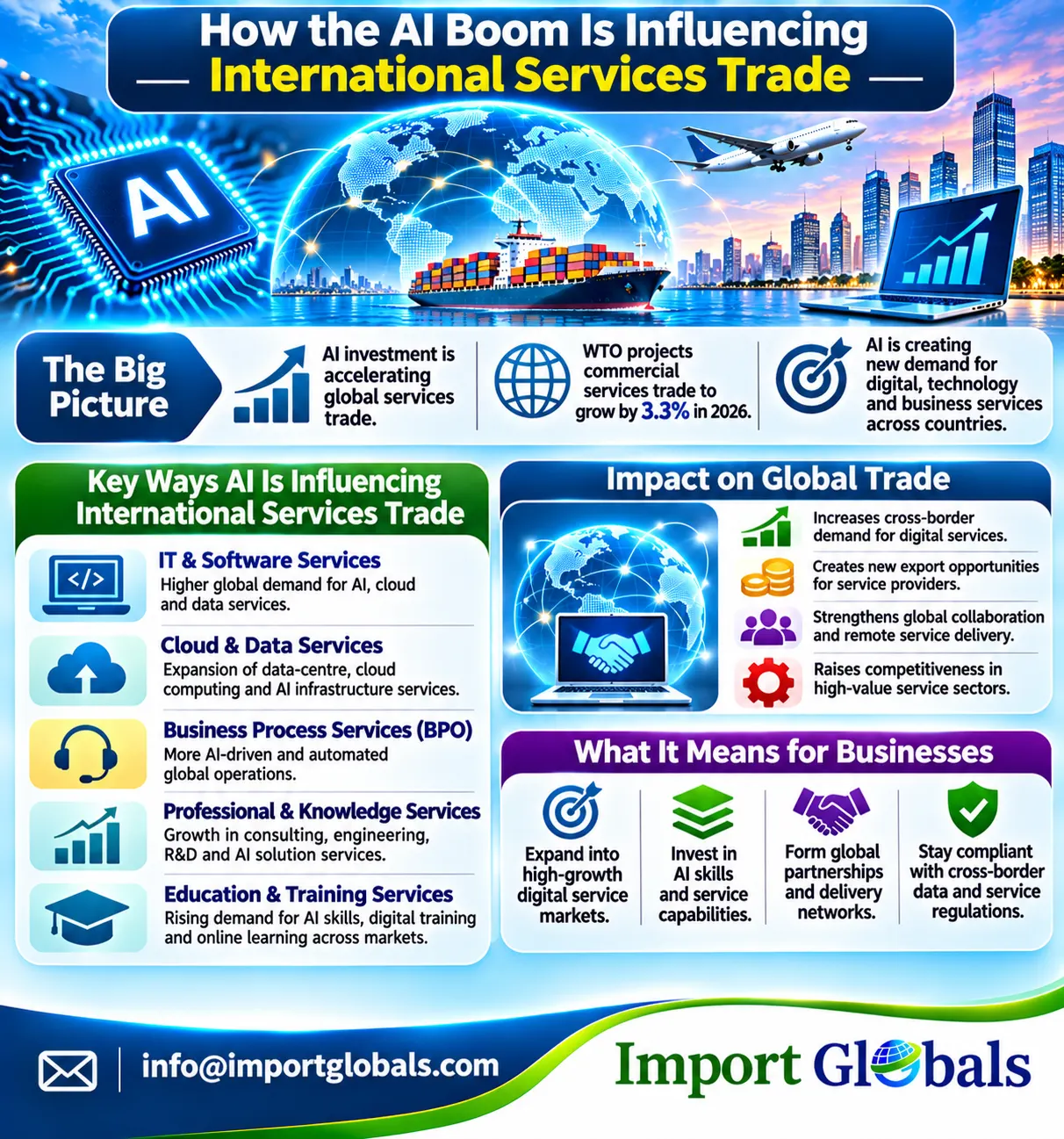
This age of artificial intelligence is creating new opportunities not only for trading physical goods but for international services as well.
Companies are purchasing digital services, software products, cloud computing facilities, data handling and other technical services from companies outside their countries. Digital channels provide services that depend less on traditional shipping channels to reach their customers.
Some of the major sectors are :
- AI software for product development
- Data management and cloud computing
- IT consultancy and support services.
- Cyber security services
- Outsourcing business processes
- Digital marketing & analysis
- Software development and maintenance
There is a growing demand for skilled tech experts across the world and countries with an existing digital infrastructure can benefit from it. India has a proven IT services industry, and opportunities to develop in artificial intelligence, data analytics and enterprise technology services, for instance.
But the services trade cannot be free of geopolitical difficulties. The international service providers may be affected by energy prices, changes in infrastructure, regulations and cross-border data flows. In October 2026, the World Trade Organization estimated that trade in commercial services would expand by 3.3% in 2026, down from its earlier estimate of 4.8%.
Challenges Facing International Importers and Exporters
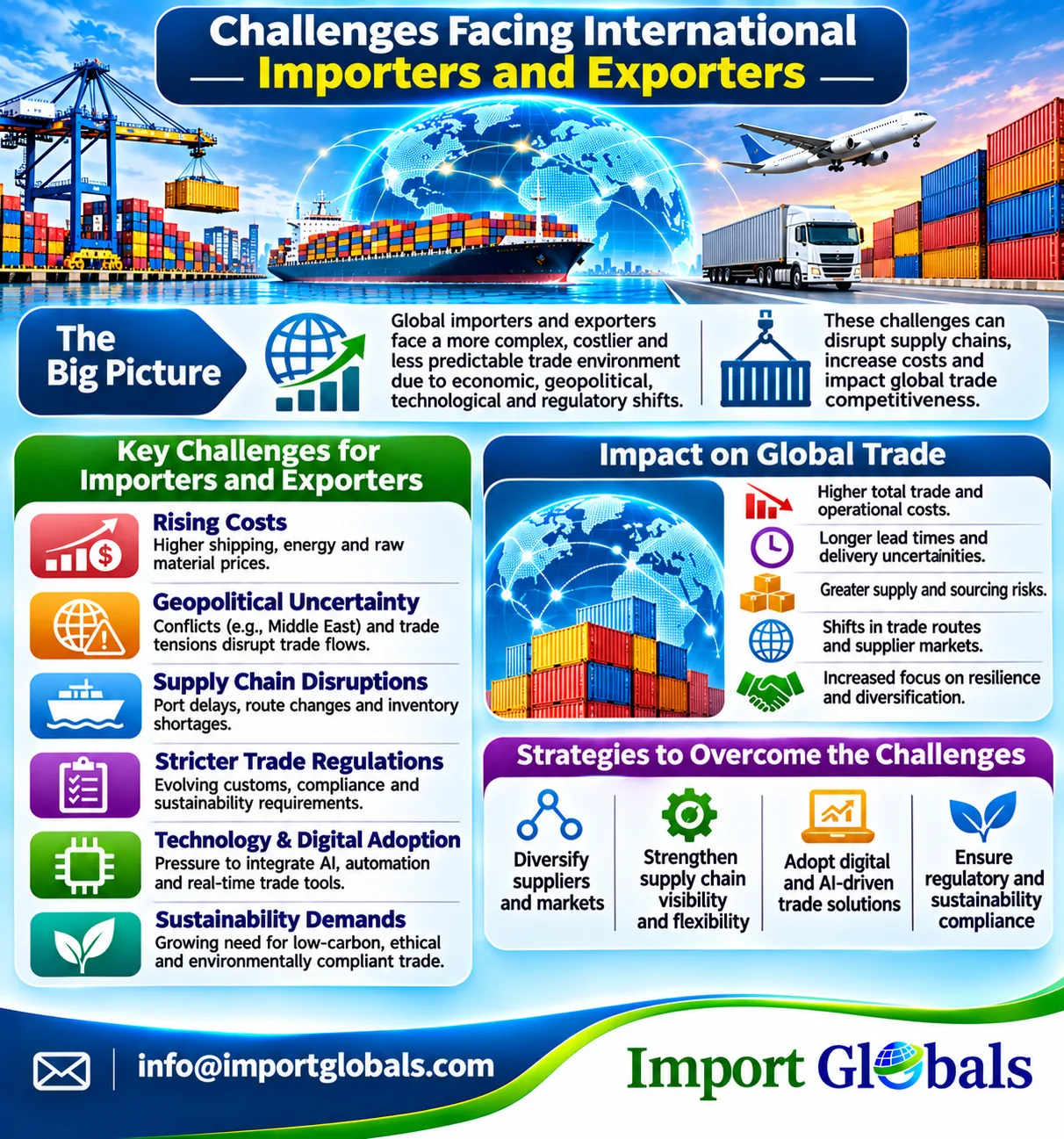
There is a wide range of other aspects a company has to take into account together with benefits provided by the use of artificial intelligence (AI).
1. Higher Logistics Costs
Transport costs could rise due to greater distances, increased fuel expenses, and the requirement for insurance.
2. Delayed Shipments
Port congestions, route changes and transport restrictions will affect delivery and stock control.
3. Raw Material Price Volatility
Changing energy and goods markets will mean higher production costs and difficulties in pricing for export.
4. Trade Restrictions and Regulations
International markets access may be affected by control regulations, sanctions, customs regulation and changes of trading policy.
5. Technology Supply Chain Concentration
There is a risk to the manufacturing process if there are only a few producers of semiconductors and specialists for manufacturing.
6. Currency Fluctuations
Exchange rate fluctuations may affect import costs, export revenues and international payment system.
7. Unequal Access to AI Opportunities
Countries not having technological infrastructure, qualified staff and investments will have difficulty participating in the trade development driven by AI. Companies should adjust flexible procurement policy and trading regulations, and build strong relationships with suppliers to cope with these difficulties.
Strategies Businesses Should Adopt to Build Trade Resilience
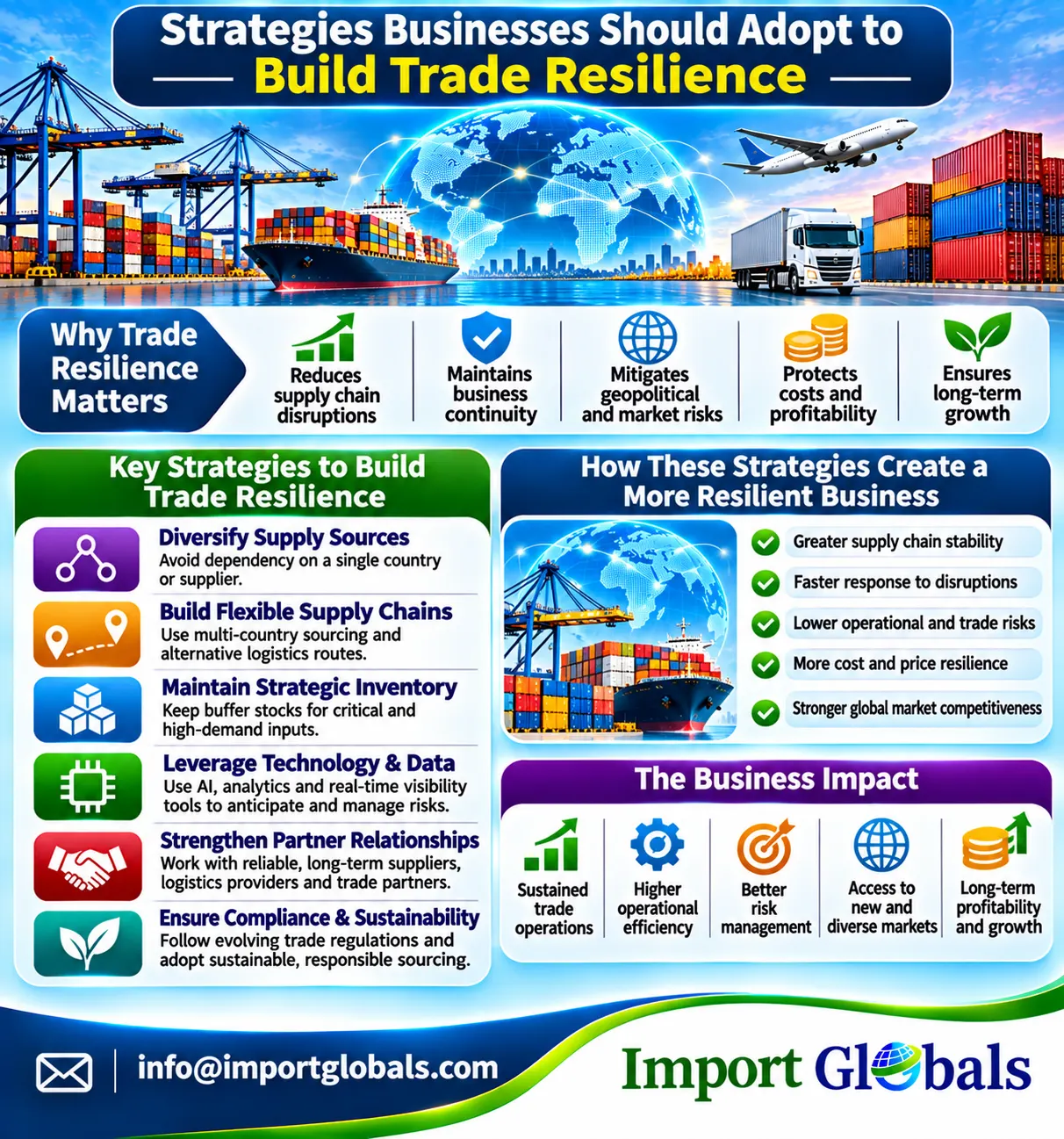
Corporate America must get ready for an international trading scene where the potential for technological advantage and geopolitical threats go hand in hand. “Flexibility in corporate strategy will be a boon for both importers and exporters in dealing with any contingencies.”
The following approaches can strengthen trade resilience:
1. Diversify Supplier Networks: Build relationships with different suppliers in different countries and target different markets at the same time.
2. Monitor Geopolitical Developments: Take into account all international policies and regional security issues that might affect the business process.
3. Use Accurate Trade Intelligence: Examine import/export statistics, market demand, competitors' and suppliers' actions.
4. Review Transportation Options: Be ready with alternate transport routes and ports to avoid any regional issues.
5. Improve Inventory Planning: Maintain the optimum stock of goods you need without the warehousing cost.
6. Invest in Digital Technology: Apply AI-enabled predictive analytics, automated inventory management and supply chain digitization.
7. Strengthen Regulatory Compliance: Think customs clearance, country of origin questions, trading rules and product classification.
8. Evaluate Energy Exposure: Quantify the effects of energy price movements on production, delivery and procurement costs.
9. Explore Emerging Markets: Source and export goods to other than the traditional markets of the company.
10. Develop Risk Management Plans: Plan a backup strategy for the cases of high delivery costs, higher prices of raw materials and change of international trade policies.
It will help companies to cope with market interruptions and take advantage of those opportunities that come from technological demands.
Future Outlook: What to Expect from Global Import-Export Trade
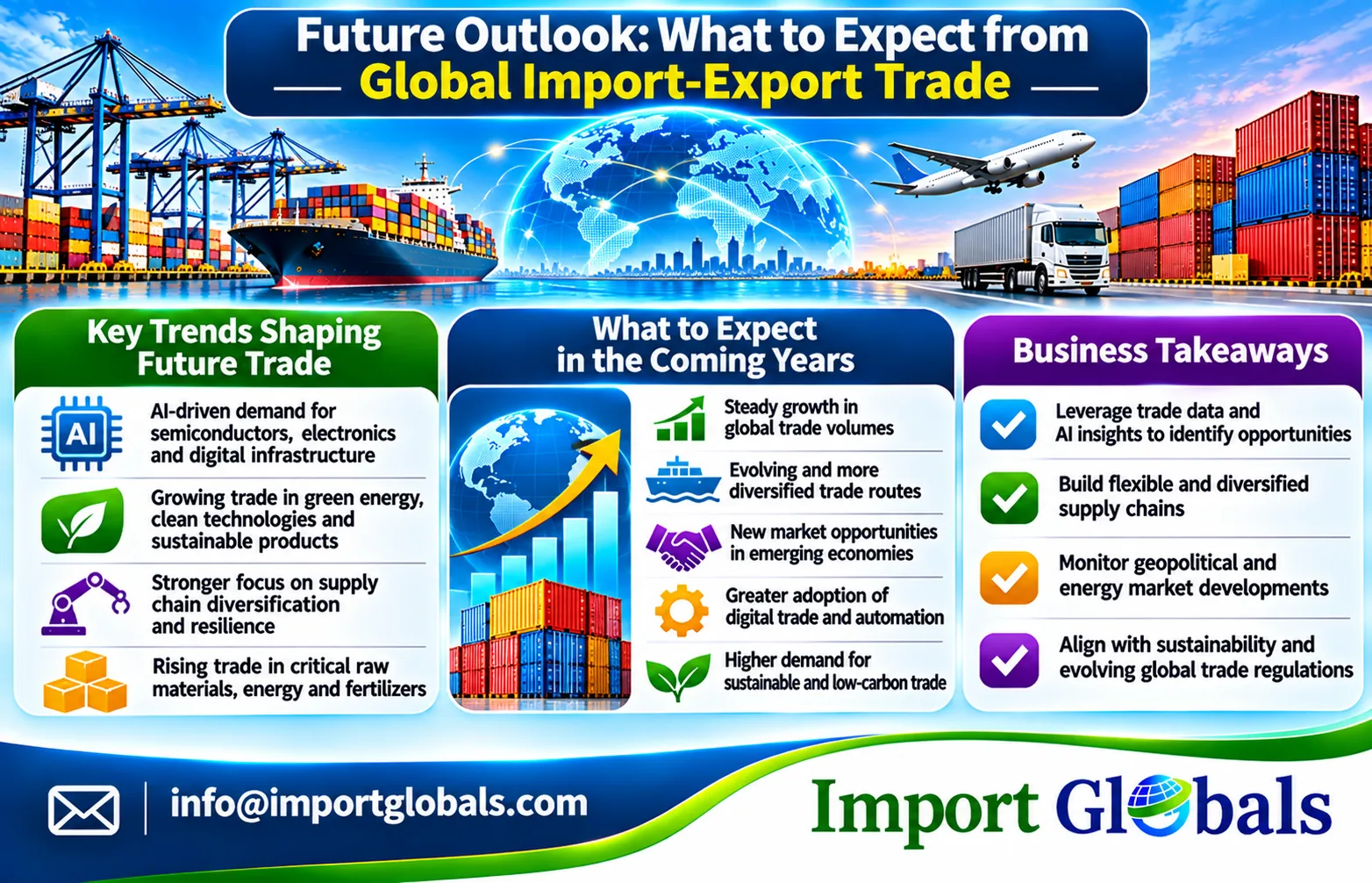
However, further development of global trade is likely to be determined by the interrelation of technological investments, international economic situation and geopolitical events.
The growing demand for products related to artificial intelligence is likely to contribute significantly to the trade in semiconductors, servers, electronic parts and advanced industrial machinery. Investment in data centers and digital technology can create new trade opportunities for manufacturers and exporters from different countries.
“The price of energy resources and shipping services is expected to remain under pressure due to the geopolitical instability in the Middle East. But that would depend on regional factors, and on the availability of other suppliers.
The World Trade Organization forecast published in October 2026 forecasts an increase of 4.1 per cent in 2027 for goods trade that was valued at 3.9 per cent in 2026. Service trade is projected to increase 6.4 percent in 2027, a sign of a possible rebound from a weak performance in 2026.
However, the above-mentioned projections are not to be seen as the final ones because there are many variables that can influence the performance of the trade in the future, such as geopolitical changes, energy markets, trade policy and investment in artificial intelligence.
Countries with advanced technology, multiple destinations and good infrastructure will probably perform better. The energy importing countries and unstable regions will probably perform badly.
Conclusion
Artificial intelligence is on the rise, and the crisis in the Middle East is changing international import/export trade. There are two very strong but opposing forces. The increased use of artificial intelligence is leading to an increased demand in international markets for semiconductors, electronics, machinery and IT services.
CTA
Build a resilient global trade business with reliable market intelligence from Import Globals. Access valuable import-export data, identify trusted suppliers, explore new markets, and stay ahead of changing trade trends. Visit www.importglobals.com or email [email protected] today to discover smarter trade opportunities and make informed business decisions.
FAQs
Que. How does the AI revolution affect international import-export business?
Ans. The use of AI is driving demand for semiconductors, servers, electronics, data center hardware, and technology.
Que. How does increased AI investment impact semiconductor exports?
Ans. Increased AI investments will have an impact on semiconductor and electronics exports.
Que. How does the Middle East situation affect international shipping routes?
Ans. The unstable situation in the Middle East will lead to disruption of shipping routes, higher shipping costs and longer delivery time.
Que. Why do increased energy costs affect imports?
Ans. Increased oil and gas prices will cause increased costs of transportation, manufacturing, production, and logistics.
Que. Which industries will be positively impacted by AI-fueled trade development?
Ans. Semiconductor industry, electronics, cloud computing, data centers, automation and services are some of the main ones.
Que. How can companies minimize supply chain disruptions?
Ans. Companies can diversify their sources of supply, find alternate transportation routes, keep strategic stocks, and watch trade developments.
Que. How can developing countries benefit from AI-based global trade?
Ans. Developing countries can bring in investment in technology, increase electronic exports and build trade connections internationally.
Que. How does Global Trade Data help companies find opportunities in the global marketplace?
Ans. Global Trade Data allows companies to examine trade flows, find potential customers and suppliers, track competitors and discover new markets.
Que. How frequently is global import-export trade data updated?
Ans. Global import-export trade data is generally updated monthly, depending on the country, data source and reporting schedule.
Que. Where can you obtain detailed information on AI-driven trade trends and global import-export data?
Ans. Visit www.importglobals.com or email [email protected] for detailed information and updates on international import-export trade data.
You Can Also Visit :-
