
Malaysia Electrical and Electronics Exports: Global Markets and Trade Opportunities
- Nov 27, 2026
- 82 Views
Malaysia Electrical and Electronics Exports: Global Markets and Trade Opportunities
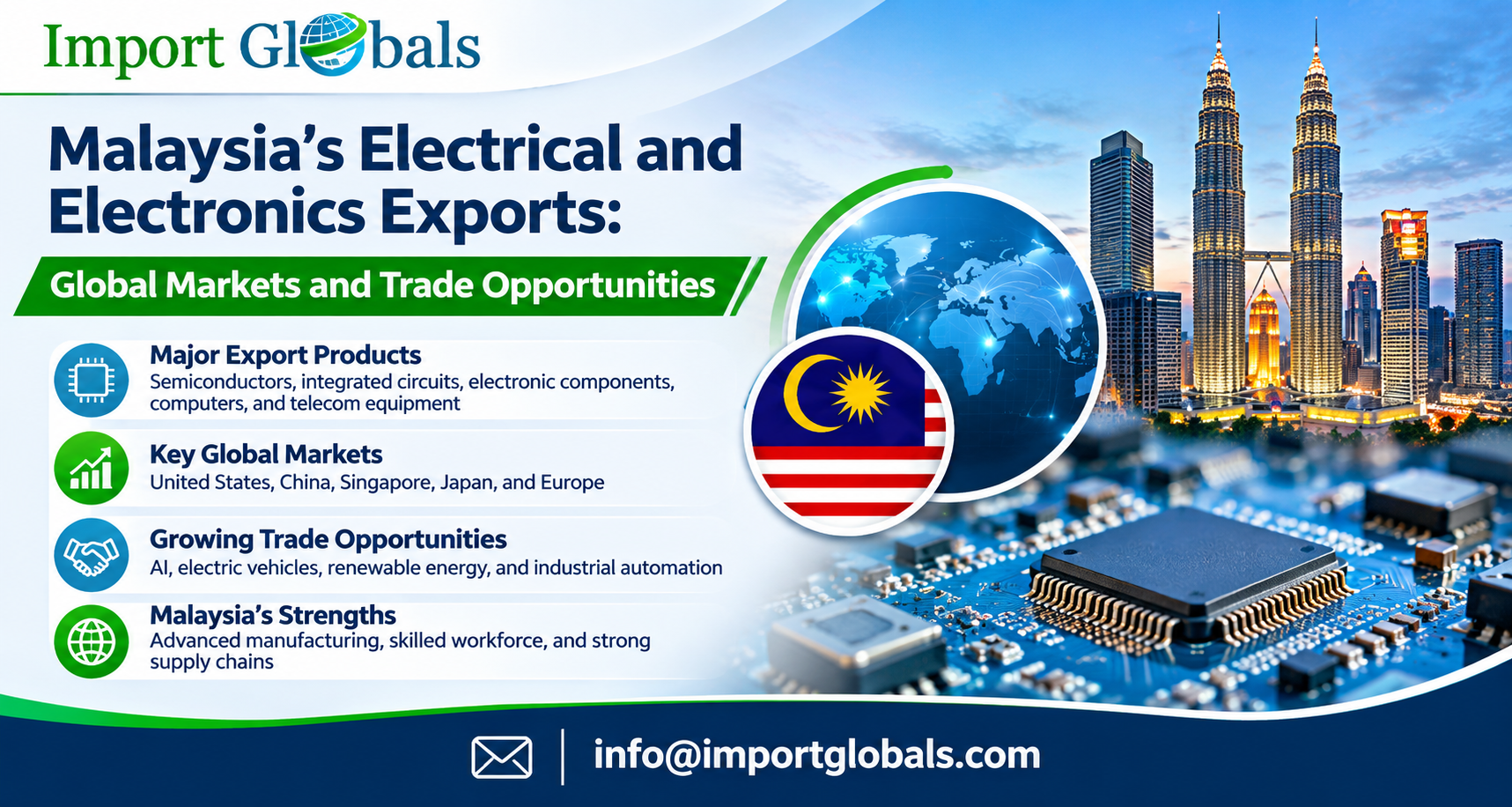
The E&E sector is based on the advanced production capacities, high qualifications of specialists and good international trading links. Malaysia has positioned itself as a prominent international center in this respect. Products produced in Malaysia include semiconductors, integrated circuits, electronic components, computers and telecommunications devices.
The E&E sector is based on the advanced production capacities, high qualifications of specialists and good international trading links. Malaysia has positioned itself as a prominent international center in this respect. Products produced in Malaysia include semiconductors, integrated circuits, electronic components, computers and telecommunications devices.
The US, China, Singapore, Japan and European countries are Malaysia’s main trading partners in the electronics industry. The increasing demand for semiconductors, artificial intelligence devices, electric cars and data center products is expected to create new export opportunities for Malaysia’s electronics future.
Importers, exporters, manufacturers and traders need to understand international demand as well as market trends to take effective business decisions. Malaysia Imports Data can be utilized for analyzing important information related to electronic imports, sources, suppliers and trading trends. Similarly Malaysia Export Data can help the companies to find their export destinations, most traded products, buyer markets and trading opportunities.Import Globals helps businesses to get insights of imports and exports to analyze their trade intelligence and shipments in Malaysia’s electrical and electronics sector with accurate data. Import-export insights help companies identify their buyers and evaluate their competition, and find suppliers and market entry strategies.
Key Electrical and Electronics Products Driving Malaysia’s Export Growth
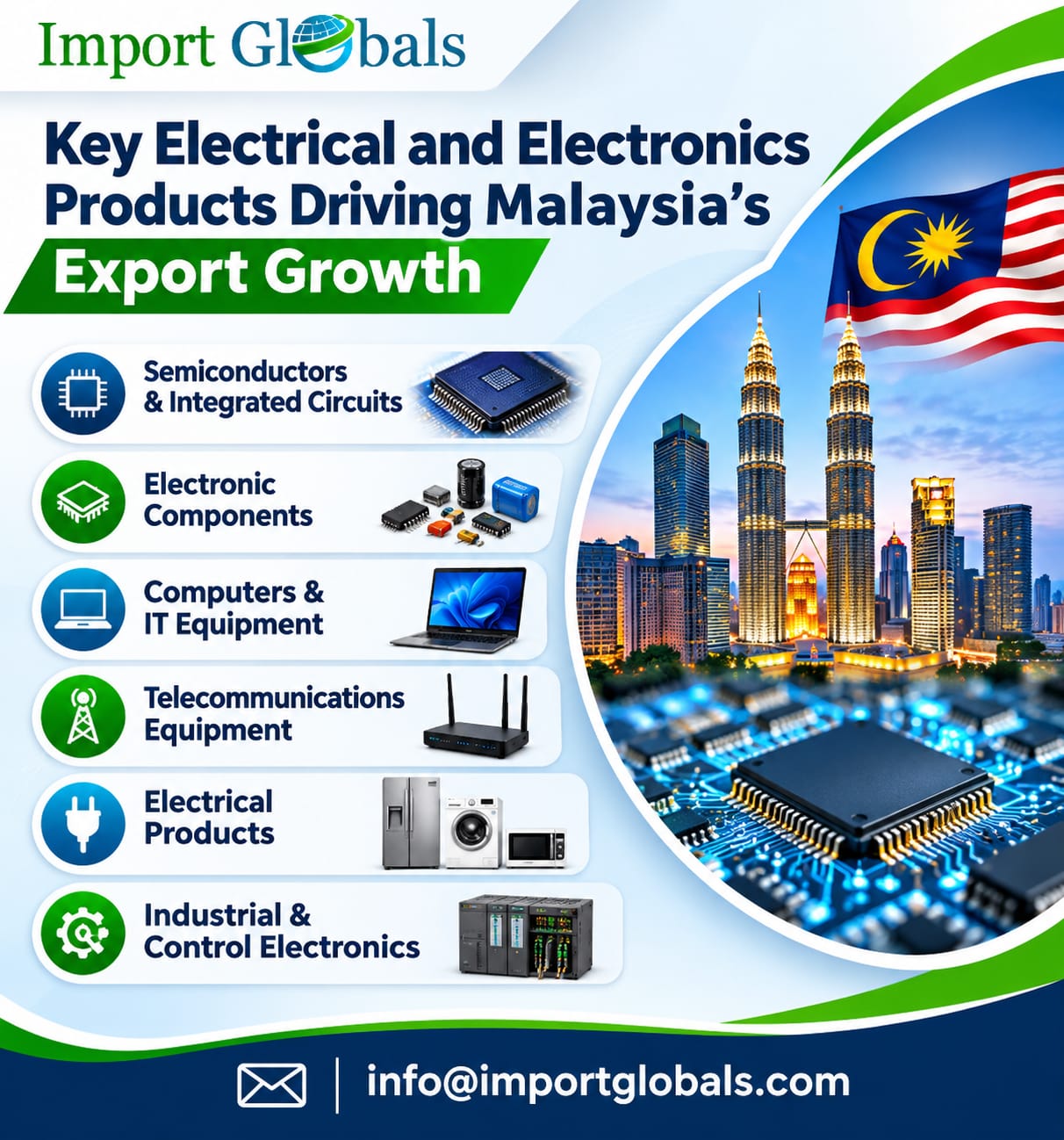 The Malaysian Electrical and Electronic (E&E) industry is one of the main contributors to Malaysian international trade due to its developed manufacturing capacity and increasing demand in the global market. Several product types are positively impacting Malaysia’s export performance and improving the country’s position in global supply chains.
1. Semiconductors and Integrated Circuits: Here are some of Malaysia's leading exports. Semiconductor demand is being driven by artificial intelligence, automotive electronics, smartphones and data centers.
2. Computers and Data Processing Equipment: Malaysia exports computers, computer components and data processing machines to the international market. These goods are driven by the demand for digitization and cloud computing.
3. Electronic Components: Communication devices, networking parts and equipment for data transmission are export products. Globalization and the development of 5G networks fuel demand for them.
4. Telecommunications Equipment: The increased global connectivity and 5G networks help to boost export of communication gadgets, network hardware and telecommunications equipment.
5. Electrical Products and Solar Components: The growth of renewable energy and industrial development also opens up possibilities for the export of batteries, cables, LED lights, solar cells and photovoltaic modules.
Malaysia Trade Data helps in analyzing export performance in terms of products, major trading partners and demand in international markets. Likewise, Malaysia Shipments Data is useful in providing insights about exporters, buyers, products and trade flow.
Import Globals provides businesses with the chance to leverage accurate trade intelligence in sourcing new buyers, competition and opportunity in Malaysia’s growing E&E export industry.
Major Global Markets for Malaysia’s E&E Exports
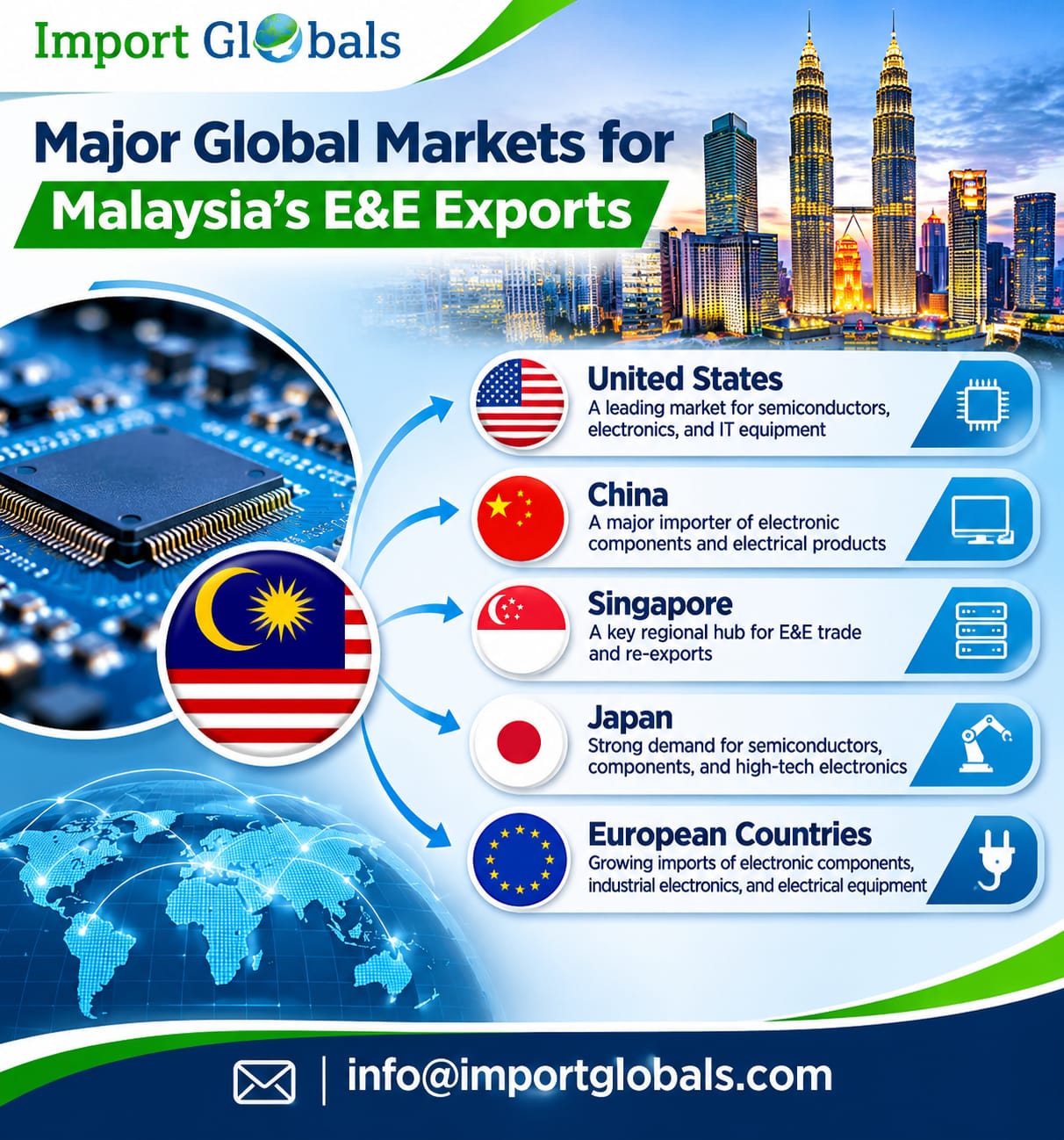
Malaysia has become a major player in the global Electrical & Electronics (E&E) industry, supplying semiconductors, integrated circuits, electronic components, computers and telecommunications devices to a wide range of foreign markets. There are some countries which are very crucial to Malaysia’s export in E&E industry.
1. United States: The United States is a big buyer of Malaysian electronics products including semiconductors, integrated circuits and computer parts. The business opportunities for electronic exporters in Malaysia are abundant.
2. China: It is still a vital trading partner of Malaysia. It needs electronic components, semiconductor products and industrial equipment from Malaysia.
3. Singapore: Import Globals can help firms with global trade intelligence, find possible buyers, analyze shipment movement and find export opportunities.
4. Japan: The Japanese market has potential customers for Malaysian producers of electronic components, precision instruments and semiconductors due to its highly developed automotive and electronics industry.
5. European Union: Malaysia’s electronics including industrial components, electric equipment and technological products are likely to find potential customers in countries like Germany, Netherlands and France.
With the Malaysia Trade Statistics you can see how exports are doing, find out which are the main countries that imports are sent to and see changes in international demand. In addition, Malaysia Export Trade Data also assists to analyze product categories, trading partners, exporter activity and shipments.
Import Globals provides comprehensive global trade intelligence to identify potential international buyers, competitor analysis and to explore new profitable opportunities in Malaysia’s fast growing export E&E industry.
Malaysia’s Role in the Global Semiconductor Supply Chain
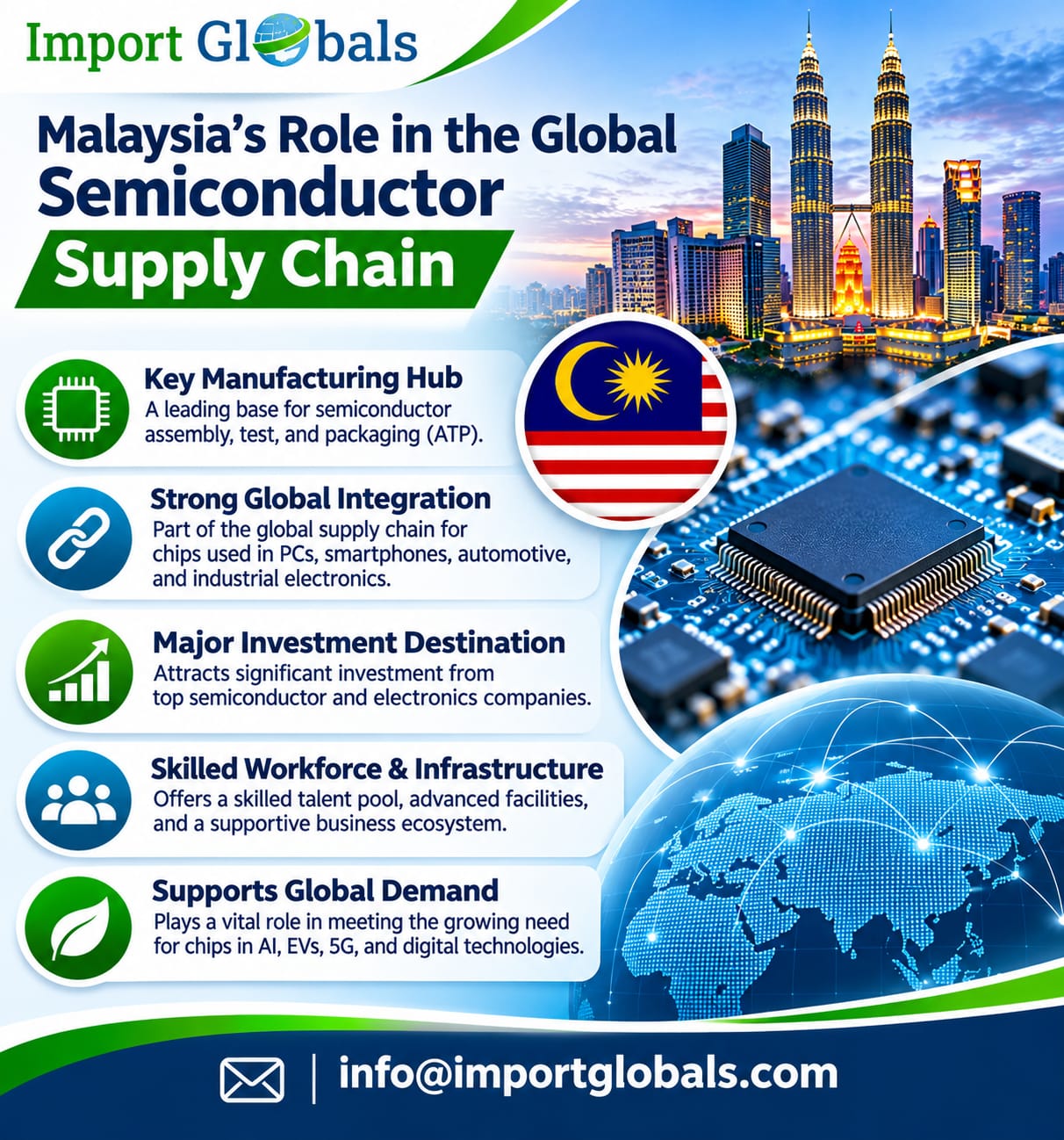 Currently, Malaysia is one of the players in the global semiconductor supply chain, thanks to its advanced manufacturing infrastructure, well-trained workforce and international trade relations. The Malaysian semiconductor industry contributes significantly to the success of the E&E industry by providing critical components to many industries around the world.
1. Semiconductor Manufacturing and Assembly: Malaysia has attained a high level of expertise in ATP. This activity helps global chip companies to supply good semiconductor products.
2. Strong Global Trade Connections: The country has trade relations with the USA, China, Singapore, Japan and European countries. These relations will help to improve semiconductor supply chains and international distribution.
3. Growing Demand for Advanced Chips: The increasing adoption of electric cars, smartphones, cloud computing and artificial intelligence (AI) is fueling global demands for semiconductors. Malaysian semiconductor manufacturers have huge opportunities to improve production and draw investments.
4. Foreign Investment and Technology Development: The government effort, the structure of industries and the foreign direct investment makes semiconductor companies to enhance their manufacturing process, technology development and manufacturing capability.
5. Opportunities in Global Supply Chain Diversification: Companies around the world are looking for new locations in which to manufacture and source products to build up their supply chains. For example, semiconductor companies can purchase semiconductors and produce semiconductor components in Malaysia.
A company can use Malaysia Import Export Data to study the imports and exports of semiconductors, identify the major trading countries, examine the product categories and gain insights into global sourcing.
Import Globals provides valuable trade intelligence to importers, exporters and manufacturers to identify business partners, monitor market trends and create new opportunities in the Malaysian semiconductor industry.
Emerging Trade Opportunities in the United States, China, and Europe
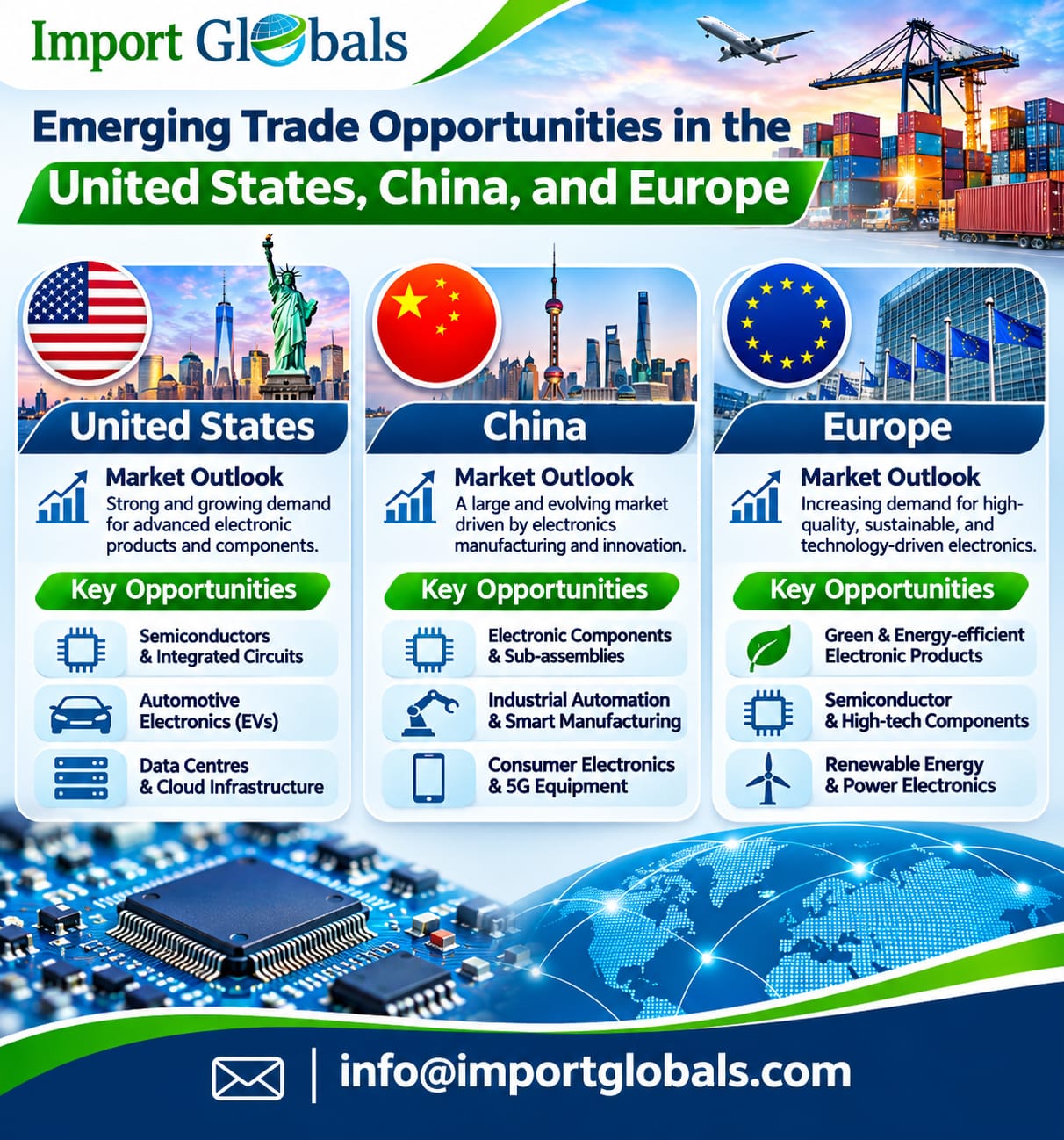 The E&E industry in Malaysia is gaining prominence in the international markets with the rising global demand for semiconductors, electronic components and advanced technology products. There are good opportunities in the USA, China and Europe markets for Malaysian exporters who want to improve their international business and partnerships.
1. United States – Expanding Demand for Advanced Electronics: The United States is a great opportunity for Malaysian exports such as semiconductors, integrated circuits, computer parts and telecommunications products. Investment is ramping up in areas like artificial intelligence, electric vehicles and data center construction, so good electronics suppliers are needed. Malaysian exporters can explore opportunities to forge strategic alliances with technology and manufacturing companies.
2. China – Strengthening Manufacturing and Supply Chain Partnerships: Malaysian exporters have a lot of opportunities in the electronics manufacturing ecosystem in China. The demand will be for semiconductors, circuit boards, electrical products and electronic components.
3. Europe – Growing Interest in Sustainable and Industrial Electronics: The exporters of industrial electronics, renewable energy products, automotive electronics and semiconductor products of Malaysia have opportunities in European market such as Germany, France and Netherlands due to the shift toward electric vehicles and renewable energy. To expand into markets you need to know the international demand, how buyers behave and what the competition is doing.
4. Identifying Opportunities Through Trade Intelligence: Import Globals can help firms with global trade intelligence, find possible buyers, analyze shipment movement and find export opportunities.
Strategic exploration of such markets will help Malaysian E&E exporters diversify their customer base and build international relations.
The Impact of Global Demand for Semiconductors and Electronic Components
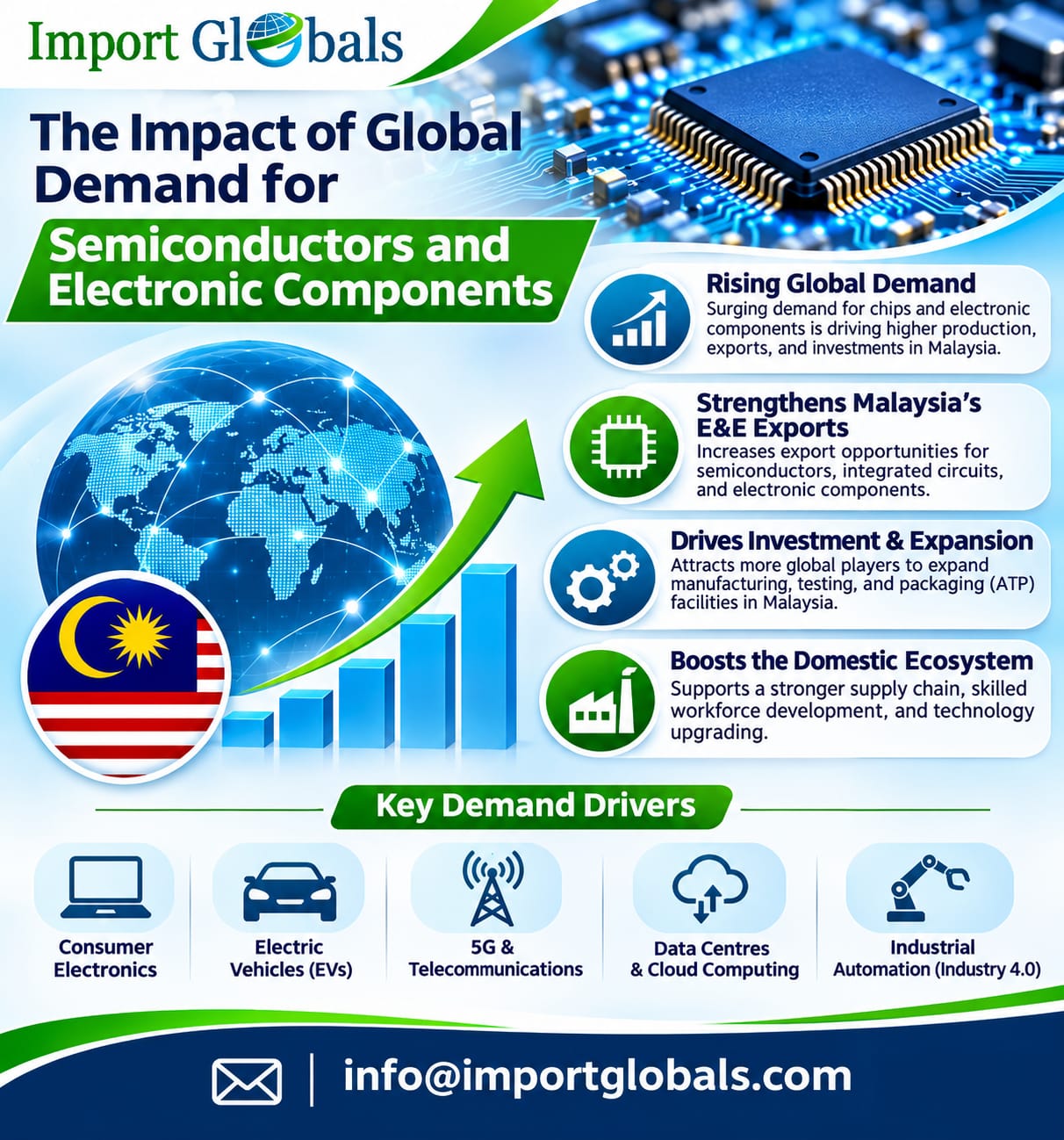 The global electronics industry is undergoing major changes due to the growing demand for semiconductors and electronic components. Some of the technological tools that have become integral parts of businesses today are AI, electric vehicles, smartphones and automation. The growing worldwide demand is a good opportunity for Malaysia to develop its Electrical and Electronics (E&E) export industry.
1. Accelerating Semiconductor Production: Artificial intelligence technology, cloud computing and advanced data centers are driving demand for better chips. Malaysian manufacturers could benefit from upgrading the capacity of their semiconductor assembly, testing and packaging operations.
2. Expanding Automotive Electronics Demand: Electric cars, advanced mobility solutions and driver assistance systems will require special chips, sensors, batteries and electronic control units.
3. Strengthening Consumer Electronics Manufacturing: Electronics manufacturers are turning to reliable overseas sources of electronic components to meet growing demand for laptop computers, cell phones, and smart devices and wearables.
4. Encouraging Technological Innovation: Electronics producers have had to invest in research, automation, manufacturing techniques and semiconductor technologies to stay competitive in the market. It might lead to better products and processes.
5. Creating New International Trade Opportunities: The increasing demand would provide Malaysian exporters the opportunity to develop strategic supply contracts to diversify export destinations and reach out to foreign buyers.
6. Improving Market Research and Business Planning: When trying to exploit the available opportunities for business, it is very important to understand the global demand trends. Import Globals helps firms analyze global trade patterns, competitors’ activities, discover new buyers and analyze new markets using trade intelligence.
“Generally the increase in demand for semiconductors and electronic parts would be good for Malaysia in terms of exports.
Challenges Facing Malaysia’s Electrical and Electronics Exporters
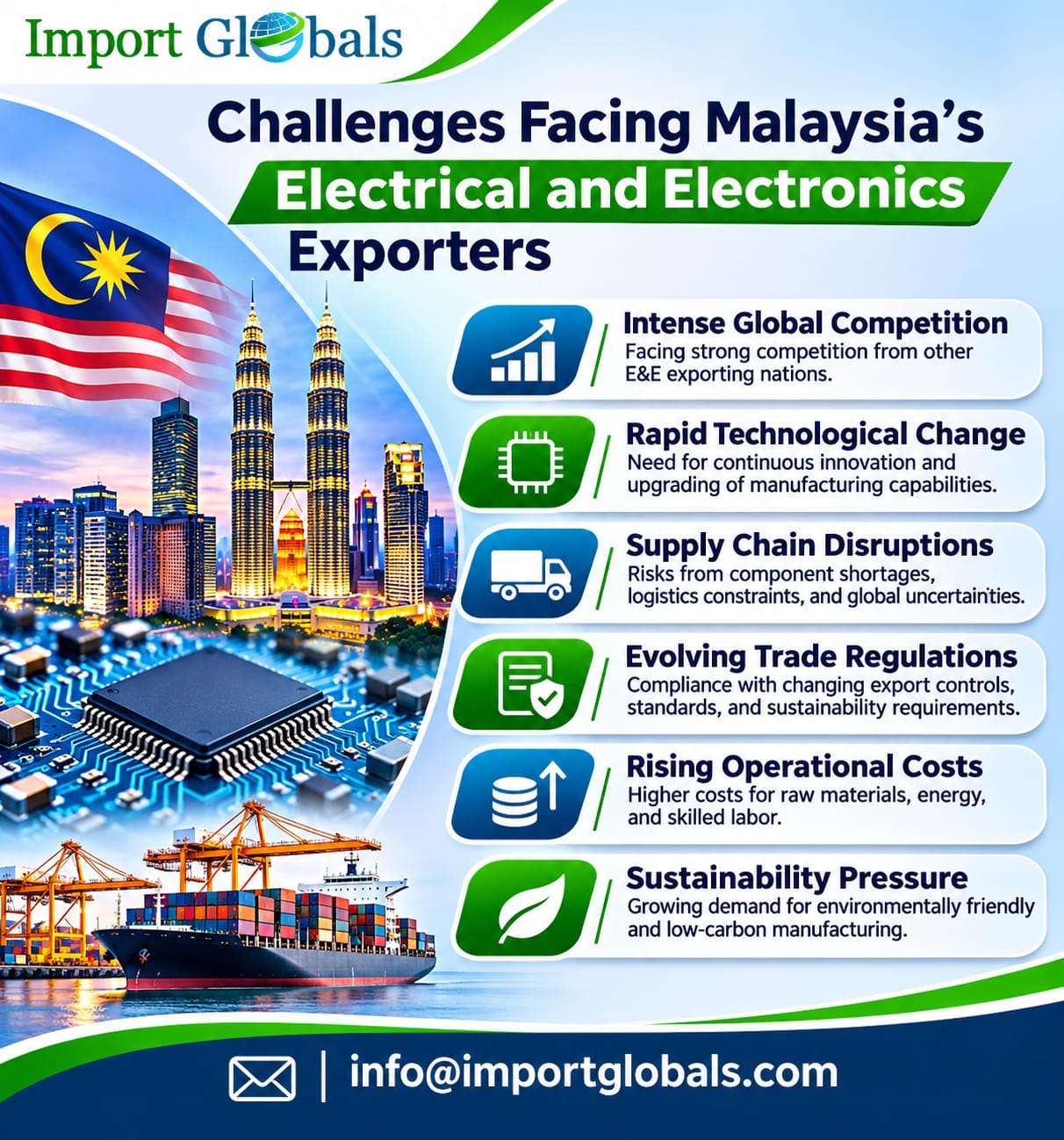
Despite the great trade potential of E&E Industry in Malaysia, there are some challenges that the exporters should face to compete effectively. Knowing about these difficulties will help to be more efficient in manufacturing process and manage risks properly.
1. Global Supply Chain Disruptions - Despite the great trade potential of E&E Industry in Malaysia, there are some challenges that the exporters should face to compete effectively. Knowing about these difficulties will help to be more efficient in manufacturing process and manage risks properly.
- Lack of materials and electronic components can disturb manufacturing plans.
- Transportation problems can lead to additional expenses on delivery.
- It is necessary to have diverse suppliers to ensure keep the operation running without interruptions.
2. Intense International Competition
- There is competition in the country of such major countries as China, South Korea, Taiwan, and Vietnam.
- Pricing, quality of products and innovations play an important role in international market.
3. Rising Manufacturing and Labour Costs
- Increasing energy prices, wages, and raw material expenses can affect production profitability.
- Manufacturing process should be automated to ensure reduce the operational costs.
4. Changing International Trade Regulations
- Additional issues could arise with exportation paperwork, certification of goods, customs processes and international regulations.
- Companies have to be current on the changing trade policies in the countries they are targeting.
5. Rapid Technological Developments
- Continuous developments in technology of semiconductors require continuous investments in technology, research and training of staff.
- Those who fail to evolve will lose their competitive advantage.
How Import Globals Supports Better Trade Decisions
Import Globals gives companies access to key trade intelligence worldwide to analyze market trends, potential customers, competing firms and international sourcing practices.
Malaysia’s Strategies for Strengthening Its Position in Global E&E Trade
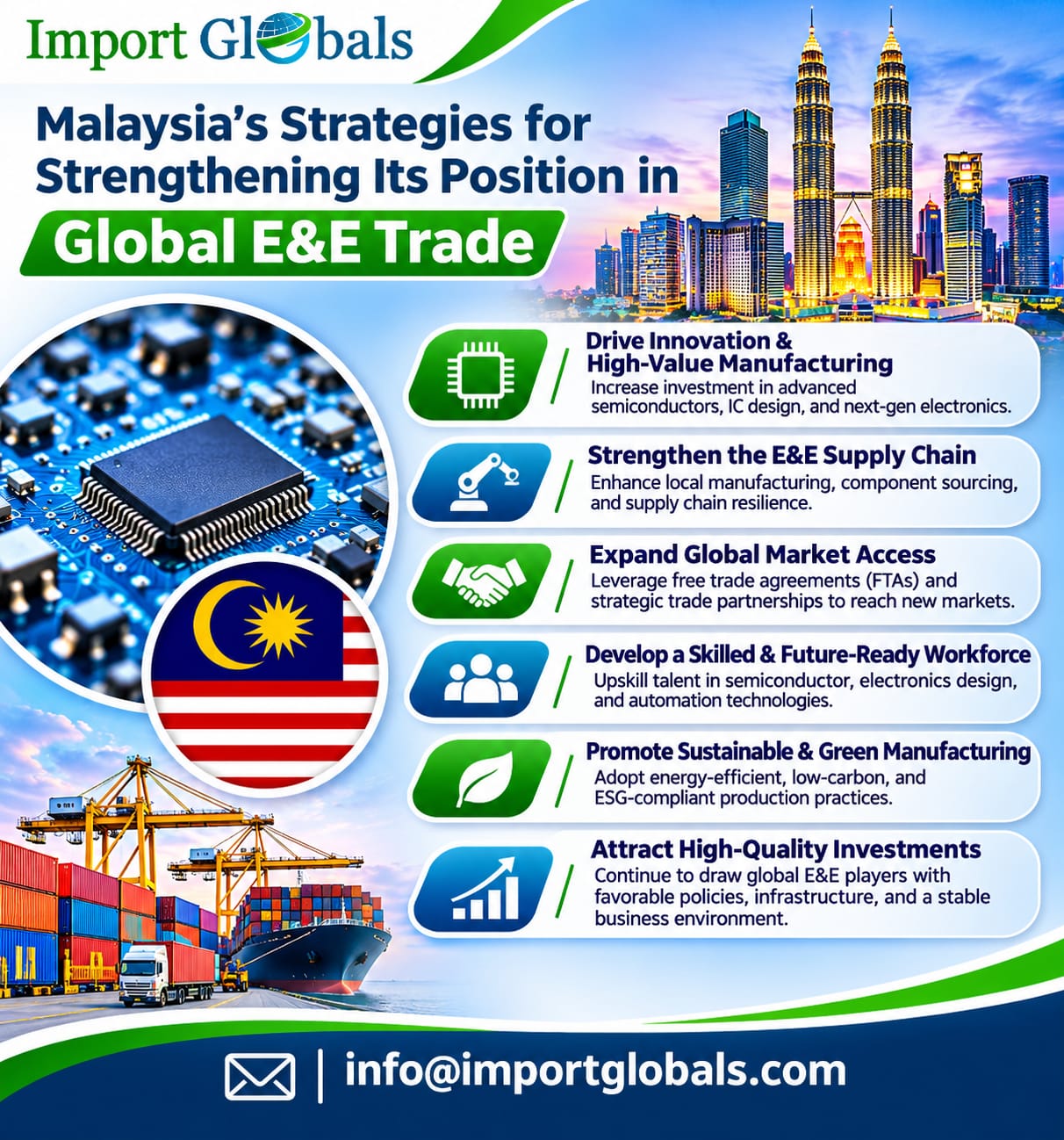 Malaysia is undertaking a series of measures to enhance its competitiveness in the international Electrical and Electronics (E&E) industry. As the global demand for semiconductors and electronic components is on the rise, Malaysia is looking at innovation, investment and better international collaborations.
Key Growth Drivers Behind Malaysia’s E&E Industry
01 | Technology-Led Manufacturing
Malaysia is urging manufacturers to adopt advanced manufacturing technologies and smart manufacturing. With increased investment in semiconductor technologies, integrated circuits and advanced packaging, Malaysia can produce high-end electronics.
02 | International Investment Opportunities
Another significant factor in the industrialization process of Malaysia is foreign direct investment. Partnerships with multinational corporations can also bring advanced technologies and manufacturing benefits to Malaysia.
03 | Workforce and Skill Development
It is a very competitive industry and needs a specialized technical knowledge base. Malaysia is developing education and vocational training in semiconductors, robotics and electronics manufacturing.
04 | Global Market Diversification
Building trade connections with the US, China, Japan, Singapore, and Europe may allow Malaysian exporters to discover new customers. Seeking business in the fields of electric vehicles, renewable energy, and artificial intelligence can enable diversification of export activities.
Development of logistics infrastructure, component diversification, and sustainable production can contribute to Malaysia becoming more competitive in international supply chains.
The company Import Globals provides businesses with information on international trade through useful shipment data, market research, analysis of competitors, and search for buyers. This information can be helpful for Malaysian exporters to develop market expansion strategies.
05 | Sustainable and Resilient Supply Chains
The development of logistics infrastructure, component diversification and sustainable production could make Malaysia more competitive in international supply chains.
The Role of Import Globals in Global Trade Intelligence
Import Globals helps companies to gain insights about global trade through useful shipment data, market research, competitor analysis and buyer search. This information can help Malaysian exporters to develop strategies to expand its market.
Conclusion
With its semiconductor development, manufacturing development and international trade ties, the Malaysian Electrical and Electronics industry continues to create huge business opportunities for itself, although having semiconductor development, manufacturing development and international trade ties. The demand for electronics components, artificial intelligence and electric vehicles is boosting its export capability. With the technology development, diversification of export destinations and supply chain resilience, Malaysia will be able to enhance its competitiveness in international markets. Import Globals provides trade intelligence for enterprises to identify potential customers and competitors and discover business opportunities. Trade intelligence helps companies to make better international trade decisions.
CTA
Uncover Malaysia's E&E export prospects through Import Globals! Gain trade intelligence information, find global buyers, and perform market analysis to make better business decisions. Log on to http://www.importglobals.com or email at [email protected] today and unlock trade intelligence information that will help you in Malaysia's Electrical & Electronics export business.
FAQ's
Que. What are the important electrical and electronics export products of Malaysia?
Ans. Malaysia mainly exports semiconductors, integrated circuits, electronic parts, computers, telecom equipment, and electrical goods.
Que. What countries form Malaysia’s market for its E&E export?
Ans USA, China, Singapore, Japan, and Europe are among the important countries which form Malaysia’s E&E markets.
Que. Why does Malaysia have significance in electronics export worldwide?
Ans. Malaysia has an advantage due to good manufacturing base, skilled workforce, efficient logistics networks, and good trade relations.
Que. What is the importance of semiconductors in Malaysia’s export sector?
Ans. Semiconductors are one of the most significant parts of Malaysia’s E&E sector which helps in meeting worldwide demand from automobile, telecom, computing and AI industries.
Que. What are the factors behind Malaysia’s export of electronics?
Ans. Demand for AI, electric vehicles, smartphones, data centers, and other electronic components drives the export growth.
Que. What business opportunities do Malaysian E&E exporters have?
Ans. Exporters can look into possibilities in semiconductor fabrication, renewable energy components, automotive electronics, and industrial automation.
Que. What is the current problem with Malaysia’s E&E exports?
Ans. Disruptions in supply chains, global competition, increasing production costs, and changes in export regulations are some of the industry problems.
Que. How can companies measure Malaysia’s performance in electronics exports?
Ans. Companies can evaluate Malaysia’s export performance using import/export statistics and shipping data.
Que. How frequently is Malaysia’s Electrical and Electronics Export Data updated?
Ans. Malaysia’s Electrical and Electronics Export Data is generally updated monthly, depending on the reporting source and data category.
Que. Where can you obtain detailed Malaysia Electrical and Electronics Import-Export Data and international trade statistics?
Ans. Visit www.importglobals.com or email to access detailed Malaysia E&E import-export data and global trade statistics.
You can Also Visit:
