
HS Codes Explained: How to Research Import-Export Statistics for Any Product?
- Nov 11, 2026
- 131 Views
HS Codes Explained: How to Research Import-Export Statistics for Any Product?
HS codes are considered important for trade understanding because it help the businesses get international trade with standardized method of classifying products traded across countries. The businesses are continuously relying on the HS codes because of researching import-export statistics.
The HS code help the businesses properly identify the market opportunities with understanding of the global product demand rate. Each product traded globally are allotted with a specific HS code, says Global Import Data. It allows the companies to accurately track the trade activity with product names or languages, different between markets.
HS code help the businesses with analysis of the important trade indicators like import and export volume, shipment quantities, and trading countries. The particularity of HS code is responsible for identification of the countries that are buying or supplying a product in comparison to the trade volumes and evaluation of the market growth rate. This information is considered particularly valuable because it helps the businesses plan the market expansion or developing internal strategies.
Significance of HS Codes
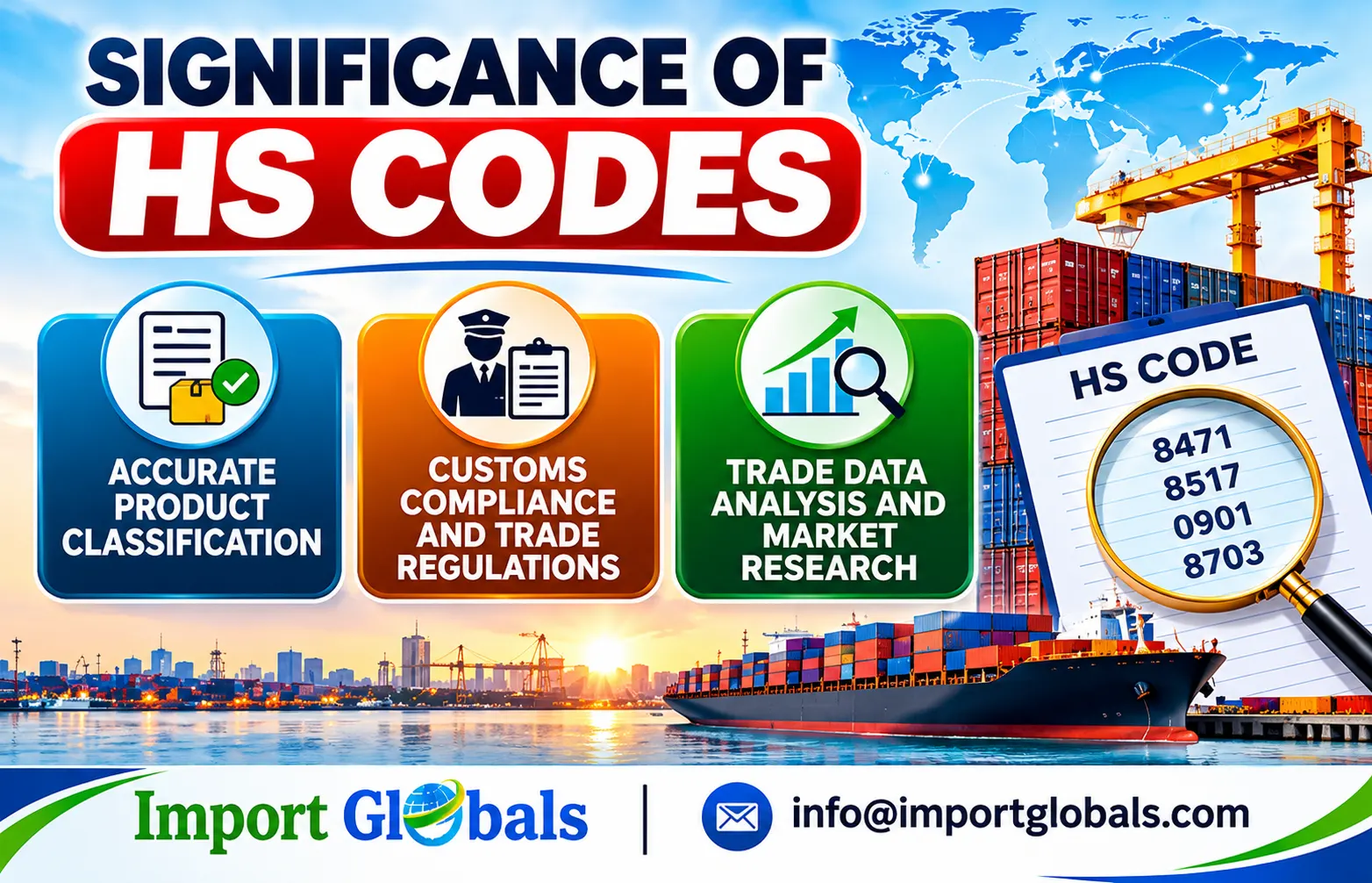
- Accurate Product Classification - HS code helps the businesses with accurate product classification as per the demanded categories of different regions worldwide. The specific categorization of trade helps the customs authorities and businesses properly distinguish the products accurately in order to maintain consistent trade records.
- Customs Compliance and Trade Regulations - HS code help the authorities for determination of applicable duties and enforce import-export regulation. The correct classification of the specific demanded category supports accurate documentation while reducing the risk of customs delays, says Global Trade Statistics.
- Trade Data Analysis and Market Research - HS code is considered as a significant tool for proper trade data analysis and market research. The natural gas export values, shipment quantities, and destination markets has been considered powerful for representing the historical trade trends. It basically supports evaluation of market demand, comparison of trade performance, and development of informed international expansion strategies.
Top 10 HS Codes Regulated Worldwide
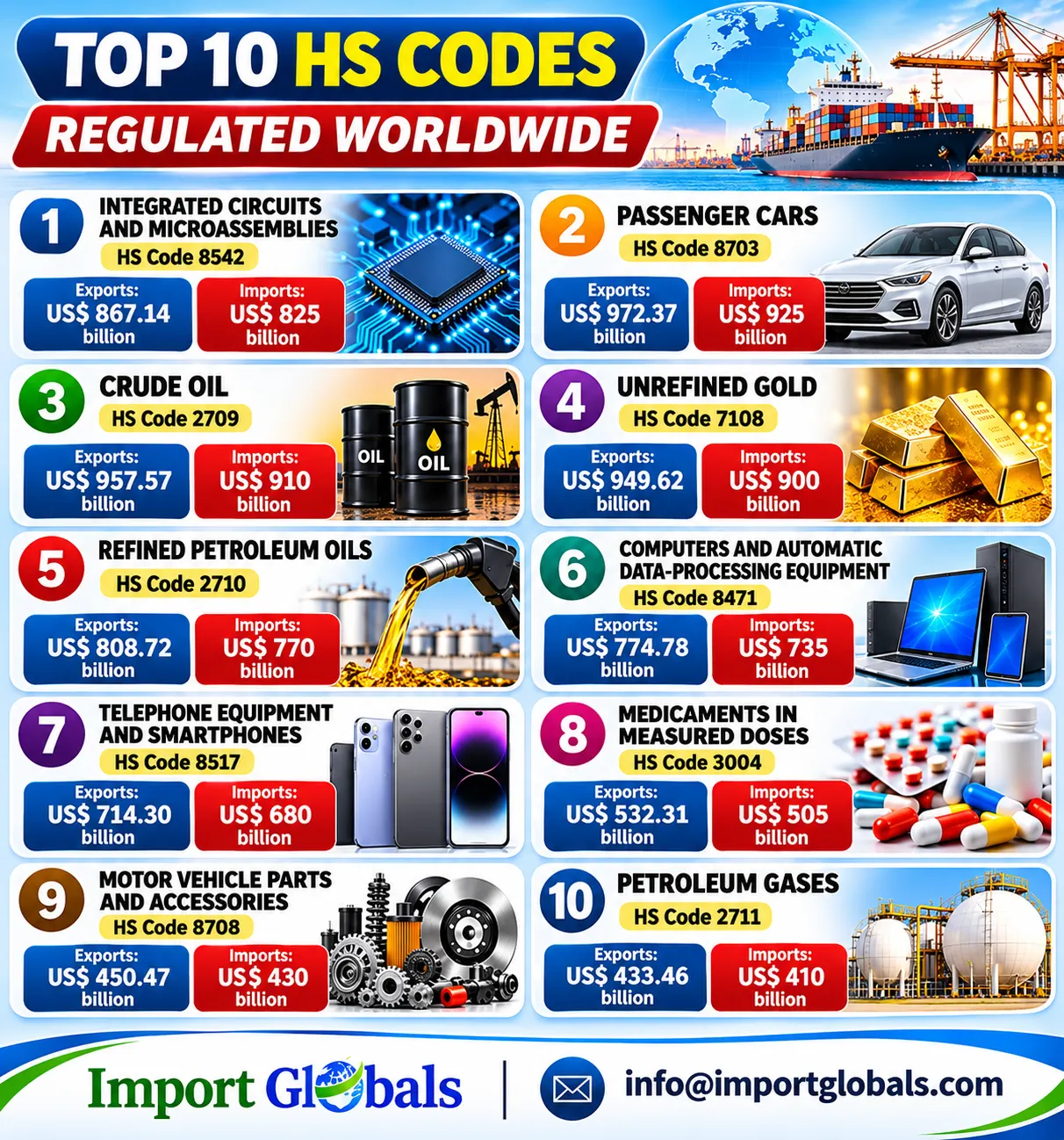
1. Integrated Circuits and Micro assemblies — HS Code 8542
Exports: US$867.14 Billion | Imports: US$825 Billion
Integrated circuits are found in computers, smartphones, cars, and telecommunications. The global trade in integrated circuits is driven by semiconductor production, electronics use, technological advances, and the changing nature of manufacturing economies.
2. Passenger Cars — HS Code 8703
Exports: US$972.37 Billion | Imports: US$925 Billion
Passenger cars are significant in global manufacturing imports, including traditional, hybrid, and electric vehicles. Demand is driven by consumer buying power, technology, taxes, safety standards, and environmental regulations in the countries considered.
3. Crude Oil — HS Code 2709
Exports: US$957.57 Billion | Imports: US$910 Billion
Crude petroleum is sent to refineries producing fuels and chemical products. International trade figures depend on oil prices, demand at refineries, production levels, and world events. Imports reflect the cost of businesses and insurance.
4. Unrefined Gold — HS Code 7108
Exports: US$949.62 Billion | Imports: US$900 Billion
Unprocessed gold is input into the investment, jewellery, and industry sectors. International trade figures for unprocessed gold depend on the price of gold, the financial climate, the activity of central banks, sourcing policies, customs declarations, and measures taken against the laundering of money and illegal mining.
5. Refined Petroleum Oils - HS Code 2710
Export valuation: US$808.72 Billion | Imports: US$770 Billion
Refined petroleum products, comprising of fuels and other oils, are considered the top HS code demanded globally. The international trade of fuels and oils are continuously supporting the transport, manufacturing and energy supply. The cross-border transactions are mainly influenced by the product specifications reported Global Customs Shipment Data.
6. Computers and Automatic Data-Processing Equipment - HS Code 8471
Export Valuation: US$774.78 Billion | Imports: US$735 Billion
Computers and data processing equipment are the basic foundation for business operations, research and communication. The global shipment reflects enterprise technologies investment and consumer demand as the massive ones.
7. Telephone Equipment and Smartphones - HS 8517
Export Valuation: US$714.30 Billion | Imports: US$680 Billion
Smartphones and telephony devices are mainly connecting the customers and businesses for worldwide trade. The electronic manufacturing network expansion and replacement demands have been driving the overall trade. Import requirements may include approval of radio equipment, compliance with electrical safety standards, and the applicable regulation on battery transport.
8. Medicaments in Measured Doses
Export Value: US$532.31 Billion | Imports: US$505 Billion
Medicaments in measured doses serve healthcare systems and are traded using international pharmaceutical supply chains; the international trade is subject to regulations governing medical approvals and quality standards, and to labelling policies, patents, and licensing practices designed to protect patients.
9. Motor Vehicle Parts and Accessories
Export Value: US$450.47 Billion | Imports: US$430 Billion
Parts of motor vehicles keep vehicle manufacturers, part suppliers, repair and aftermarket companies together. The international trade is guided by manufacturing networks, technical specifications, safety standards, tariff codes, and rules of origin.
10. Petroleum Gases
Export Value: US$433.46 Billion | Imports: US$410 Billion
Petroleum gases are used for heating purposes, processes involving industries, generation of power, and in chemical manufacturing. International trade involving these products needs accurate classification; without issues involving storage, transportation, environment, etc.
Top 10 Globally Leading Companies in HS-Coded Product Trade
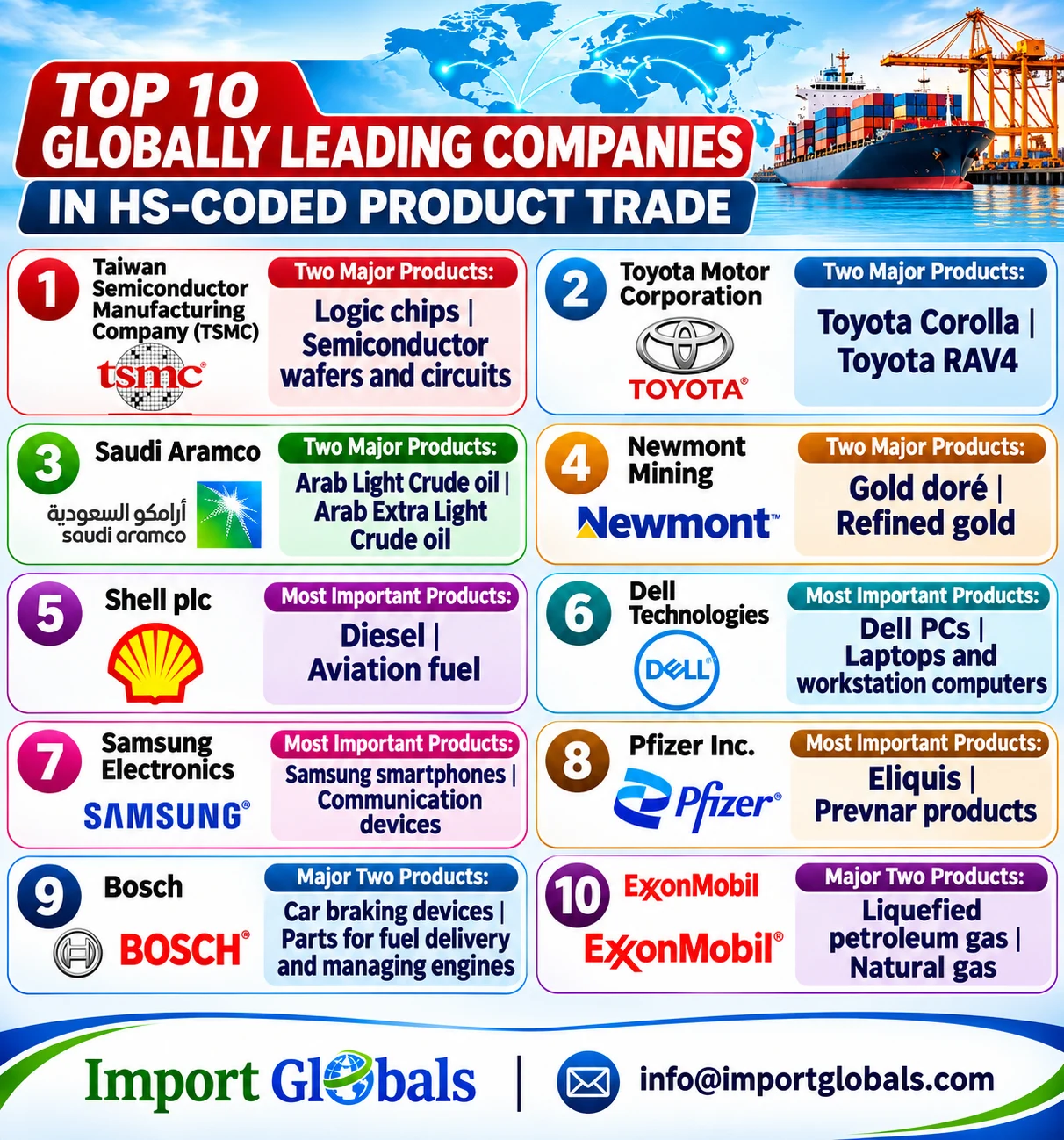
1. Taiwan Semiconductor Manufacturing Company (TSMC)
Two Major Products: Logic chips; semiconductor wafers and circuits
The TSMC creates advanced semiconductors for technology firms across the globe. Its products are vital to the electronics supply chain and carry technology.
2. Toyota Motor Corporation
Two Major Products: Toyota Corolla; Toyota RAV4
Toyota is one of the leading manufacturers of automobiles in the world, offering vehicles in various markets. Its well established international manufacturing and distribution network is one of the major factors in global automobile trade.
3. Saudi Aramco
Two Major Products: Arab Light Crude oil; Arab Extra Light Crude oil
Saudi Aramco is known for its huge crude oil production and export. Its oil supply is important for the functioning of refineries and generating fuel.
4. Newmont Mining
Two Major Products: Gold doré; refined gold
Newmont is one of the largest producers of gold and a supplier of gold-bearing material for the refining industry.
5. Shell plc
Most important products: diesel; aviation fuel
Shell operates in refining, processing, and promoting oil products internationally. Shell’s fuels satisfy consumers’ transportation and industrial needs, through an international system of refining connected with distribution capabilities.
6. Dell Technologies
Most important products: Dell PCs; laptops and workstation computers
Dell provides PC systems to clients worldwide. Dell’s operations are global and link device Makers with business customers and general public customers.
7. Samsung Electronics
Most important products: Samsung smartphones; communication devices
Samsung Electronics sells technology, including smartphones, in many international markets. Samsung’s capability to sell works because it takes all the advantages of providing these products via international networks.
8. Pfizer Inc
Most important products: Eliquis and Prevnar products
Pharmaceutical operations of Pfizer influence drug development, manufacturing, and marketing; the company utilizes its regulated production capabilities to provide international clients with high-quality medications.
9. Bosch
Major Two Products: Car braking devices, parts for fuel delivery and managing engines
Bosch makes car technologies and components for automakers and aftermarket users globally, says Global Trade Data. Bosch products entail improving safety of cars and engines and electronic systems, thus making the company important in the chain of car components supply worldwide.
10. ExxonMobil
Major Two products: Liquefied petroleum gas; natural gas
ExxonMobil produces natural gas and sells energy products globally. The company's operations link producers and industry users, energy companies, and market through supply, and distribution networks.
Top 10 Countries Dominating Global Import-Export Trade in 2025 With HS Code
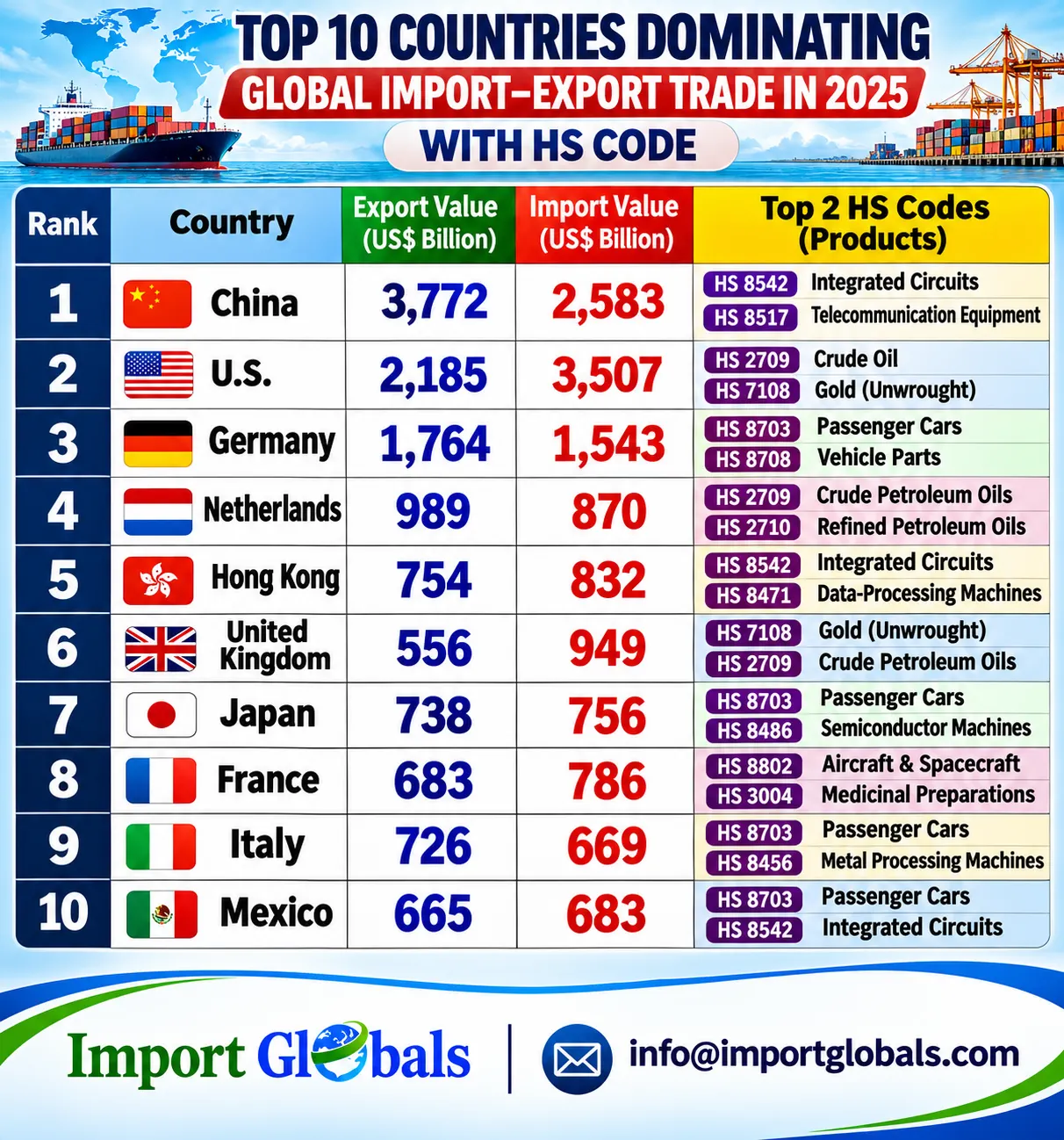
1. China - Export Valuation: US$3,772 Billion | Import Valuation: US$2,583 Billion
Most Popular Two HS Codes: HS 8542 — Integrated Circuits; HS 8517 — Telecommunications and Communication Equipment
China is a key player in world trade; exporting electronic products, machinery, and manufactured goods; while importing energy, raw materials, and high-tech components. By examining HS code data; businesses can discover potential vendors in China, analyze product demand, and explore international sourcing possibilities, says Global Import Trade Data.
2. U.S. - Export Valuation: US$2,185 Billion | Import Valuation: US$3,507 Billion
Most Popular Two HS Codes: HS 2709 — Crude oil; HS 7108 — Gold, including unwrought gold
The United States is an important consumer market which supplies energy and machinery, airplanes, and agricultural products. Using HS-code statistics helps businesses detect American customers, examine product demand, and investigate business prospects in the market.
3. Germany - Export Valuation: US$1,764 Billion | Import Valuation: US$1,543 Billion
Most Popular Two HS Codes: HS 8703 — Passenger motor vehicles; HS 8708 — Parts and accessories for motor vehicles
Germany stays in a strong trading position in international markets by manufacturing automobiles, industrial machinery, chemicals, and precision engineering products. Using HS code statistics gives businesses the opportunity to find suppliers of necessary products, license automotive products, and take the would-be purchasers into account in transactions within the international markets.
4. Netherlands — Export Value: US$989 Billion | Import Value: US$870 Billion
Top 2 HS Codes: HS 2709 — Crude petroleum oils; HS 2710 — Refined petroleum oils and preparations
The Netherlands acts as a significant trade and logistics centre in Europe; with the support of its port and distribution systems and re-export operations. Businesses can conduct HS code research to observe the trade of petroleum as well as find suppliers and European distributors.
5. Hong Kong — Export Value: US$754 Billion | Import Value: US$832 Billion
Top 2 HS Codes: HS 8542 — Electronic integrated circuits; HS 8471 — Automatic data-processing machines and computers
Hong Kong is a major re-export and trading centre regarding various electronics. Conducting HS code research helps companies to study demand patterns and the best suppliers in the area to conduct business.
6. United Kingdom — Export Value: US$556 Billion | Import Value: US$949 Billion
Top 2 HS Codes: HS 7108 — Gold, including unwrought gold; HS 2709 — Crude petroleum oils
The UK is an important player in global trade, particularly in energy, pharmaceuticals, machinery, metals, and other goods. HS research enables establishments assess the market demand and determine suppliers.
7. Japan - Export Valuation: USD 738 Billion | Import Value: USD 756 Billion
Top 2 HS Codes: HS 8703 Passenger cars; HS 8486 Machines and devices for semiconductor manufacturing
Japan is one of the largest exporters of cars, machines, and advanced technologies while importing energy and raw materials. HS-code analysis helps companies in searching Japanese suppliers, analyzing the product segments, and finding sourcing opportunities outside the country.
8. France - Export Value: USD 683 Billion | Import Value: USD 786 Billion
Top 2 HS Codes: HS 8802 Other aircraft, spacecraft, and suborbital vehicles; HS 3004 Medicinal preparations in doses
France has a significant position in the international trade market due to aerospace and space industry, medications industry, cosmetic industry, agricultural industry, and machinery. HS-code statistics allow business people to explore the French export segments, find suppliers, and analyse distribution opportunities in foreign markets.
9. Italy - Export Value: USD 726 Billion | Import Value: USD 669 Billion
Top 2 HS Codes: HS 8703 Passenger cars; HS 8456 Laser and other machines for metal processing
Italy is one of the best-known countries in the world for machinery, cars, fashion products, medications, and special products. HS-code analysis allows businesses to do comparisons among Italian goods, analyse exporting markets, and find buyers and suppliers.
10. Mexico – Export value: $665 billion, import value: $683 billion
Top 2 HS Codes: HS 8703 – Passenger cars; HS 8542 – Electronic integrated circuit
Mexico plays an important role in the North American and international supply chains, especially regarding vehicles, electronics, machinery, and equipment. Trade research based on HS codes allows companies to find suppliers, assess the demand for products imported into the county, and analyse the issues related to sourcing decisions.
How HS Codes Help Businesses Investigate Import-Export Statistics?
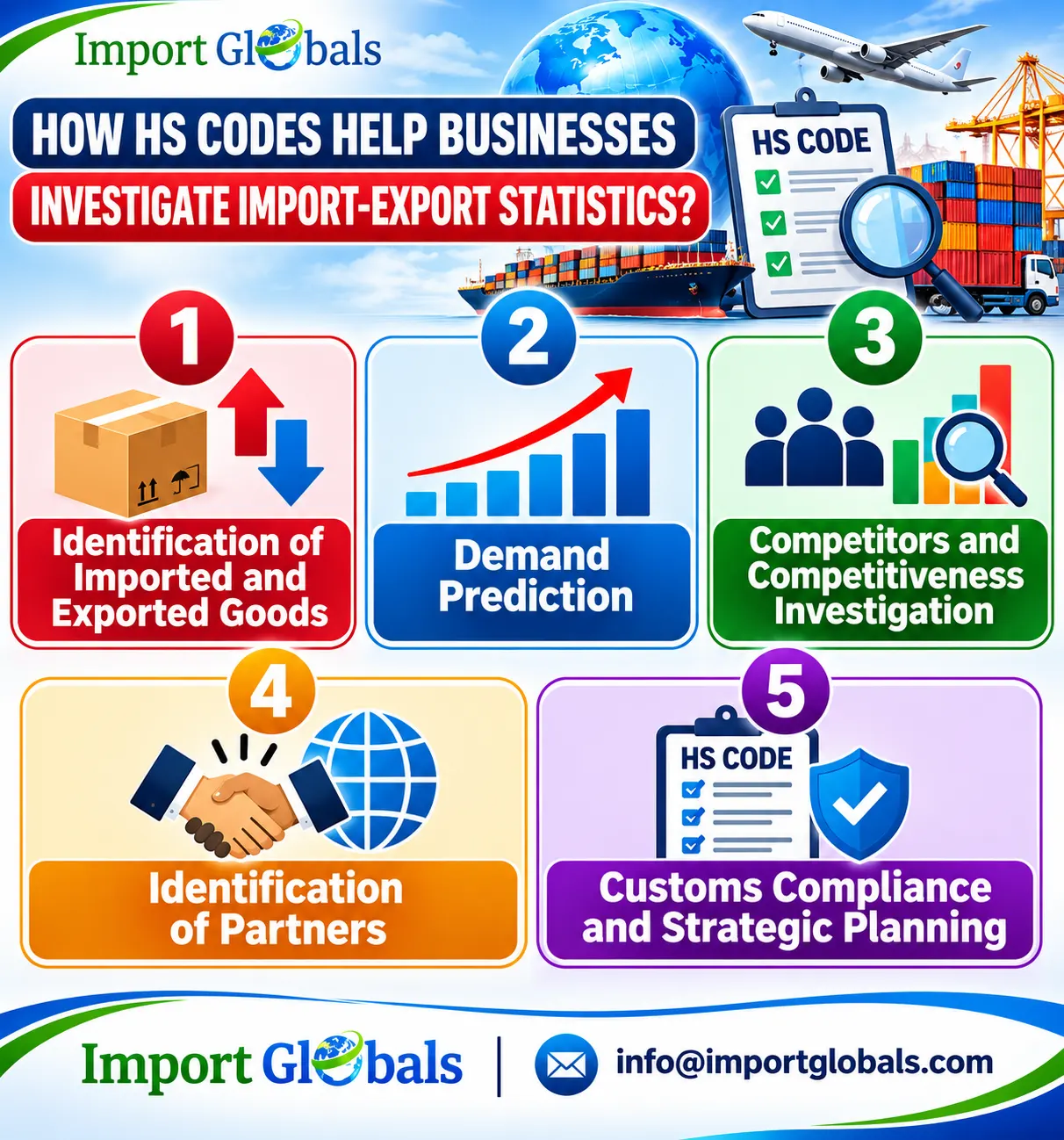
1. Identification of Imported and Exported Goods: HS codes characterize the particular goods using the well-known global classification system. Companies develop import-export statistics for the goods and estimate trade values in different markets.
2. Demand Prediction: HS codes help businesses monitor the amount of imports and exports of certain products and monitor the shifts in demand and the perceptions of consumers. What is more, it enables exporters to get aware of possible opportunities and prioritize their overseas directions.
3. Competitors and Competitiveness Investigation: HS codes support the research of the whole trade process concerning the particular goods and being aware of the suppliers and exporting countries as well.
4. Identification of Partners: By using information derived from the analysis of HS codes from Global Customs Shipment Data, it is possible to find out countries where goods are imported most of all and recognize those who sell goods actively.
5. Customs Compliance and Strategic Planning: By using HS codes businesses can determine specifics with regard to customs classifications for the goods they trade as well as duties applicable to them and other regulations affecting their trade. This information allows them to estimate costs better and plan for import/export operations accordingly.
The Future Use of HS Codes in Trade
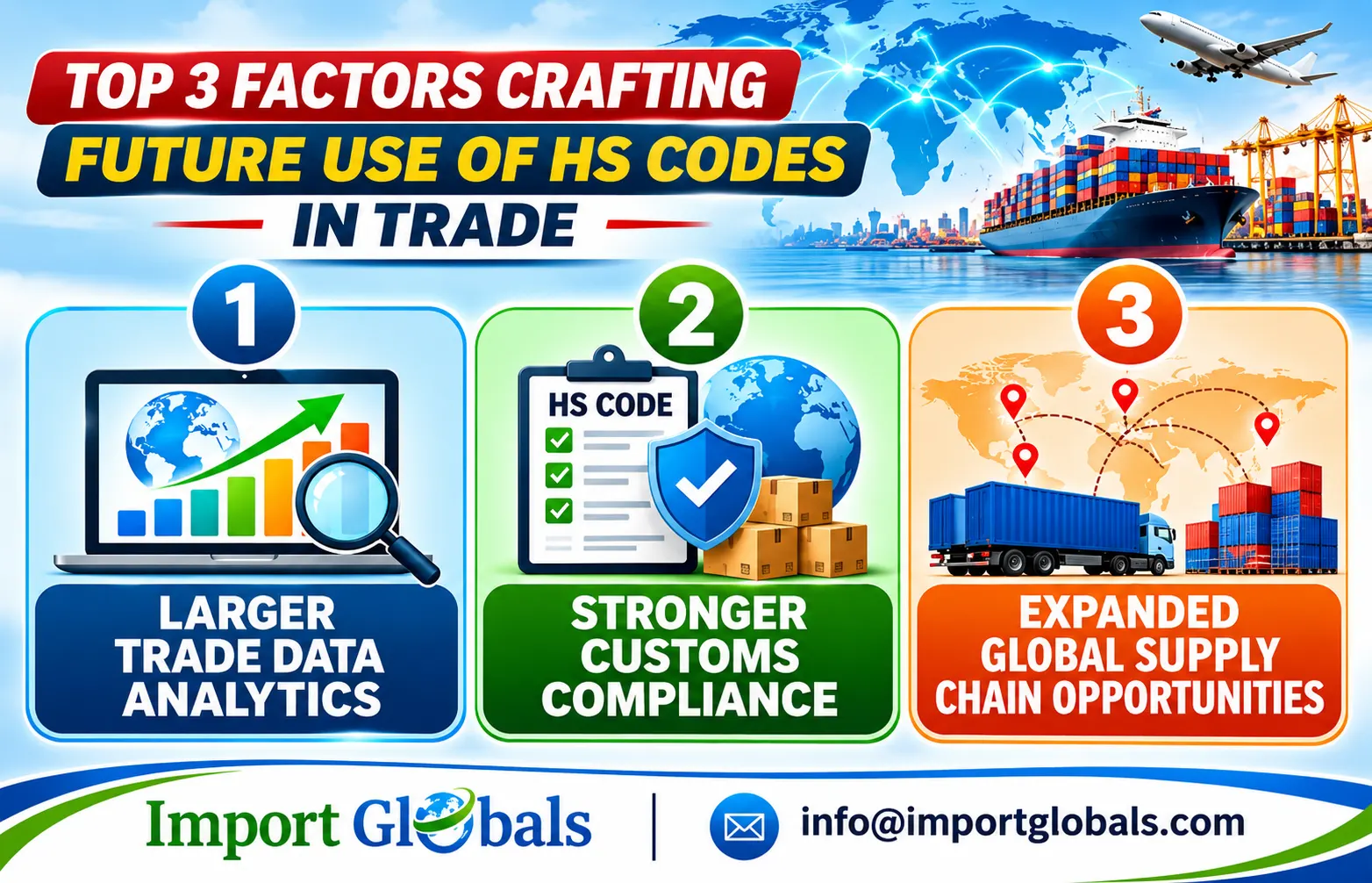
The role of HS codes in trade shows no sign of diminishing due to companies entering new markets and the proliferation of trade networks. Companies use HS-code-based statistics on imports and exports to analyse the performance of certain products over time, monitor demand trends, and discover new business opportunities. Moreover, the importance of using the HS codes correctly increases with the raised trade in semiconductors, cars, petroleum, drugs, and digital equipment.
The new data analysis techniques and the automation of customs clearance should make the process of working with HS codes more effective and easier, allowing to analyse shipments, values, suppliers, recipients, etc. Firms may use databases of HS codes along with market information to trace competitors, select suppliers, and price products better. However, it is vital for companies to ensure that the classification processes are done correctly, taking into account differences in customs systems, as per Global Trade Statistics.
Conclusion
The use of HS codes is indispensable when it comes to examining and analysing global import and export statistics. HS codes provide a systematized means of identifying products that are traded and enabling trade researchers to analyse trade trends in different markets. Business can take advantage of HS codes while assessing the value of products, monitoring trade volumes, determining main trading partners, and analysing competition in the market.
The evaluation of the major product categories with HS classification such as integrated circuits, passenger cars, crude oil, gold, refined petroleum products, computers, mobile phones, pharmaceuticals, automotive parts, and petroleum gases shows the great diversity of industries represented in international trade classification.
As a result, through combining accurate HS classification with reliable data on import-export statistics, companies are able to make sounder commercial decisions and keep track of industries that are developing. In addition, in order to improve their market competitiveness, companies have to monitor the trade statistics in the current changing market conditions reported Global Export Data.
CTA
Looking for the latest information regarding the implementation of HS code for import-export market understanding? Then you have come to the right platform. Import Globals helps the businesses easily resemble the trade records as per the HS code and shipment analysis of specific regions. Subscribe to www.importglobals.com or drop an email at [email protected] for detailed analysis of the HS codes and its implementation over the global trade to transform your international business growth.
FAQ’s
Que. What are HS codes in the international trade?
Ans. HS codes in the international trades are basically the standardized numerical codes that are used for classification of the traded products.
Que. How does HS codes helps the businesses, research import-export statistics?
Ans. HS code help the businesses get proper tracking of product valuations.
Que. Which HS codes are mostly preferred for global merchandise trade?
Ans. HS codes including integrated circuits, passenger cars, and crude petroleum oils are mostly preferred for global merchandise trade.
Que. How businesses are able to identify the potential buyers using HS code?
Ans. Businesses are able to identify the potential buyers using HS code via analysis of purchasing patterns and shortlisting the distributors in target markets.
Que. Are HS codes helpful for businesses finding international suppliers?
Ans. Yes, HS codes are considered helpful for finding international suppliers as the export statistics organized by HS code aid the identification of countries supplying particular goods.
Que. Name the countries that are important for researching global import export trade.
Ans. China, the United States, and Germany are important for researching global import export trade.
Que. How does Global import-export data support business growth?
Ans. Global import-export data supports business growth via proper identification of buyers, suppliers, analysis of market demand, and development of effective market expansion strategies.
Que. What information is available in Global trade data?
Ans. Global trade data covers importer name, exporter name, shipment date, HS code, product details, quantity, pricing information, origin country, importing country, and port details.
Que. How frequently is the Global trade dataupdated?
Ans. Global trade data is updated on a monthly basis.
Que. Where can you obtain detailed information on Global trade data?
Ans. Visit www.importglobals.com or drop an email at [email protected] for detailed updates on Global trade data.
You Can Also Visit :-
